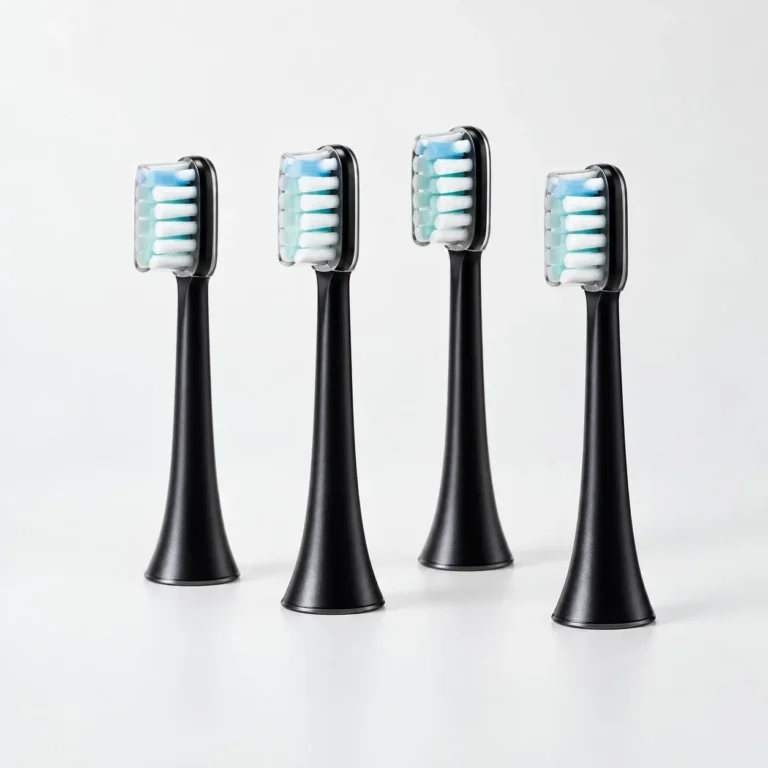
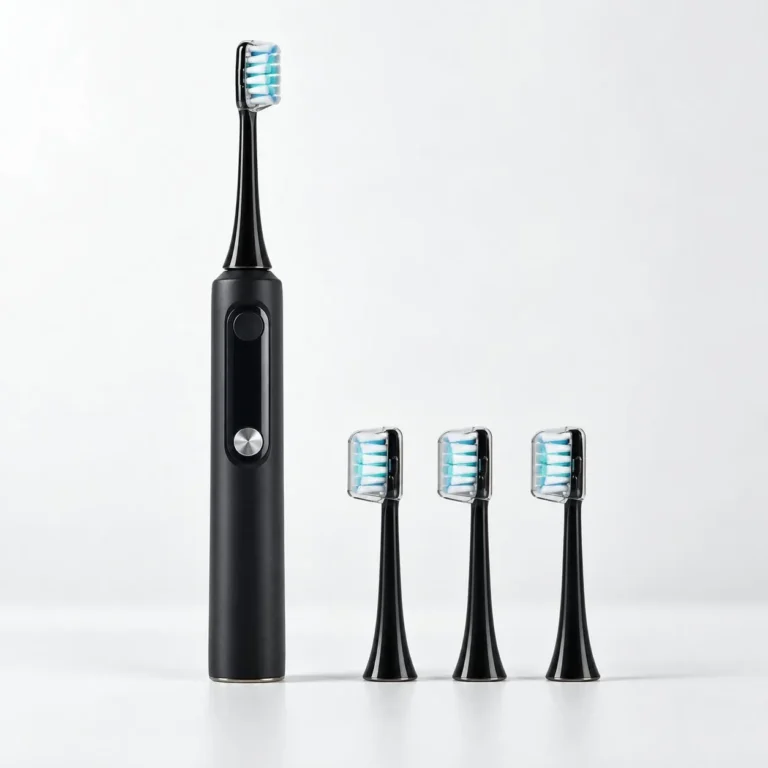
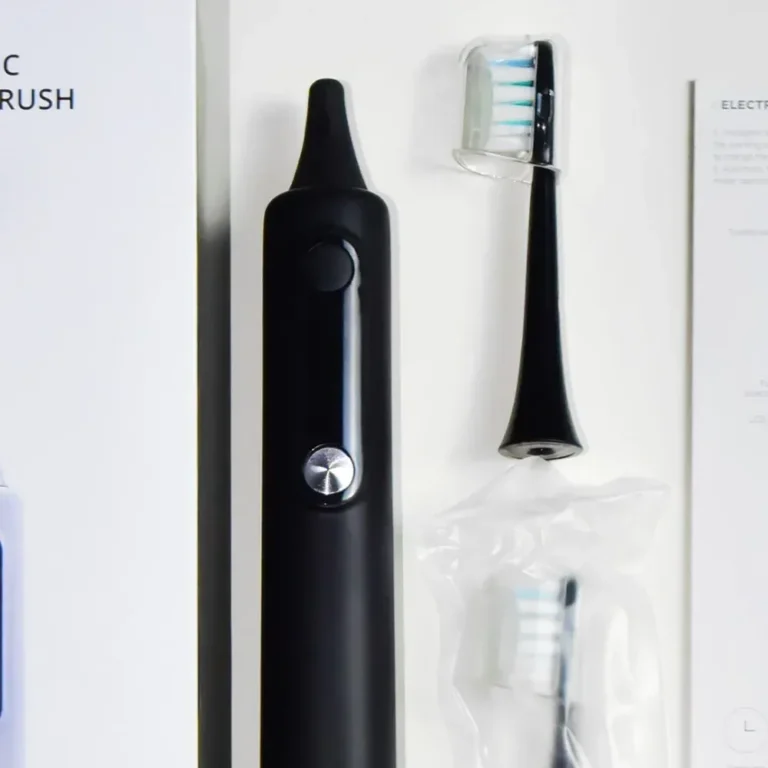
Start Your Electric Toothbrush Project
Tell us your product requirements and target market. We will review the details and reply with the relevant next steps.
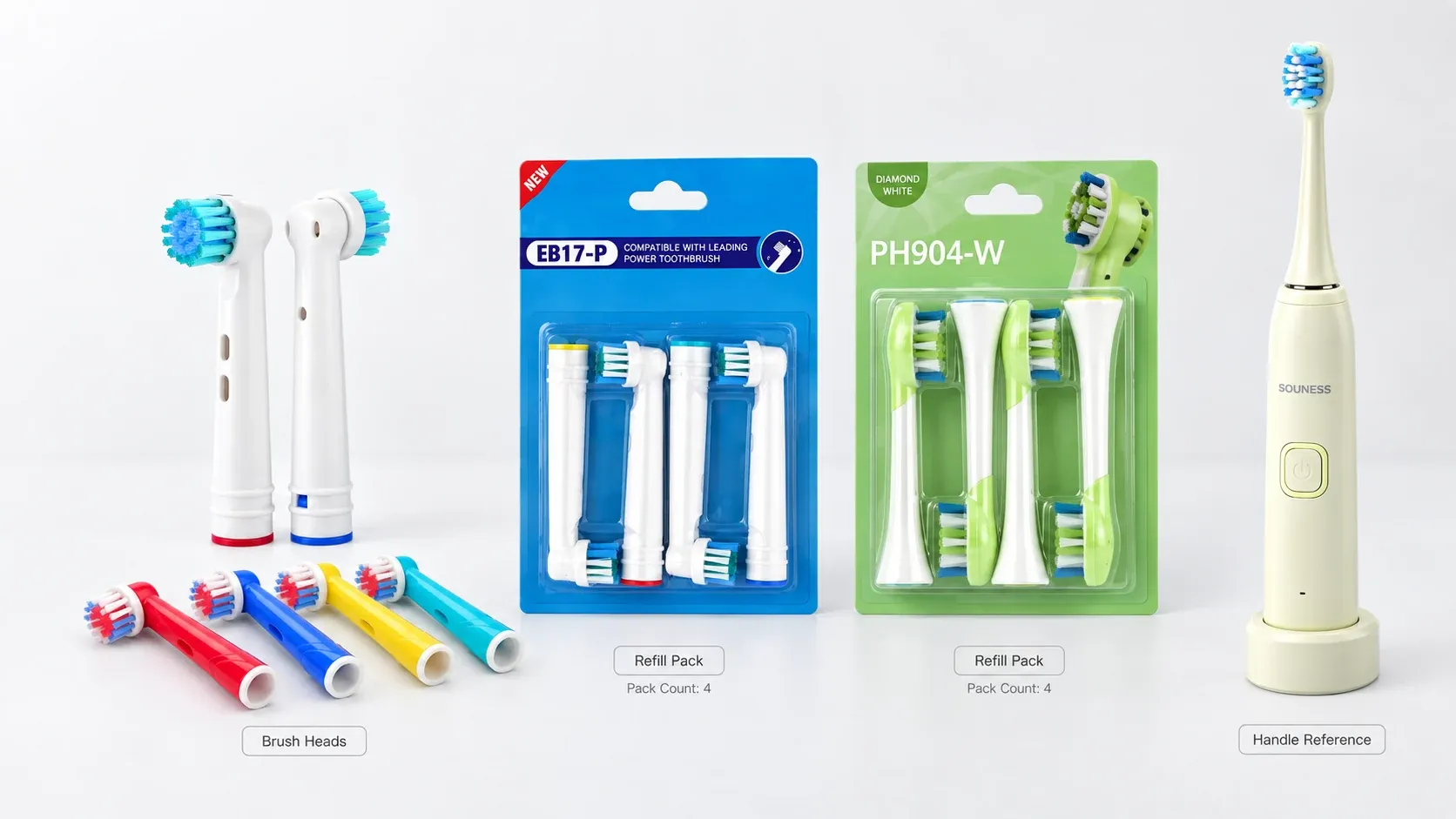
Before ordering replacement brush heads, a B2B buyer should first identify the exact target handle or platform and define the head, interface and bristle specification.
Compatibility should then be reviewed on appropriate samples, followed by packaging approval and final configuration control for mass production and reorders.
A brush head that attaches to one handle is not automatically proven suitable for a private-label or compatible-refill program. Fit, retention, drive transfer and operating behavior should be reviewed against the intended platform and production-intent configuration.
This guide covers each stage of replacement brush head sourcing, from RFQ preparation to reorder control.
Every replacement brush head project starts with one question: which handle will this head be used on?
Not the brand in general. The exact handle model, platform or series, and, where relevant, the revision or generation.
Two handles that look similar may not use the same interface or drive architecture. A shaft profile, coupling geometry or internal drive difference is not always visible from the outside.
Buyers should be prepared to provide a physical reference handle where possible, together with clear photos and any available interface dimensions, drawings or CAD. These inputs give the supplier a clearer basis for reviewing fit, function and quotation scope.
The buyer should also define the intended compatibility claim from the start.
A head developed for one identified platform is a different project from a head intended to cover several handle models. The scope of the claim shapes the scope of validation.
| Buyer Input | What to Confirm | Why It Matters |
|---|---|---|
| Handle model / platform | Exact model name, series and revision where relevant | Similar-looking handles may use different interfaces or drive systems |
| Physical handle sample | Whether a reference handle can be provided | Enables real fit and function review rather than assumption |
| Interface reference | Photos, dimensions, drawings or CAD where available | Defines the geometry the head must work with |
| Intended compatibility scope | Which models the finished product will claim to fit | Determines validation scope and packaging wording |
| Brush-head style | Head shape, size direction and bristle direction | Aligns the quotation with the actual product intent |
| Target market / channel | Region, retail or e-commerce channel | Affects packaging, wording and documentation needs |
If the project involves a new interface or custom electric toothbrush heads rather than an existing head design, the development route itself becomes a decision point.
See OEM vs ODM for Oral-Care Products for how that choice affects development scope and project control.
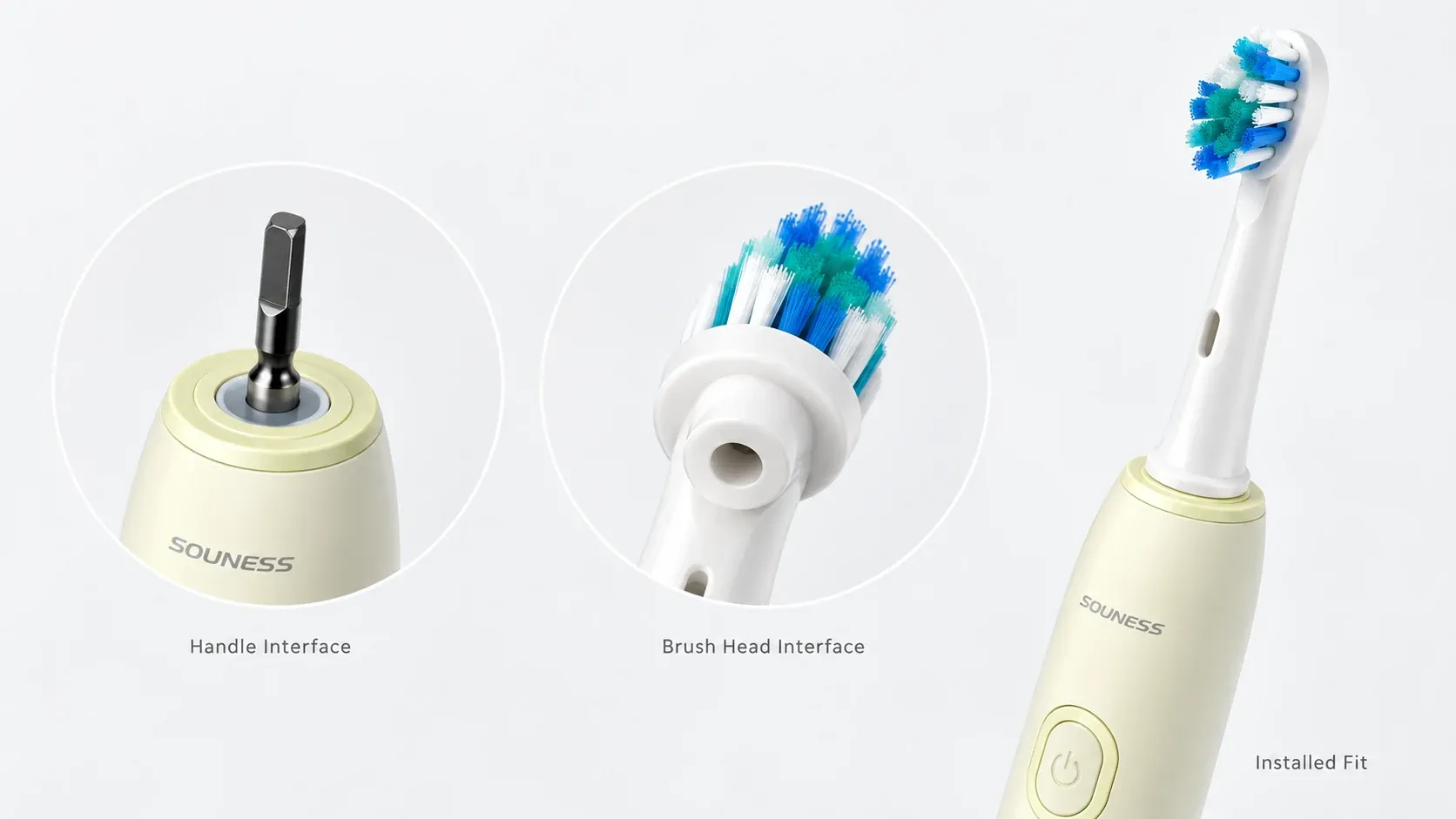
“It fits” is not a complete specification.
In replacement brush head sourcing, it helps to separate static fit from functional compatibility.
Static fit means the head can physically attach to the handle.
That is only the starting point.
Functional compatibility means the head behaves correctly on the intended platform under the agreed product configuration.
Depending on the platform, compatibility review may include:
Which checks apply, and how they are performed, depends on the drive architecture and the intended compatibility claim.
There is no single validation method that applies to every project. There is also no universal numeric limit for retention force, insertion force or allowable play across all brush-head platforms.
What should remain controlled is the reference configuration.
Brush head compatibility testing should be tied to:
Where appropriate, reviewing representative brush heads against the target handle can provide stronger evidence than checking only one matched head-and-handle pair.
The appropriate sample scope should be agreed for the specific project.
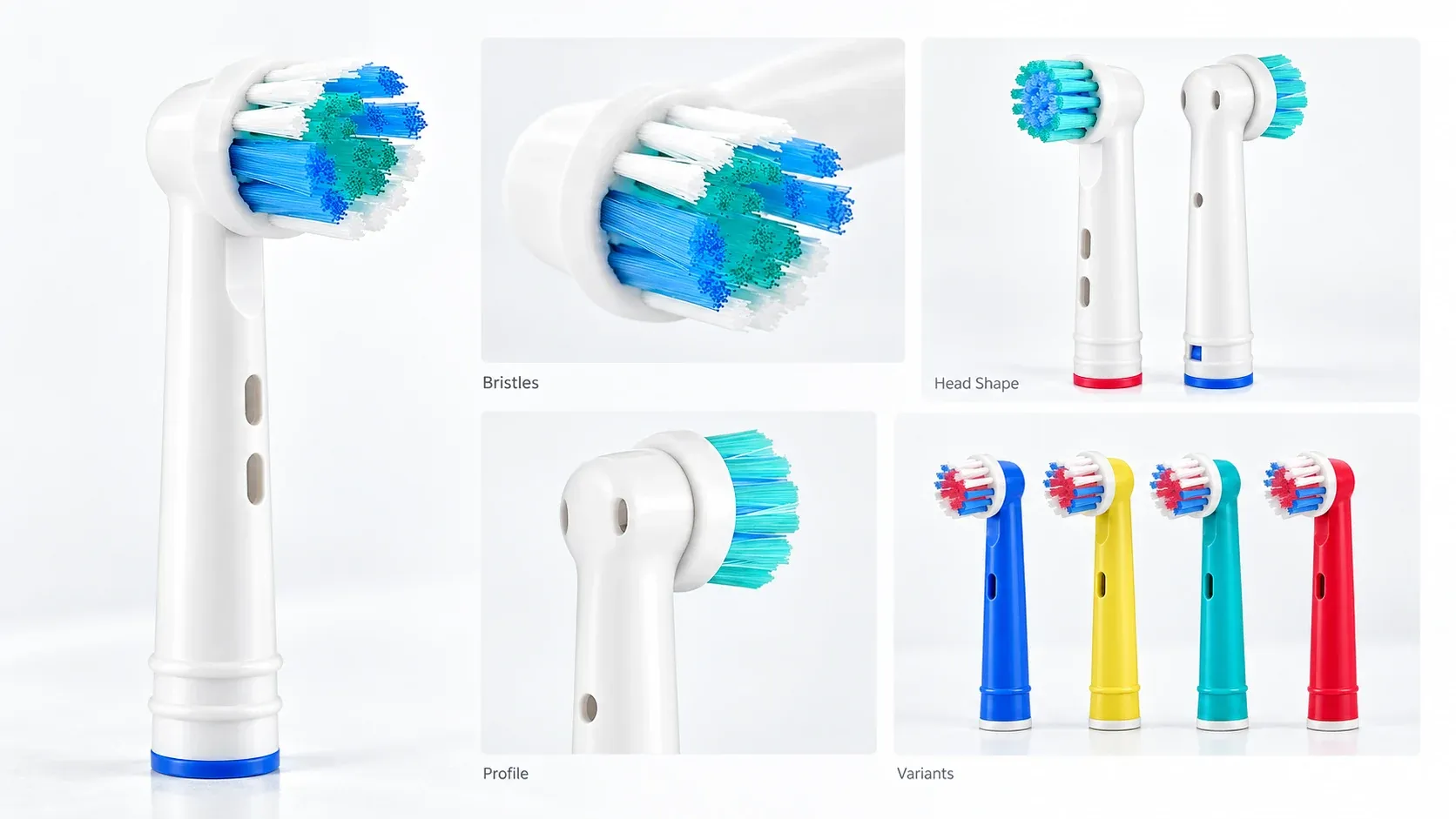
Descriptions such as “soft brush head,” “premium bristles” or “high-density bristles” are commercial descriptions, not complete controlled product specifications.
Vague descriptions make quotations harder to compare and make later production or reorder control less precise.
A workable RFQ for private label replacement brush heads should define the main product configuration before quotation.
| Specification Area | Fields to Define |
|---|---|
| Product identification | Buyer part number, supplier part number, intended handle or platform |
| Head / interface | Head geometry, neck length and profile, neck angle where relevant, interface geometry, plastic material, soft or overmold components where applicable |
| Bristles | Filament material, filament specification or diameter where defined, color, tuft arrangement, trim profile, bristle height, indicator filament where applicable, end treatment |
| Pack configuration | Pack count, hygiene cap, color or variant, packaging direction, compatibility wording |
“Soft,” “medium” and “ultra-soft” are not complete engineering specifications on their own.
They should be connected to the agreed filament specification, brush-head specification and/or an approved reference sample.
End rounding is one quality checkpoint within the wider brush-head specification.
It sits alongside filament material, tuft construction, trim, head geometry, fit and production consistency.
For a detailed discussion, see What End-Rounding Quality Means for Brush Head Safety.
Replacement brush head quality control covers more than bristles.
The following issues are useful when defining sample review, inspection scope and production controls with a supplier.
| Quality Risk | What the Buyer May Observe | Type of Check |
|---|---|---|
| Poor fit | Head does not seat correctly on the target handle | Functional / Dimensional |
| Loose connection | Head shifts or detaches during operation | Functional / Mechanical |
| Difficult installation or removal | Excessive effort needed to attach or remove | Functional |
| Excessive wobble | Visible or perceptible movement during operation | Functional |
| Poor drive transfer or abnormal noise | Weak head movement, rattle or unusual buzzing | Functional |
| Bristle shedding / tuft-retention issue | Filaments loosen or pull out | Mechanical |
| Uneven trim or inconsistent tufting | Irregular bristle height, gaps or stray filaments | Visual / Dimensional |
| Sharp flash or rough plastic surfaces | Molding flash around edges or interface areas | Visual / Process |
| Deformation or warpage | Bent necks or distorted head geometry | Visual / Dimensional |
| Packaging deformation | Compressed bristles or displaced hygiene caps | Packaging |
Not every check needs to be performed on every production unit.
Validation and inspection scope should depend on the product architecture, intended compatibility claim, final configuration, target market, known risks and agreed quality plan.
“Sample approved” is too vague to control a replacement brush-head project.
Different samples may be used to approve different parts of the configuration.
Common stages can include:
The exact terminology can vary by project, so the approval scope should be recorded rather than assumed.
| Sample Type | Main Purpose | Does Not Automatically Approve |
|---|---|---|
| Reference sample | Confirms product direction and general style | Final compatibility or production configuration |
| Compatibility sample | Confirms fit and function on the target handle | Final artwork or production consistency |
| Packaging sample | Confirms structure, protection, pack count and artwork placement | Final product functionality |
| Production-intent sample | Confirms the intended final production configuration | Later material, component or process substitutions |
| Golden sample | Provides a retained physical reference | Anything outside its documented revision and approval scope |
A useful approval record should identify at least:
Without this information, it becomes difficult to reconstruct later what “approved” actually referred to.
That becomes especially important during repeat orders.
Depending on project scope, a B2B buyer may request:
It is useful to distinguish qualification, development and periodic checks from routine production QC.
Destructive, extended-duration or qualification-level testing may be reserved for defined samples, development stages, periodic verification or change-triggered review rather than every production unit.
Routine QC can instead cover agreed visual, dimensional and functional checks at defined stages and sampling levels.
What belongs in each category should be established in the project quality plan.
ISO 20127 is relevant when evaluating physical properties of powered toothbrushes and brush-head construction.
Buyers should confirm the current applicable edition, its scope and the relevance of individual test requirements to the final product configuration rather than relying on an older edition or treating the standard as a generic certification label.
Toothbrush refill packaging is part of the approved product configuration.
It should not be treated as an afterthought after the head itself has been approved.
Packaging decisions may include:
Each SKU also needs controlled identification.
This may include:
Practical packaging risks can include:
Packaging approval should therefore use the final intended brush-head geometry and pack configuration.
Approving artwork files alone is not the same as approving the final packed product.
A replacement brush head may be designed for use with a third-party handle system.
The wording used on packaging, product pages and marketplace listings therefore carries commercial and legal importance.
Compatibility wording should be factually supportable and limited to the verified model or platform scope.
It should not imply that the replacement head was made, authorized, endorsed or licensed by the trademark owner unless that relationship is accurate and documented.
A descriptive statement such as:
“Compatible with [identified handle series/model]”
is different from an authorization claim such as:
“Official [Brand] Brush Head.”
Trademark treatment is jurisdiction-specific.
Packaging, product pages and marketplace listings should be reviewed for the intended market where needed.
This article is not legal advice.
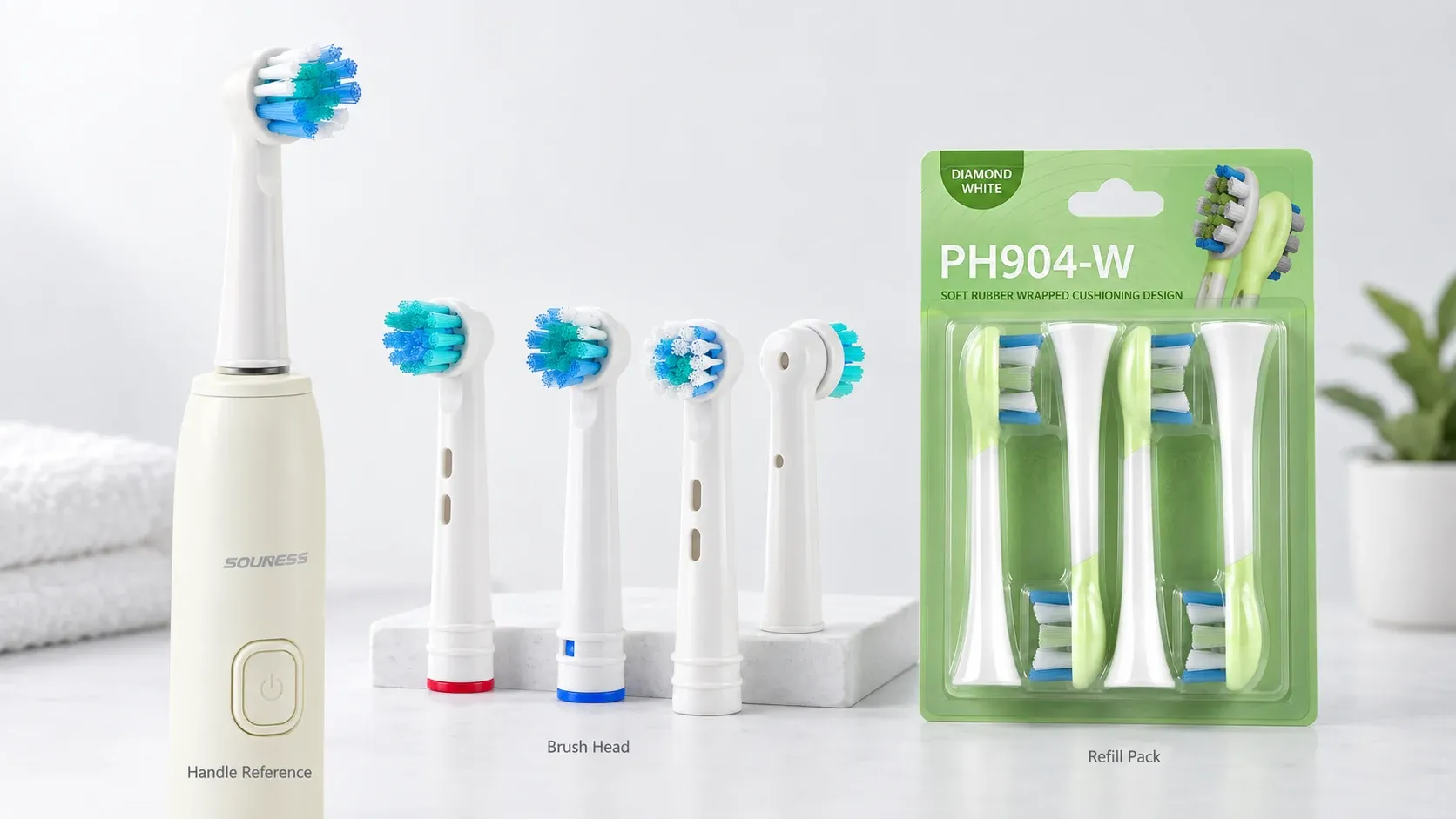
Mass-production approval should apply to a defined configuration.
It should not rely on a generic description such as “same brush head.”
Before production release, confirm and freeze:
Production approval should refer to that controlled configuration.
A visual match to an earlier sample does not automatically confirm that every controlled material, interface or packaging element remains unchanged.
A repeat order should be treated as a controlled continuation of an approved configuration.
It should not simply be requested as “the same brush head.”
Between orders, more can change than the visible product name suggests.
Examples include:
Any of these changes may affect fit, appearance, documentation or production consistency.
Before confirming a reorder, the buyer should ask whether any relevant tooling, material, filament, component, process, packaging or artwork has changed since approval.
A change does not automatically require complete retesting.
Instead, it should trigger a review of whether the proposed change requires:
Practical templates for configuration control, sample approval and reorder checks are available under Project Resources.
At minimum, provide the exact target handle or platform, intended compatibility scope, head style, bristle and trim direction, pack count, packaging direction and target market.
A physical reference handle and available interface data can give the supplier a clearer basis for evaluating the project.
Review the brush head against the exact intended handle.
Checks may include seating, insertion and removal, retention, play or wobble, drive transfer, clearance and operating behavior.
The method and sample scope should be agreed according to the platform and project.
No.
Electric toothbrush handles can use different interface geometries and drive architectures.
Similar-looking handles should not be assumed to share the same brush-head interface.
Compatibility should be confirmed against the exact intended handle or platform.
Relevant fields can include filament material, filament specification or diameter where defined, color, tuft arrangement, trim profile, bristle height, indicator filaments where applicable and end treatment.
Terms such as “soft” should be connected to the agreed filament specification and/or an approved reference sample.
Yes.
Static fit only confirms that the head can attach.
The head may still seat incorrectly, wobble, transfer motion poorly, loosen during use, create abnormal noise or behave inconsistently across production variation.
Functional compatibility should therefore be reviewed separately.
A compatibility sample is used to review fit and function against the target handle.
A production-intent sample is intended to represent the final planned production configuration, including controlled geometry, materials, bristles and construction.
Approving one does not automatically approve the other.
Depending on project scope, buyers may request the product specification, drawing revision, exact compatibility reference, approved sample record, bristle specification, inspection criteria, relevant test summaries, material declarations where applicable, packaging and artwork revisions, traceability information and change-control records.
The required document set should match the final product configuration and target market.
Confirm the exact part number and revision, compatibility reference, interface and head configuration, materials, bristle specification, packaging format and artwork revision.
Any relevant change since the previous approval should be disclosed and reviewed to determine whether updated samples, reapproval or revalidation are needed.
Prepare the target handle reference, intended compatibility scope, head style, bristle requirements, target market and packaging direction before requesting a project review.
A defined starting point can reduce avoidable back-and-forth and make supplier quotations easier to compare.
Browse current options on our Replacement Brush Heads category page, or start with our broader guide to sourcing electric toothbrushes for private label and OEM projects.