Start Your Electric Toothbrush Project
Tell us your product requirements and target market. We will review the details and reply with the relevant next steps.
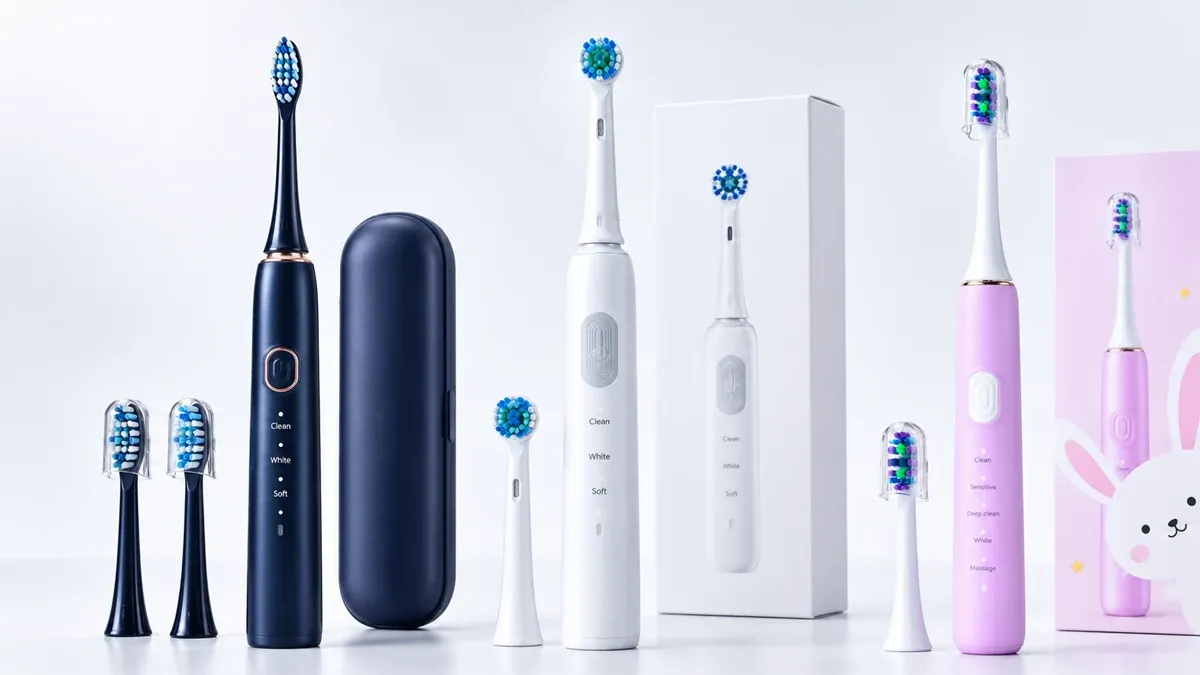
To source a private label electric toothbrush, define the project before requesting a final quotation. Start with your target market, target customer and sales channel. Then select a product platform — sonic, rotary or kids — and decide whether the project will use an existing model, an existing platform with configuration changes, or a new development route.
Plan the replacement-head program together with the handle. Define branding, packaging and destination-market requirements before the final configuration is confirmed. A clear project brief helps suppliers shortlist suitable models and prepare more relevant commercial information.
AileCare supports product selection, customization planning, sampling, packaging development, quality coordination and destination-market documentation review through established manufacturing partners.
You do not need a complete technical specification before the first inquiry. A short, structured brief is enough to begin. Open questions can be marked for further review rather than guessed.
| Brief Item | Why It Affects Sourcing |
|---|---|
| Target Market / Destination | Influences labeling, documentation, testing, language and charging requirements. |
| Buyer Type / Sales Channel | Retail, distribution and e-commerce projects can require different packaging, bundles and SKU structures. |
| Target Customer | Adult, kids, family, travel or gift positioning helps narrow the product platform. |
| Target Price Positioning | Value, mainstream or premium positioning helps identify realistic platforms and feature sets. |
| Product Category | Choose between sonic, rotary/oscillating, kids, or remain open to recommendations. |
| Expected Quantity | Quantity can affect available color, branding, packaging and configuration options. |
| Launch Window | The required timing helps determine whether an existing model or a deeper development route is realistic. |
| Branding Scope | Logo application, artwork, packaging and multi-SKU programs involve different project requirements. |
If some items are undecided, say so in the brief. An open question stated clearly is more useful than a guess presented as a requirement.
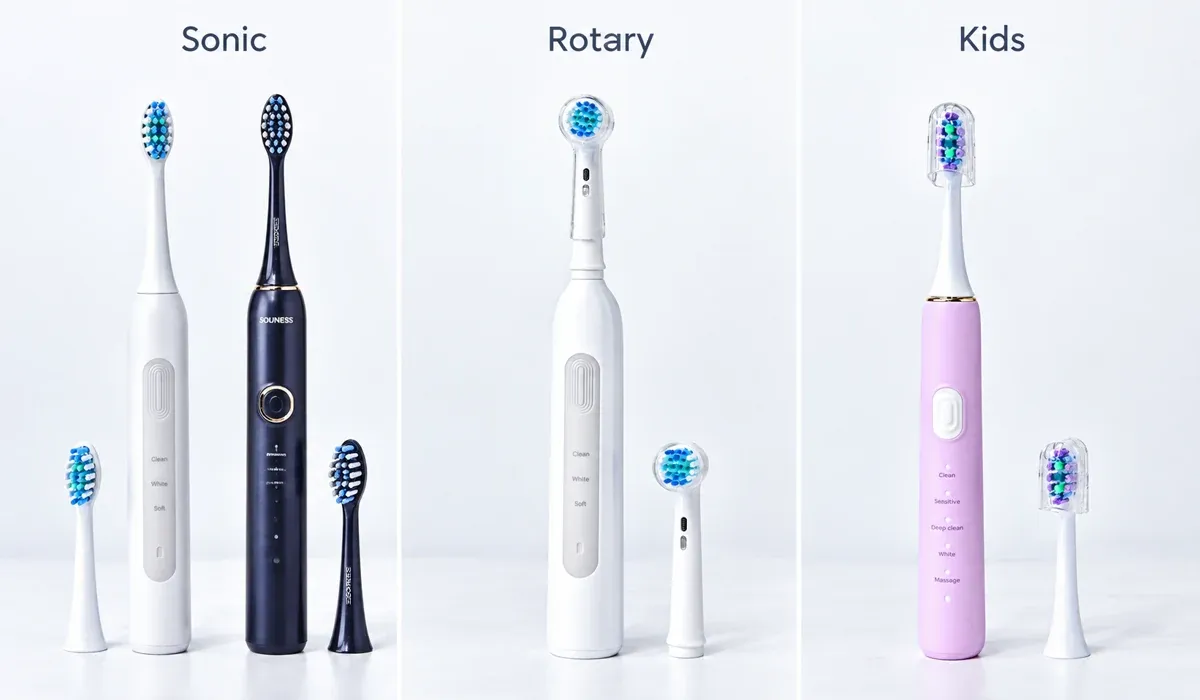
From a sourcing perspective, the main platforms differ in movement system, brush-head architecture, refill planning, charging and product positioning. The goal is not to decide which technology is “better,” but which platform fits the intended project.
| Sourcing Factor | Sonic Electric Toothbrushes | Rotary / Oscillating Electric Toothbrushes | Kids Electric Toothbrushes |
|---|---|---|---|
| Motion Type | High-frequency vibration; exact movement specifications vary by model. | Rotating, oscillating or other mechanically driven movement, confirmed per model. | May use sonic, rotary, oscillating or another confirmed platform depending on the model. |
| Brush-Head Architecture | Often uses elongated or compact vibration-driven head formats; exact design varies by model. | Often uses compact or round-head systems, but head shape does not define the motion type. | Head size, bristle configuration and intended-user positioning require model-specific review. |
| Refill Program | Requires a confirmed handle/head interface and refill plan. | Interface, fit and mechanical connection make refill planning especially important. | Refill format, bristles, pack structure and intended-user positioning should be reviewed together. |
| Product Positioning | Suitable for a wide range of rechargeable, travel, mainstream and premium programs. | Useful for brands seeking mechanically driven or round-head product platforms. | Used for child-focused oral-care ranges, color programs and family-oriented assortments. |
| Feature Complexity | Modes, timers, sensors, displays and charging features vary by model. | Motion system, modes, timer, sensors and charging vary by platform. | Controls, modes, timers and charging vary by model and intended product brief. |
| Packaging | Starter kits, travel kits, gift sets and refill packs. | Handle, included heads and refill packaging should be planned together. | Color variants, accessories, refill heads and intended-user information may affect the pack. |
| Documentation | Reviewed for the selected model and destination market. | Motion description, head system, charging and claims require model-level confirmation. | Intended-user positioning, instructions, packaging and destination-market requirements need project-specific review. |
Explore Sonic Electric Toothbrushes for OEM/ODM projects, Rotary Electric Toothbrushes and round-head options, and Kids Electric Toothbrushes for private-label programs to compare current product platforms.
Terms such as private label, OEM and ODM are used differently across the industry. For sourcing purposes, it is more useful to separate projects by how much the existing product platform needs to change.
This route starts from an existing product platform. Branding, available colors or finishes, packaging artwork, manuals, barcodes and existing accessory options can be reviewed for the selected model.
Because the core product platform remains largely unchanged, this route generally involves less development work than configuration changes or new development. Final timing still depends on branding, packaging, sample approval and order conditions.
The underlying platform remains, but selected elements may change. Depending on the product, this can include brush heads, included-head quantity, refill multipacks, modes, timer functions, charging options, cases, accessories or packaging structure.
Configuration changes may affect MOQ, tooling, validation, testing, documentation and project timing. Each requested change should therefore be reviewed before quotation.
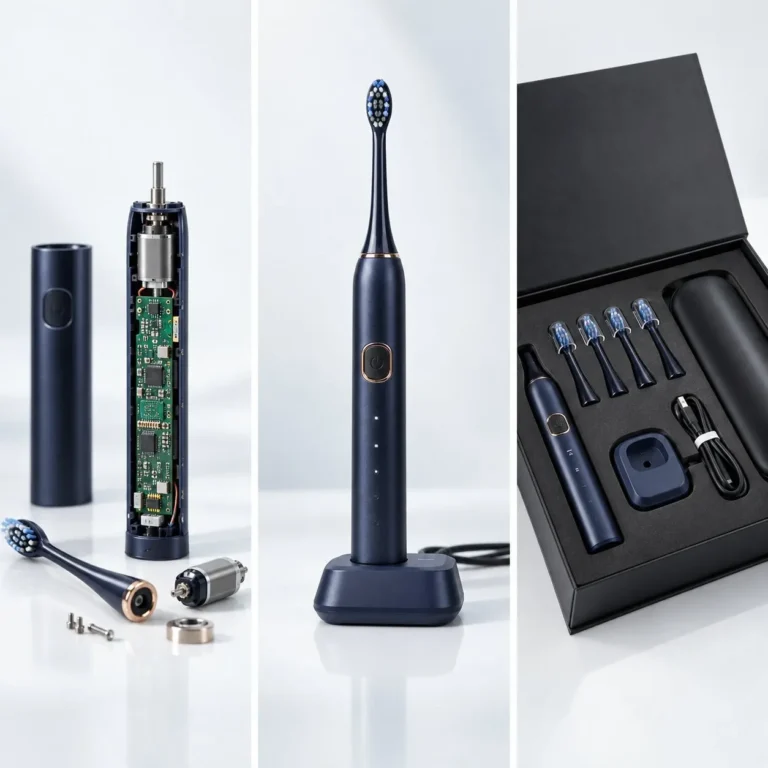
New housings, new brush-head interfaces, tooling, motor or gearbox changes, electronics, PCB, firmware, sensors or new charging architecture require a separate feasibility and development review.
This route can introduce additional engineering, prototypes, tooling, validation and documentation. Commercial requirements should be evaluated after the development scope is clear.
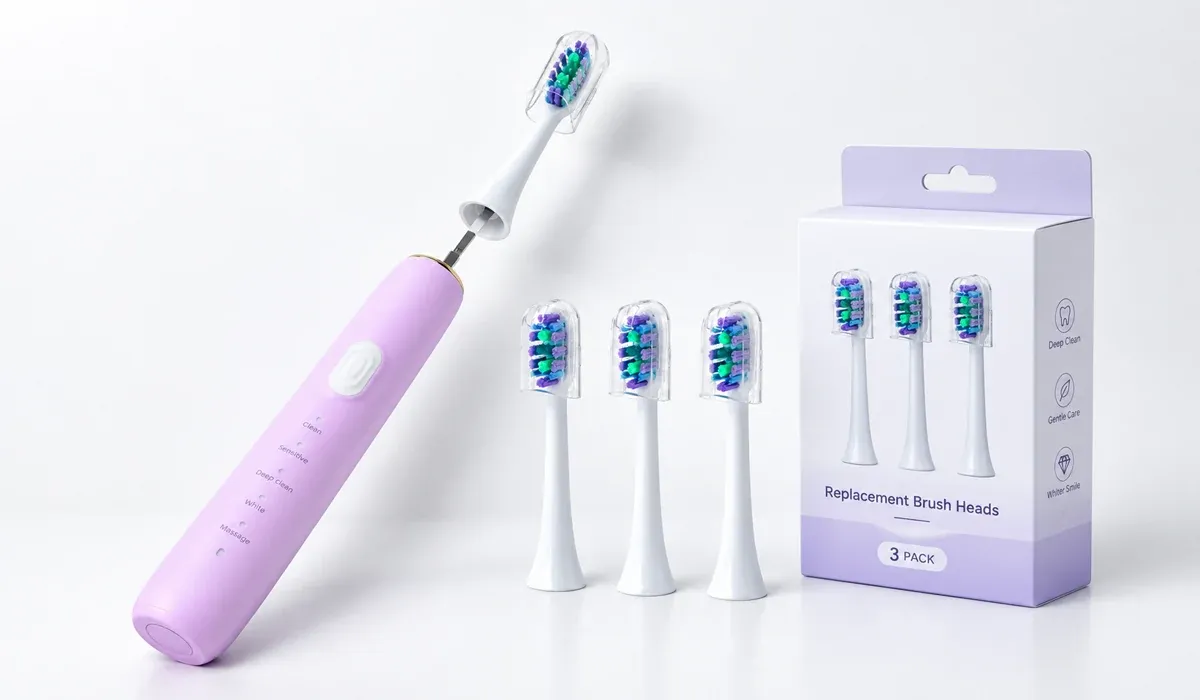
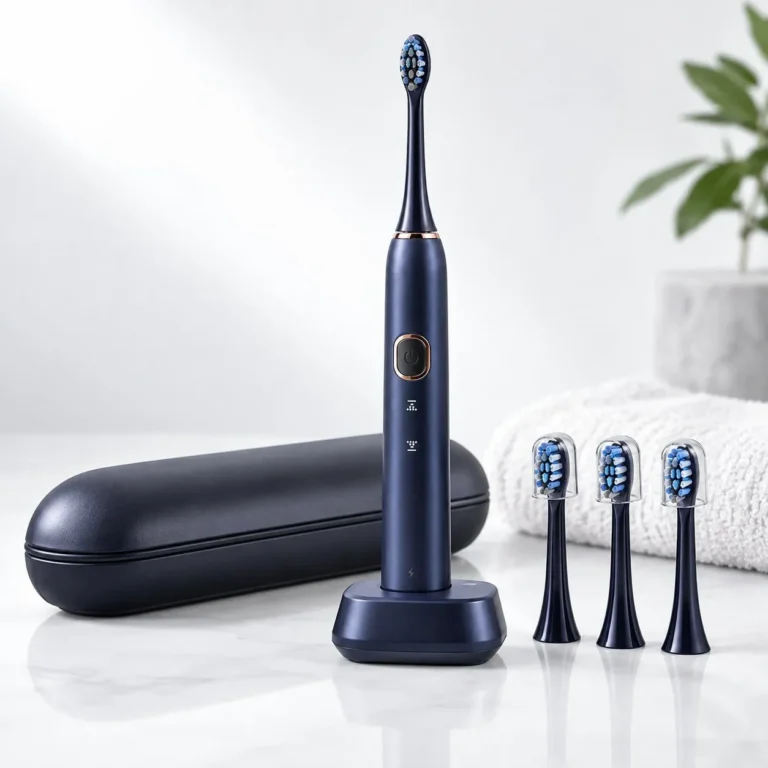
The toothbrush handle and replacement heads should be treated as one product program. A handle should not be selected without understanding the refill path. Planning the interface, included heads, refill packs and continuity requirements early helps keep the handle and replacement-head program aligned after launch.
Brush-head interface
Confirm how the head connects to the handle and how the selected interface is controlled.
Head fit
Verify the specific handle and head combination rather than relying on visual similarity.
Included heads
Confirm how many heads are included in the starter product and which bristle configuration is used.
Refill multipacks
Define pack quantity, bristle variants, head colors and packaging format.
SKU structure
Plan separate barcodes and packaging references for handles, starter kits and refill packs where required.
Continuity planning
Discuss future head availability and how engineering or component changes would be handled.
Replacement-head compatibility should be verified for the exact handle and head combination. Do not assume that heads fit across different platforms without confirmed mechanical compatibility.
Explore Replacement Brush Heads when planning the refill program alongside the toothbrush handle.
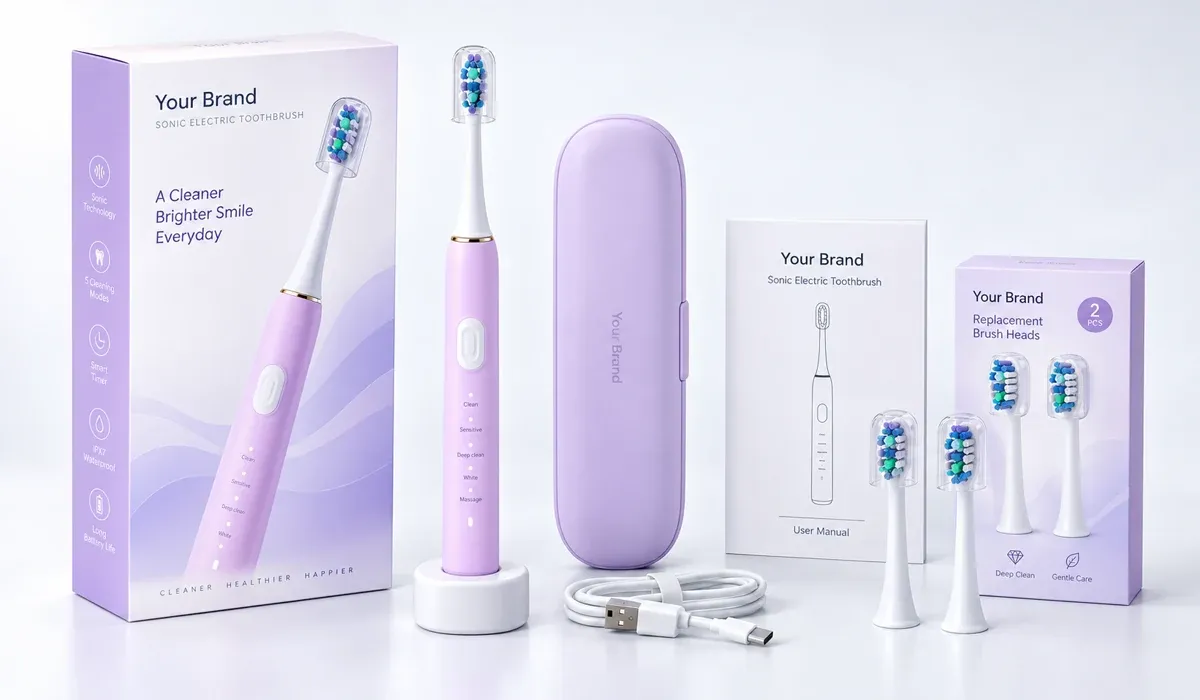
Packaging depends on the final product configuration. For this reason, structural packaging should normally be developed after the main platform, included components and accessory bundle are sufficiently clear.
A typical private-label electric toothbrush program may include logo application, available product colors and finishes, product marking, included brush heads, charging cable or base, travel case, protective cap, retail carton, e-commerce packaging, gift-box options, refill-head packaging, multilingual manuals, barcodes and inserts.
Product changes can directly affect the package.
A different head count changes the internal tray. Switching from a cable to a charging base changes the component layout. Adding a travel case changes carton dimensions. Language variants affect artwork and manual versions.
Confirming the main product configuration before final packaging approval can reduce unnecessary artwork and structural revisions later in the project.
Before production commitment, review the product information for the exact model and final configuration being purchased rather than relying on category-level assumptions.
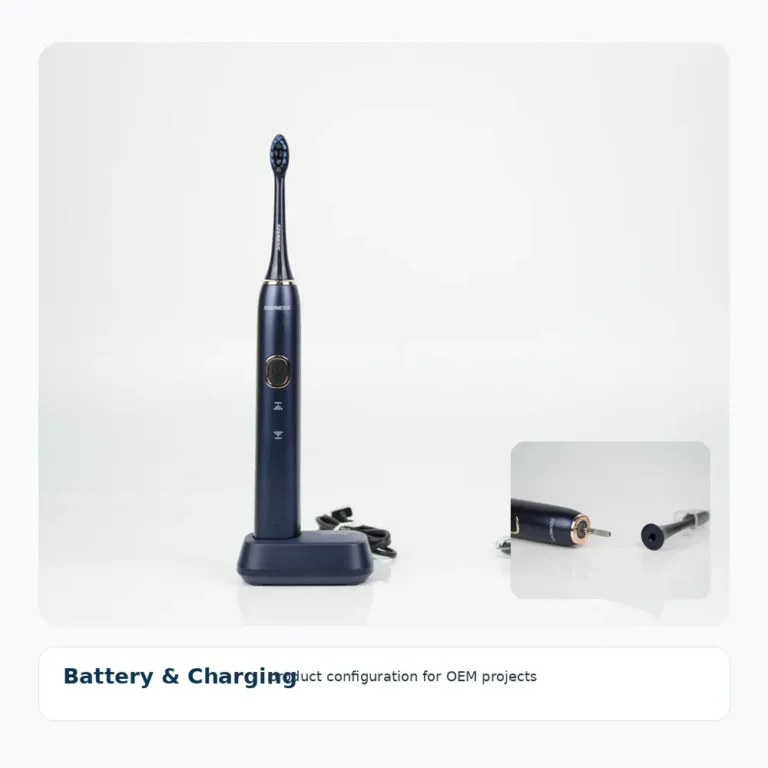
The review may include the final product specification, confirmed motion type, battery and charging configuration, brush-head system, water-resistance information where applicable, material information, available product documentation, labels, instructions, packaging, destination-market requirements, testing scope and inspection requirements.
AileCare helps buyers review the selected model, final specification, battery and charging configuration, brush-head system, packaging, instructions and destination-market requirements with established manufacturing partners before production commitment.
Available documentation and testing requirements are reviewed for the selected model, final configuration and destination market. Product claims, compatibility statements and water-resistance information should be confirmed at product level rather than assumed across an entire category.
Commercial terms depend on the product and project scope. Instead of relying on generic “typical” figures, ask what variables are driving the quotation.
| Commercial Question | What Typically Affects the Answer |
|---|---|
| MOQ | Model, color, logo method, brush-head configuration, packaging, accessories and market version. |
| Sample Availability | Existing product availability and whether the buyer needs a catalogue, branded, configured or packaging sample. |
| Sample Cost | Sample type, product value, branding, custom components, packaging work and courier requirements. |
| Branding Requirements | Print method, color, finish, logo position and selected model. |
| Packaging Requirements | Structure, materials, printing, inserts, language versions, accessories and pack contents. |
| Customization Scope | Whether the project uses an existing model, configuration changes or new development. |
| Tooling / Development | New housings, brush-head components, cases, structural packaging or other custom parts may introduce tooling or development costs, whether within a configured-platform project or a new-development program. |
| Testing / Documentation | Final configuration, destination market, intended claims, charging system, materials and labeling requirements. |
| Production Timing | Preliminary timing can be discussed earlier, while the final production schedule depends on the approved configuration, artwork, required materials, documentation and order conditions. |
| Payment Terms | Order scope, order value, project stage and agreed commercial terms. |
| Shipping Terms | Destination, Incoterms, shipment mode, battery requirements and packaging volume. |
| Inspection | Approved specification, reference sample, buyer requirements and third-party inspection scope where applicable. |
| Replacement-Head Reorders | Interface continuity, head configuration, packaging, colors, forecast and SKU structure. |
“Sample” can mean different things at different stages of an electric toothbrush project. Clarifying the sample purpose helps both sides understand what is being evaluated.
Used to evaluate the existing product platform, including build, movement, charging, brush-head fit and general configuration.
Used to review branding, selected colors, configuration changes or other agreed project details.
Used to review packaging structure, artwork, trays, accessories and overall presentation before production packaging is confirmed.
For projects that require one, an approved pre-production sample can serve as a physical reference for the final product and inspection process.
Not every project requires all four stages. The appropriate sample route depends on whether the project uses an existing product, configuration changes or new development.
For projects that require a final approval sample, the agreed pre-production reference can serve as a benchmark for production and inspection. The exact sample sequence depends on the project scope.
Before production commitment, confirm the commercial and technical scope in writing. The exact checklist will depend on the project, but it should normally cover the final product, packaging and approved product information.
Open items at this stage can create avoidable production changes, delays or commercial adjustments, so key technical and packaging decisions should be closed before production commitment.
Your RFQ does not need to be perfect. The goal is to provide enough information for a meaningful model shortlist, feasibility review and quotation.
1. Target market / destination
Country or region where the product will be sold.
2. Buyer type and sales channel
Brand, importer, distributor, retailer or e-commerce seller.
3. Product platform
Sonic, rotary/oscillating, kids, or open to recommendations.
4. Preferred model(s)
If you have already shortlisted products.
5. Target positioning
Value, mainstream, premium, travel, kids, family or gift.
6. Expected quantity / SKUs
Initial quantity and planned colors or variants.
7. Branding requirements
Logo, color, finish, graphics and product marking.
8. Brush-head and refill requirements
Included heads, bristle requirements and refill packs.
9. Feature / charging requirements
Modes, timer, sensors, battery and charging method.
10. Packaging requirements
Retail, e-commerce, gift, travel or other format.
11. Languages / documentation / testing needs
Manual languages and any known destination-market requirements.
12. Target launch window
Planned launch period and any fixed project deadlines.
If some items are still open, mark them as “to be advised.” A clear open item is more useful than an unsupported assumption.
The terms private label, OEM and ODM are used differently across suppliers. For sourcing purposes, it is clearer to distinguish an existing-model branding route, configuration changes to an existing platform, and a separate new-development program.
Compare the product platform based on your target market, positioning, brush-head system, refill strategy, charging, features and packaging requirements. Avoid choosing a platform solely on generic performance comparisons.
For selected existing models, branding, available colors, packaging, manuals and other existing options can be reviewed as a private-label route. The available scope depends on the selected platform and project requirements.
Depending on the model, brush heads, included-head quantity, refill packs, brushing modes, timer functions, charging options, cases, accessories and packaging structure may be reviewed. Configuration changes can affect MOQ, tooling, validation, documentation and timing.
New housings, brush-head geometry, brush-head interfaces, mechanical components, electronics, PCB or firmware changes are more likely to introduce tooling or additional validation.
Branding, colors, printing and packaging may have a lower development impact, but their requirements still need project-specific confirmation.
Include your target market, buyer/channel, preferred product platform, expected quantity, branding scope, brush-head and refill requirements, charging needs, packaging requirements, documentation needs and planned launch window.
Replacement-head packs can be planned together with the toothbrush handle. Interface, fit, head quantity, bristle configuration, packaging, SKU structure and continuity planning should be reviewed for the selected platform.
Compatibility should be confirmed for the specific handle and replacement-head configuration. The mechanical interface, fit and retention should be reviewed rather than assuming compatibility from visual similarity.
Retail cartons, e-commerce packaging, refill packs, multilingual manuals, barcodes and other packaging elements can be reviewed for the selected project. Structural packaging should be finalized after the main product configuration and pack contents are clear.
Yes. The appropriate sample type depends on the project stage. Buyers may begin with an existing product sample and later review branded, configured, packaging or pre-production samples where required.
The final model, configuration, brush-head program, branding, packaging, manuals, labels, barcodes, approved claims, documentation requirements and inspection reference should be confirmed according to the agreed project scope before production commitment.
Share your target market, preferred product platform, expected quantity, branding scope, brush-head and refill requirements, charging requirements, packaging plan, documentation needs and launch timing.
AileCare can review the brief, identify suitable current platforms and discuss the next project steps with you.