Start Your Electric Toothbrush Project
Tell us your product requirements and target market. We will review the details and reply with the relevant next steps.

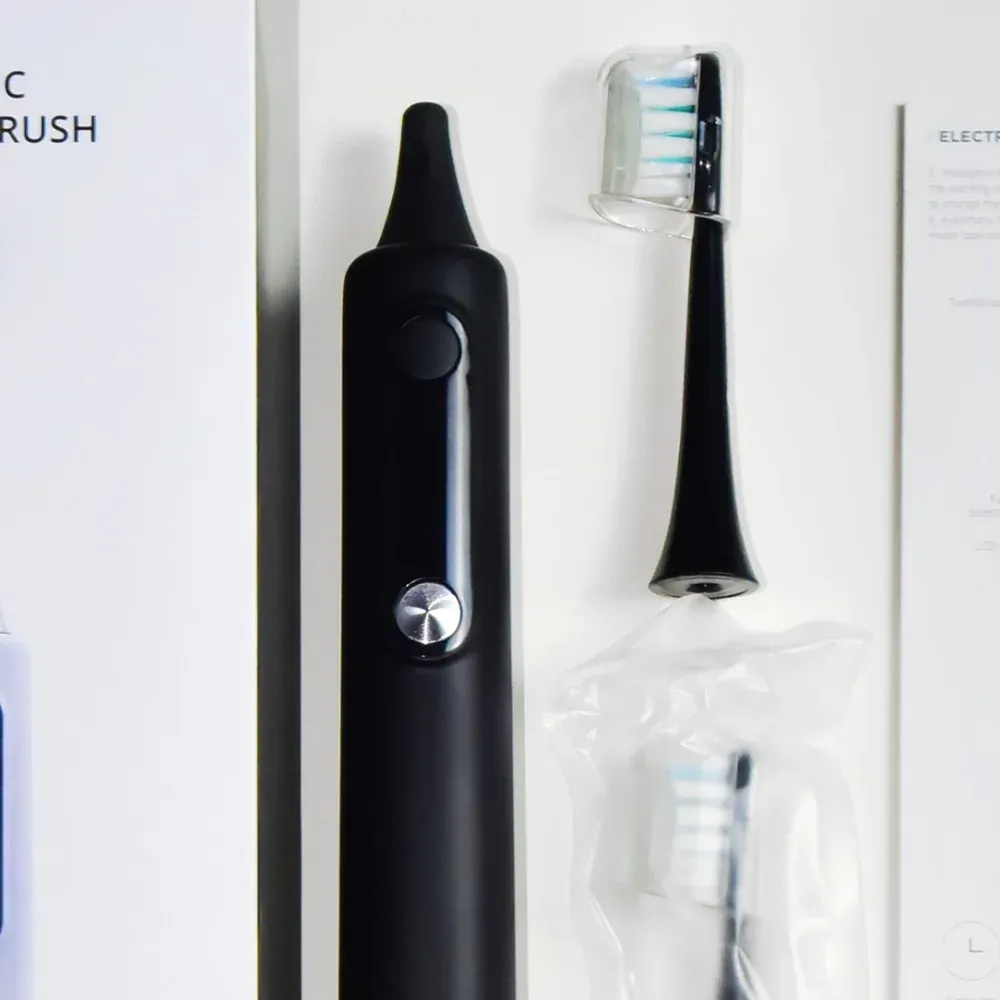
“Soft bristles” is not a complete OEM specification.
Two replacement brush heads can both be described as “soft” while using different filament materials, diameters, exposed lengths, tapering, tuft counts, tuft loading, layouts, trim profiles and end treatments.
If the purchase specification says only “soft premium bristles,” too much of the final construction remains open to supplier interpretation.
To reproduce the same brush head across samples and repeat orders, buyers should define the physical construction behind the marketing description.
There is also a second sourcing question: does the requested change stay within the existing molded brush head, or does it alter tuft-hole position, angle, head geometry or elastomer features? The answer determines whether the project remains a bristle/tufting customization or moves into tooling development.
Terms such as:
“Soft”
“Ultra soft”
“Premium”
“High density”
“Gentle”
can be useful commercial descriptions.
They do not fully define what the factory needs to reproduce.
| Marketing Description | What It Does Not Define | Better Sourcing Control |
|---|---|---|
| Soft Bristles | Material, diameter, trim, taper or tuft loading | Construction specification + approved sample |
| Premium Bristles | Supplier, series, geometry or construction | Identified filament reference |
| High Density | Tuft count, filament count, spacing or diameter | Actual layout and construction information |
| Indicator Bristles | Whether the color is functional or decorative | Indicator-filament specification |
| End-Rounded | The rest of the brush-head construction | End treatment + complete construction reference |
A claim name is not a technical construction specification.
| Term | Buyer-Friendly Meaning |
|---|---|
| Filament | One individual synthetic strand used in the brush head |
| Bristle | Common commercial term for toothbrush filaments or the bristle field |
| Tuft | A group of filaments fixed at one location in the head |
| Tufting | The process of fixing filament groups into the brush-head body |
| Tuft Layout | The arrangement and position of tuft locations |
| Trim | Cutting or shaping the exposed bristle field to its final geometry |
| Free Filament Length | Exposed filament length after tufting and trimming |
| Trim Profile | Final visible height and shape of the bristle field |
| Tapered Filament | Filament that narrows toward its free end |
| Indicator Filament | Specialized filament intended to show a visible change during use |
These are the terms buyers should use when moving from a marketing description to an RFQ or product specification.
Toothbrush filaments may use nylon-family materials, polyester-family materials such as PBT, and specialty filament constructions.
There is no reason to treat one material family as universally better.
Buyer-relevant differences may include:
The appropriate choice depends on the selected brush-head platform, target feel, production process and approved construction.
“PBT bristles” or “nylon bristles” therefore identifies only one part of the product.
If a supplier describes a brush head as using “DuPont bristles,” that may identify a claimed filament source, brand or material lineage.
It still does not fully define the finished brush head.
For controlled sourcing, buyers may need to confirm:
A branded filament source can be useful where it is part of the product requirement.
But the brand name alone does not define the filament geometry, tuft construction or final brush-head feel.
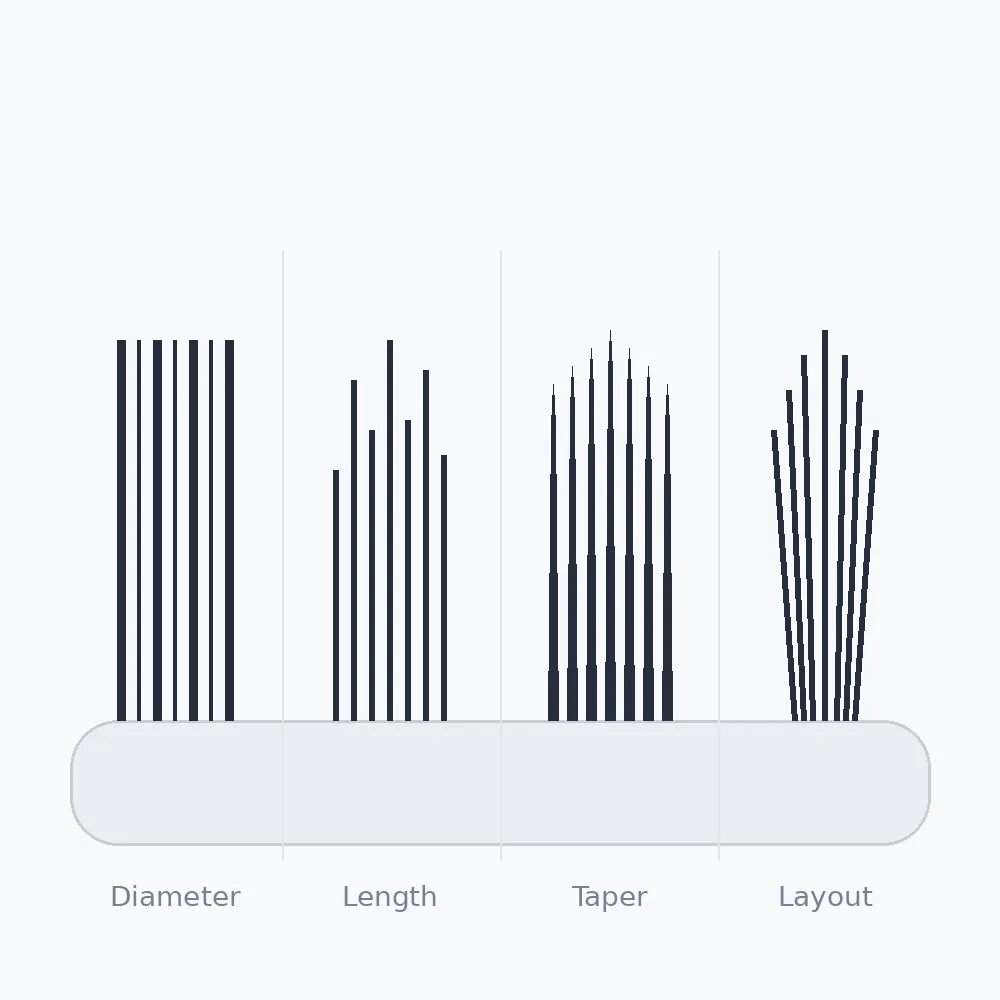
Perceived softness is not controlled by one parameter.
It can result from the combination of:
That is why two heads marketed as “soft” can feel different.
Instead of specifying only:
Soft
buyers should define or approve:
**Material
The consumer-facing product may still be described as “soft” or “ultra soft.”
The sourcing specification controls what those words mean for that specific product.
Filament diameter can influence:
It is therefore an important construction field.
But the same diameter does not guarantee the same finished feel.
Material, exposed length, tapering, tuft loading and trim profile can all change the result.
The supplier should identify the actual filament diameter, but buyers should treat it as one parameter within the complete construction rather than a standalone definition of softness.
Two heads can use the same filament material and diameter and still feel different.
The difference may come from:
For sourcing purposes, buyers should control the final bristle-field geometry through a drawing, specification or approved physical reference.
Material and diameter alone do not define the finished head.
A tapered filament narrows toward its free end.
Compared with a standard cylindrical filament, it can differ in:
Taper status should therefore be recorded as a separate construction field.
A tapered filament should not simply be treated as interchangeable with a non-tapered filament of similar nominal base diameter.
This is a sourcing distinction, not a claim that one design is clinically superior.
Color customization may include:
For a multi-zone head, “blue and white bristles” is incomplete.
It does not tell the supplier which tuft positions should be blue, which should be white or how the pattern should be oriented.
A stronger specification identifies:
For complex designs, use a top-view color map plus a written construction specification.
Decorative colored filament and functional indicator filament are not the same thing.
If indicator behavior is required, buyers should confirm:
If the color is decorative only, that should also be clear.
This prevents packaging or product claims from implying functionality that is not part of the actual filament construction.
A tuft is a group of filaments fixed at one location in the brush head.
Buyer-relevant variables can include:
Buyers do not need to define the factory’s machine settings.
They do need to define the finished construction well enough that the supplier can reproduce the approved head.
“High density” can describe several different constructions.
It may mean:
Two heads can therefore both be described as “high density” while being structurally different.
If density matters to the product, record the actual tuft layout and construction rather than relying only on the adjective.
More density should not automatically be interpreted as better quality or better performance.
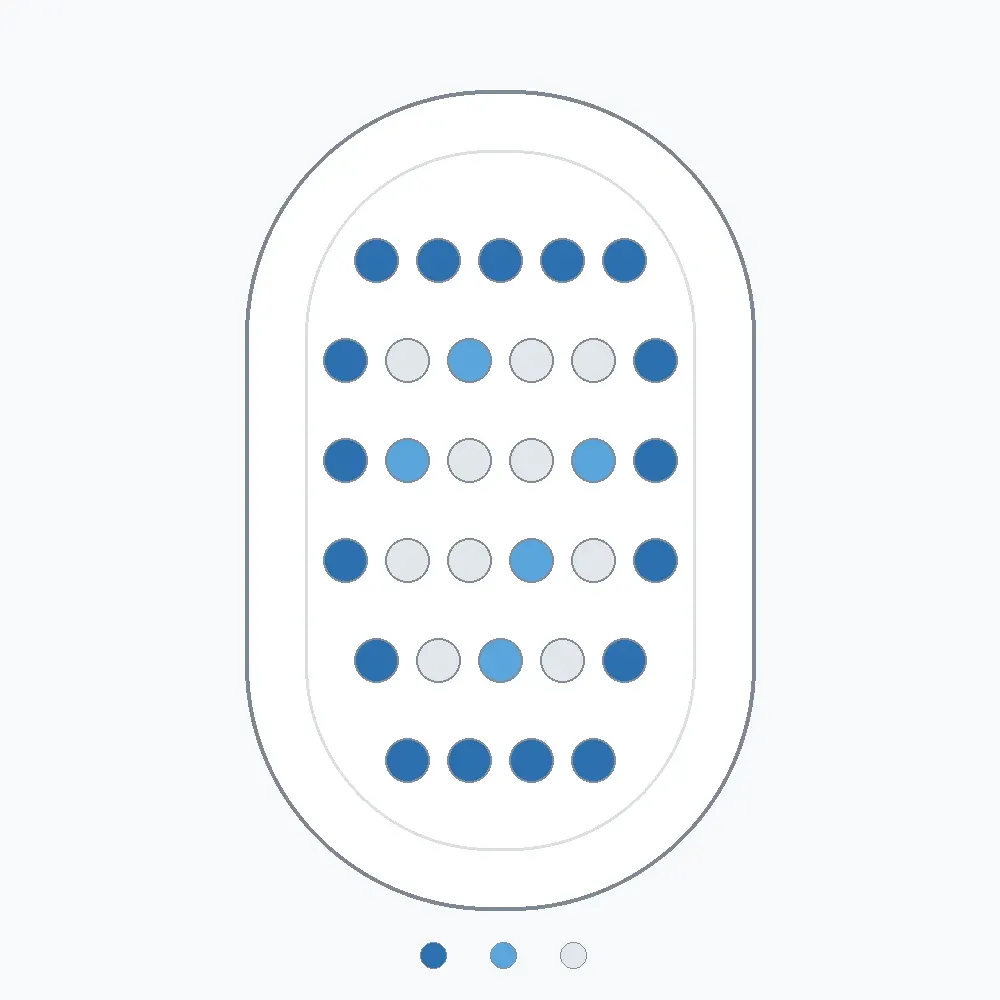
Brush-head layouts may contain:
The sourcing question is not which layout is “better.”
It is whether the factory can reproduce the approved layout consistently.
Useful controls include:
For complex brush heads, text alone is rarely enough.
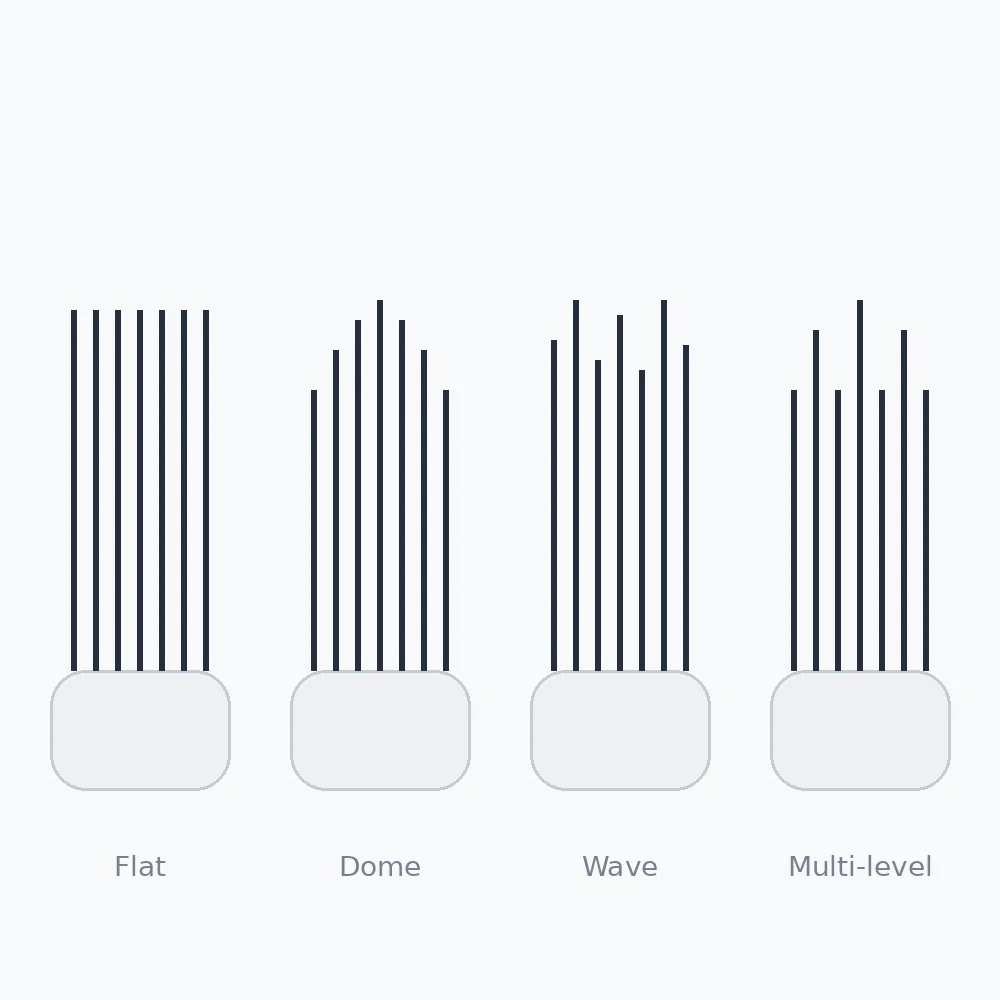
These two specifications should be separated.
Brush-head shape refers to the molded head geometry.
Trim profile refers to the final height and shape of the exposed bristle field.
Possible trim concepts may include:
Two heads using the same molded plastic body can still have different trim profiles.
Likewise, similar-looking trim profiles can sit on different molded head geometries.
The buyer should define the trim profile using a drawing, annotated image or approved physical sample rather than relying only on a descriptive name.
Some visual changes can be produced through:
without changing the molded plastic head.
Other requests may require:
The key question is:
Is this a trimming or tufting change on the existing head, or does it alter the molded tuft-hole geometry?
That distinction determines whether the request remains a production customization or moves into tooling development.
| Usually Determined by Molded Head Geometry | May Be Changeable Within Existing Head Geometry* |
|---|---|
| Tuft-hole position | Filament color |
| Tuft-hole diameter | Supported filament material |
| Tuft-hole angle | Supported filament diameter |
| Head outline | Certain tuft-loading choices |
| Neck geometry | Trim height |
| Handle-interface features | Trim profile |
| Elastomer-feature locations | Certain color/layout combinations |
| Major bristle-field footprint | Existing supported tufting combinations |
*Subject to supplier capability, existing head design, retention method and tufting equipment.
This distinction is not universal.
A filament-color change and a tuft-hole-position change are fundamentally different requests.
For a broader view of which customization requests can stay within existing tooling, see our guide to electric toothbrush OEM customization levels.
Depending on the existing head and production process, some changes may be possible without new brush-head tooling.
Examples may include:
These should not be assumed to be available on every head.
The supplier should confirm feasibility against the actual molded hole geometry, tufting method and equipment.
Requests that alter molded geometry may require mold modification or new tooling.
Examples include:
Not every change automatically requires a completely new mold.
Localized changes may sometimes be handled through tool modification, depending on the existing mold design.
The supplier should confirm whether the request can use the existing tool, requires modification or requires new tooling.
Conventional anchor or staple tufting mechanically retains filament bundles using an anchoring element.
Anchor-free production uses another retention concept without the conventional metal anchor.
Neither should automatically be described as safer, cleaner or superior.
For buyers, the important point is that tufting technology can affect:
Changing from one retention concept to another may therefore represent a platform-level manufacturing change rather than a simple filament substitution.
Some replacement heads contain non-filament features such as:
These may be:
They can affect:
If these features are part of the target design, identify their position and appearance separately from the bristle specification.
Two brush heads can use the same filament material and diameter while having different filament-end quality.
Filament selection, trimming and end finishing are separate parts of the manufacturing process.
End treatment should therefore be controlled as its own specification field.
ISO 20127:2025 addresses physical properties of powered toothbrushes, including relevant filament-end and retention considerations.
For the dedicated topic, see What End-Rounding Quality Means for Brush Head Safety.
Powered brush heads are subject to physical-property and retention requirements.
At buyer level, the useful questions are:
ISO 20126 covers manual toothbrushes and should not be treated as a substitute for powered-toothbrush requirements.
The relevant test evidence should be reviewed against the actual powered brush-head configuration being ordered.
A practical specification can include:
| Field | Why It Matters |
|---|---|
| Brush-Head Model | Identifies the purchased replacement head |
| Target Handle / Platform | Links the head to the intended toothbrush system |
| Head Geometry Reference | Identifies the approved molded head |
| Filament Material | Defines the filament material family |
| Filament Supplier / Series | Useful where controlled sourcing is required |
| Filament Diameter | Controls an important construction variable |
| Filament Color | Controls visible filament specification |
| Tapered / Non-Tapered | Identifies tip geometry |
| Tuft Count | Controls the main tuft construction |
| Tuft Layout | Identifies tuft positions and zones |
| Filaments per Tuft | Include where it is a controlled field |
| Trim Height | Controls exposed filament geometry |
| Trim Profile | Controls the final bristle-field shape |
| End Treatment | Identifies end-rounding or specialty-end condition |
| Indicator Filaments | Distinguishes functional indicators from decorative colors |
| Rubber / Elastomer Elements | Identifies non-filament features |
| Tufting Method | Include where relevant to head design/control |
| Packaging Configuration | Connects the head to the sellable SKU |
| Approved Sample Reference | Connects the written specification to a physical reference |
| Revision / Date | Controls later changes |
Not every project needs every field.
The goal is to control the finished brush-head construction, not to transfer unnecessary machine parameters into the buyer’s RFQ.
Complex tuft patterns should be controlled visually as well as in writing.
A visual construction reference may show:
For example:
“Blue and white high-density soft bristles”
still leaves many unanswered questions.
A top-view tuft map can show exactly which tufts are blue, which are white and how the zones are arranged.
This makes the specification much easier to reproduce and approve.
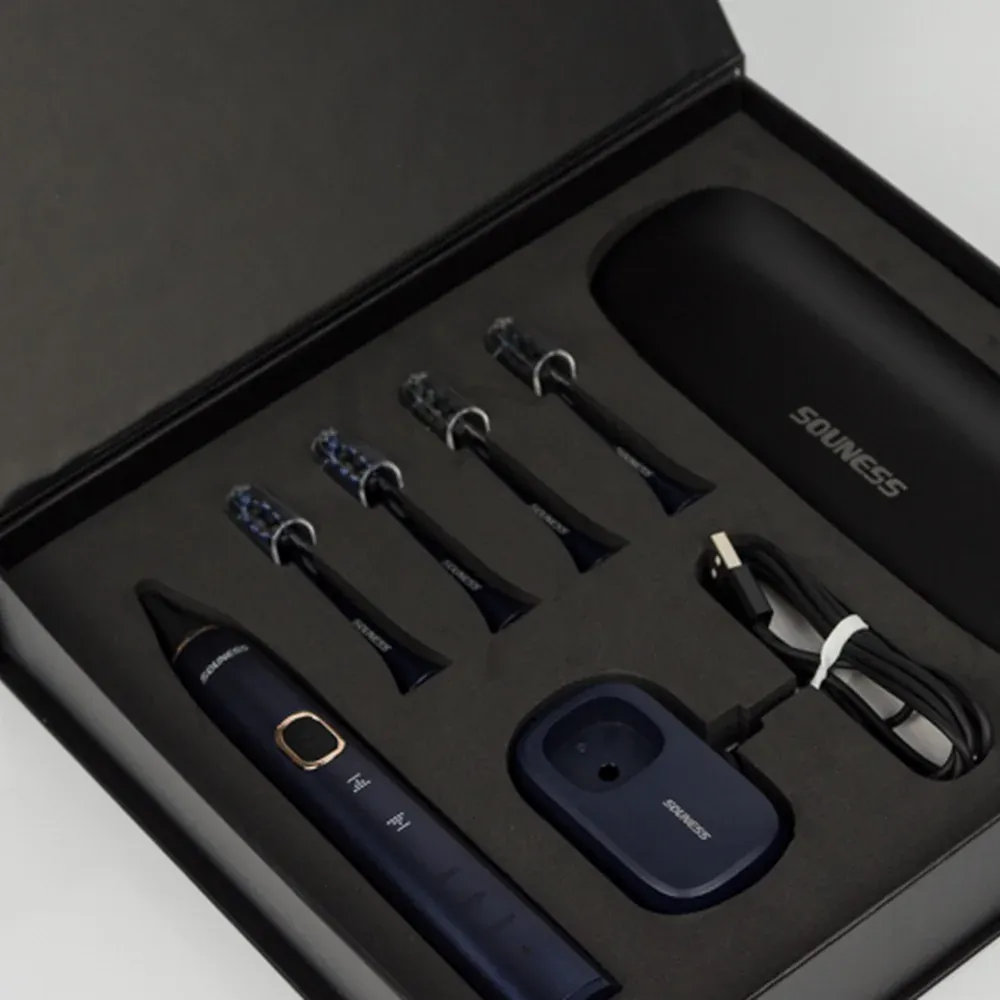
For bristle and tufting construction, buyers can review:
The sample should be identified by model, construction revision and date.
An identified physical sample plus a written specification is a stronger production reference than a product photo alone.
Bristle construction is only one part of approving a replacement head — handle fit, retention and the wider sourcing steps are covered in our replacement brush head sourcing checklist.
A repeat-order head may look similar while one or more construction details have changed.
Possible changes include:
Not every substitution requires complete redevelopment.
But a material or construction change should trigger a specification-impact review.
The buyer and supplier should determine whether the change affects:
For how these changes should be documented and notified across orders, see our guide to BOM and engineering change control.
Filament substitution is a useful example.
Two filament products within the same broad polymer family may differ in:
That does not mean supplier substitutions are automatically unacceptable.
The relevant question is whether the replacement still matches the approved specification and physical reference.
If equivalence is unclear, the change should be reviewed before repeat production.
Before approving a replacement-head construction, ask:
| Field | Buyer Input |
|---|---|
| Target Handle / Platform | Intended compatible toothbrush platform |
| Replacement-Head Model | Existing head or new development request |
| Target Market | Destination or customer program |
| Head Shape | Existing reference or desired geometry |
| Filament Material | Required material or preferred direction |
| Softness / Diameter | Approved reference or requested construction direction |
| Tapered / Non-Tapered | Required, optional or supplier recommendation |
| Filament Colors | Color references and zones |
| Tuft Layout | Top-view map or approved reference |
| Trim Profile | Flat, curved, wave, multi-level, angled or reference sample |
| Indicator Filaments | Required, decorative only or not required |
| Rubber / Elastomer Elements | Required features and locations |
| End Treatment | End-rounding or specialty-end requirement |
| Branding | Head marking, cap or packaging branding |
| Packaging | Refill pack, retail pack or other configuration |
| Must-Have Changes | Non-negotiable items |
| Optional Changes | Items that may remain standard |
| Existing Mold Acceptable? | Yes / no / subject to review |
| New Tooling Acceptable? | Yes / no / subject to quotation |
The buyer does not need to know every production parameter.
The important distinction is:
What must match
What can remain standard
Where supplier recommendation is acceptable
| Common Mistake | Better Approach |
|---|---|
| Specifying only “soft” | Define the construction and approved reference |
| Choosing filament only by brand name | Identify the actual filament series and construction |
| Assuming the same material means the same feel | Review diameter, free length, taper, tuft loading and trim |
| Approving only the color | Approve physical filament and layout |
| Using “high density” as the specification | Record the actual tuft construction |
| Changing tuft layout without checking molded holes | Confirm whether molded geometry changes |
| Assuming every bristle change avoids tooling | Confirm existing head and equipment capability |
| Confusing trim profile with head shape | Specify them separately |
| Assuming colored bristles are indicators | Confirm the actual indicator-filament construction |
| Approving only a product photo | Use written/visual specification plus a physical reference |
| Allowing filament substitution without review | Perform a specification-impact review |
Before ordering replacement brush heads, buyers should be able to identify:
The objective is not to make the RFQ unnecessarily technical.
It is to make sure the supplier and buyer are talking about the same physical brush-head construction.
If you are sourcing replacement electric toothbrush heads, define the filament construction, tuft layout and approved physical reference before repeat production instead of relying only on terms such as “soft,” “premium” or “high density.”
A useful specification can include the brush-head model, filament material, filament supplier or series where controlled, filament diameter, taper status, color and tuft positions, tuft layout, trim height and profile, end treatment and any indicator filaments.
The finished construction should also be connected to an identified physical sample or visual reference.
“Soft” alone does not define a repeatable manufacturing construction.
Perceived softness can depend on filament material, diameter, exposed length, tapering, tuft loading, trim profile and head geometry.
For OEM sourcing, the term should therefore be supported by defined construction fields and an approved physical sample.
No.
Diameter affects bending behavior and feel, but material, exposed length, tapering, tuft loading and trim profile also influence the finished brush head.
Diameter should be recorded as an important specification field, but it should not be used as the only definition of softness.
A filament is one individual synthetic strand.
A tuft is a group of filaments fixed at one location in the brush head.
The tufting pattern or tuft layout describes how those tuft positions are arranged across the head, including location, zones, color assignments and sometimes height or angle.
Often it may be possible because changing filament color does not necessarily change molded head geometry.
However, feasibility depends on the available filament, existing tuft layout, tufting process and supplier capability.
The color zoning should still be defined with a visual map or approved physical sample.
A tooling review becomes more likely when the requested layout changes molded features such as tuft-hole position, hole angle, bristle-field footprint, head outline or elastomer location.
Changes that only affect supported filament colors, loading or trim may sometimes remain within the existing head.
The supplier should confirm which case applies.
No.
Ordinary colored filaments may be used only for visual design.
Indicator filaments are specialized products intended to provide a visible change during use.
If indicator behavior is required, the supplier should identify the actual filament type and which tuft positions use it rather than assuming any colored bristle provides that function.