Start Your Electric Toothbrush Project
Tell us your product requirements and target market. We will review the details and reply with the relevant next steps.

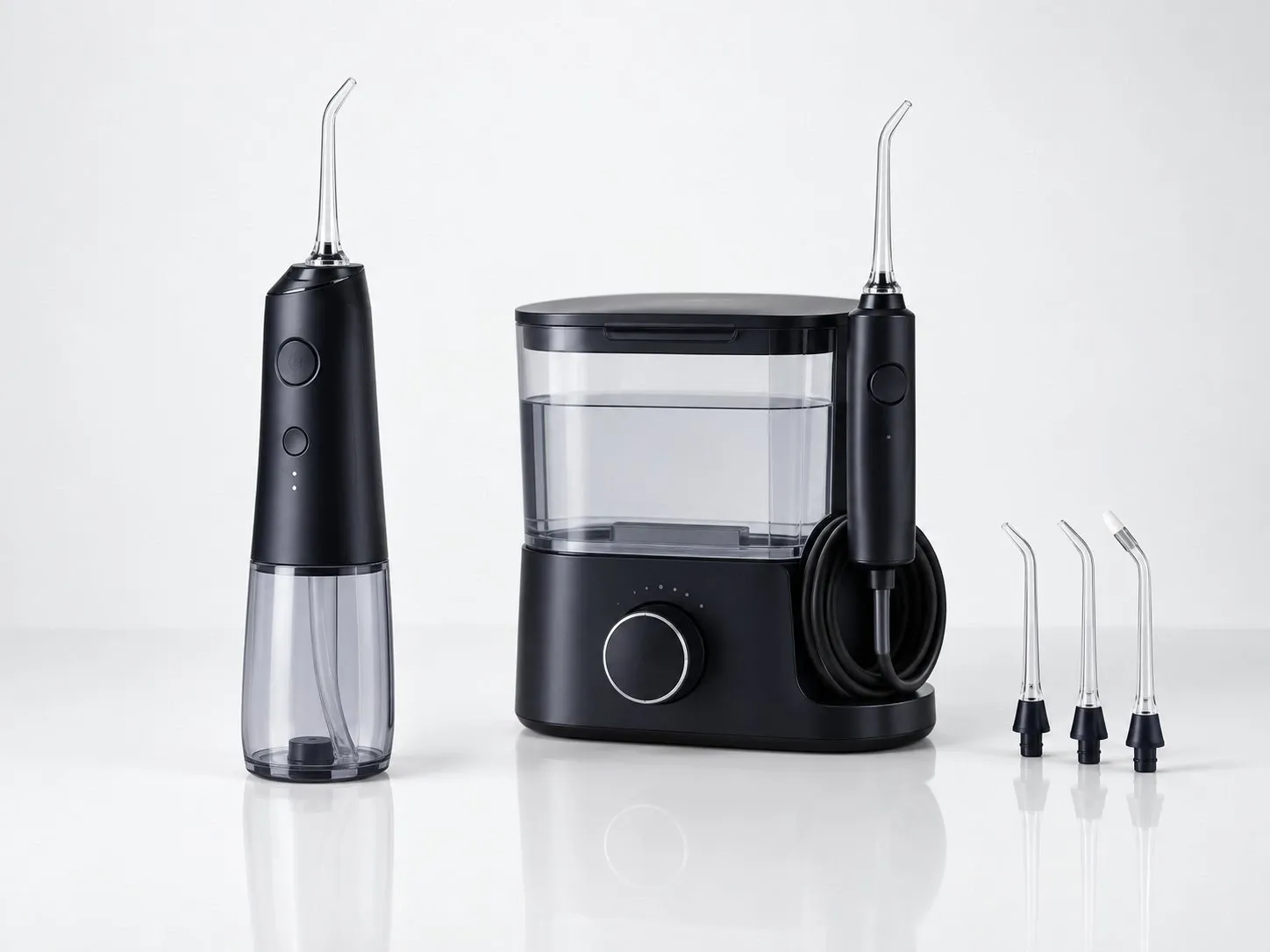
Two water flossers can both be listed as “300 mL, 5 modes, IPX7, USB charging” and still be very different products.
Behind the same feature list, they may differ in usable reservoir volume, water-output behavior, nozzle system, control logic, battery, charging input, accessory BOM, dimensions, materials, packaging and approved revision.
Before comparing quotations, buyers should define the complete product configuration.
That means aligning the platform, reservoir basis, output specifications, controls, nozzle system, charging scope, accessories, packaging and approved sample.
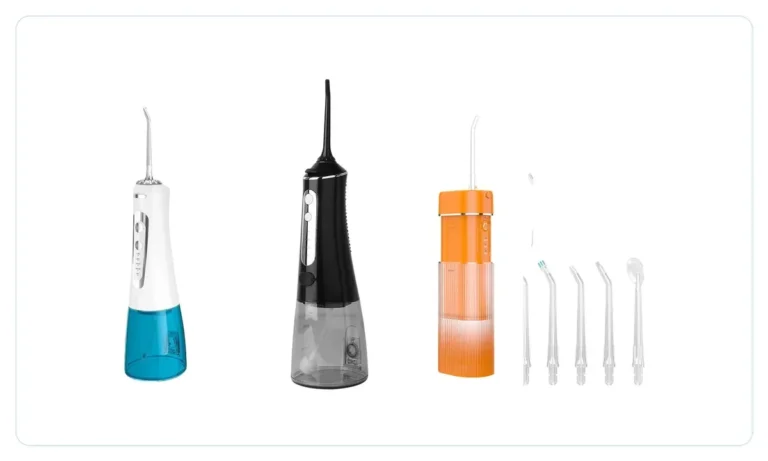
For sourcing purposes, water flossers can be grouped into several practical platform types:
This is a practical sourcing classification, not an official industry standard.
Platform choice affects:
Do not compare fundamentally different platforms as though the same mode count makes them equivalent.
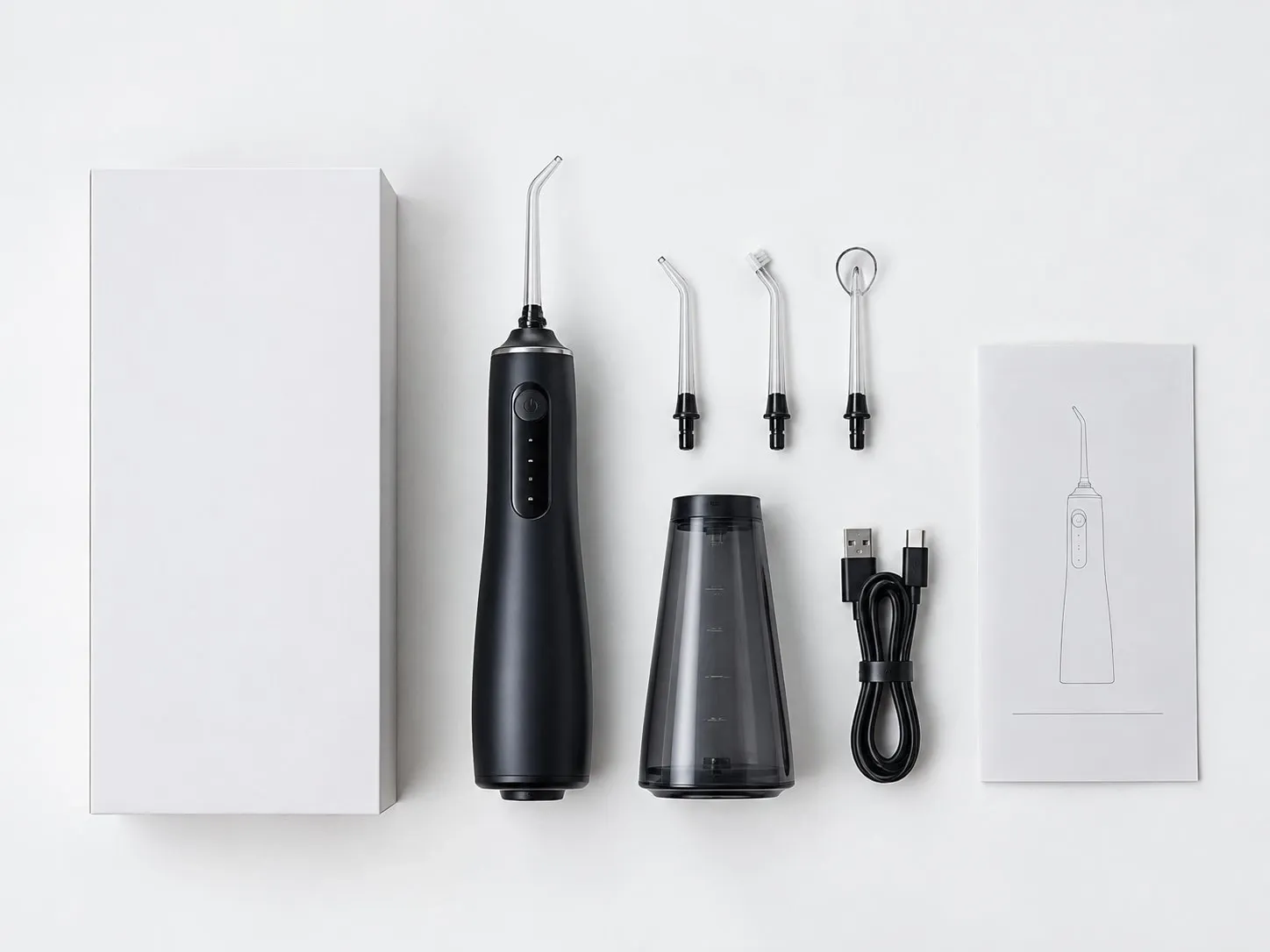
A supplier’s catalog page normally describes its standard or default model.
A buyer needs a controlled record of the exact configuration being quoted.
| Specification Area | What the Buyer Should Define |
|---|---|
| Product Identity | Supplier model, buyer SKU, revision, target market |
| Water System | Reservoir, fill method, intake, pump reference, water path |
| Output | Pressure and its basis, modes, pulse, flow where controlled |
| Controls | Buttons, control logic, memory, indicators |
| Nozzle System | Interface, retention, release, rotation, included tips |
| Power System | Battery, charging method and input, runtime claim |
| Mechanical Configuration | IP claim, dimensions, weight, materials, finish |
| Accessories | Cable, adapter, base, case, holder, manual |
| Packaging | Unit box, insert, accessory layout, master carton |
| Control Records | Approved sample, BOM references, documentation |
Once these fields are aligned, quotation comparison becomes much more meaningful.
A reservoir figure such as “300 mL” can represent different things.
It may refer to:
Duration per fill also depends on:
A larger reservoir does not automatically mean a longer operating session.
The useful buyer question is:
Is the stated reservoir value nominal, fill-line or verified usable capacity?
Reservoir architecture may include:
For the selected model, record:
Reservoir design affects more than convenience.
It can also influence sealing, product dimensions, packaging volume and the overall platform architecture.
At a high level, the water path can be understood as:
Reservoir → Intake → Pump → Tubing / Valve / Seal → Outlet → Nozzle Interface → Nozzle
Buyers do not need proprietary internal schematics for every sourcing project.
They do need to understand which water-path components are:
A visible tank specification does not define the complete water-output system.
Different water flosser platforms may use different motor-driven pump architectures.
However, for most B2B sourcing projects, the useful questions are not simply:
“What pump type does it use?”
More useful questions are:
Pump architecture can influence the product, but it does not by itself define final pressure, flow, pulse behavior or noise.
For most sourcing comparisons, verify the finished-product behavior first.
Water pressure may be expressed in PSI or kPa.
But a pressure number is only comparable when its measurement basis is understood.
Ask:
Higher pressure is not automatically better.
The useful sourcing question is whether two pressure claims describe the same type of measurement.
A pressure number is meaningful only when the measurement condition is defined.
Mode names such as:
are generally manufacturer-defined.
They are not standardized performance categories.
One supplier’s “Normal” mode may behave differently from another supplier’s “Normal” mode.
For each mode, record where relevant:
“Five modes” is a feature count, not a complete output specification.
These parameters are sometimes mixed together in supplier listings, but they describe different characteristics.
| Parameter | Buyer-Friendly Meaning | Typical Expression |
|---|---|---|
| Pressure | Force-related condition of the water jet | PSI / kPa |
| Flow Rate | Water volume delivered over time | mL/min or similar |
| Pulse Frequency | Repetition rate of pulsating output | Pulses/min, Hz or supplier term |
Two products with similar claimed pressure can still differ in:
Treat each parameter as a separate specification.
Suppliers may describe pulse-related values using terms such as:
These terms should not automatically be treated as equivalent.
Where pulse frequency matters, record:
Do not convert one supplier’s terminology into another unless the measurement basis is known.
Flow rate can help buyers understand:
But it becomes comparable only when the conditions are aligned.
Relevant conditions may include:
Not every sourcing project needs a controlled flow-rate target.
Treat it as a project-specific field where it materially affects platform selection or quotation comparison.
Output behavior may change with:
A single pressure or flow figure does not necessarily describe the entire operating session.
If output consistency is important to the project, define how it will be evaluated.
[Internal link: Water Flosser Testing & Reliability]
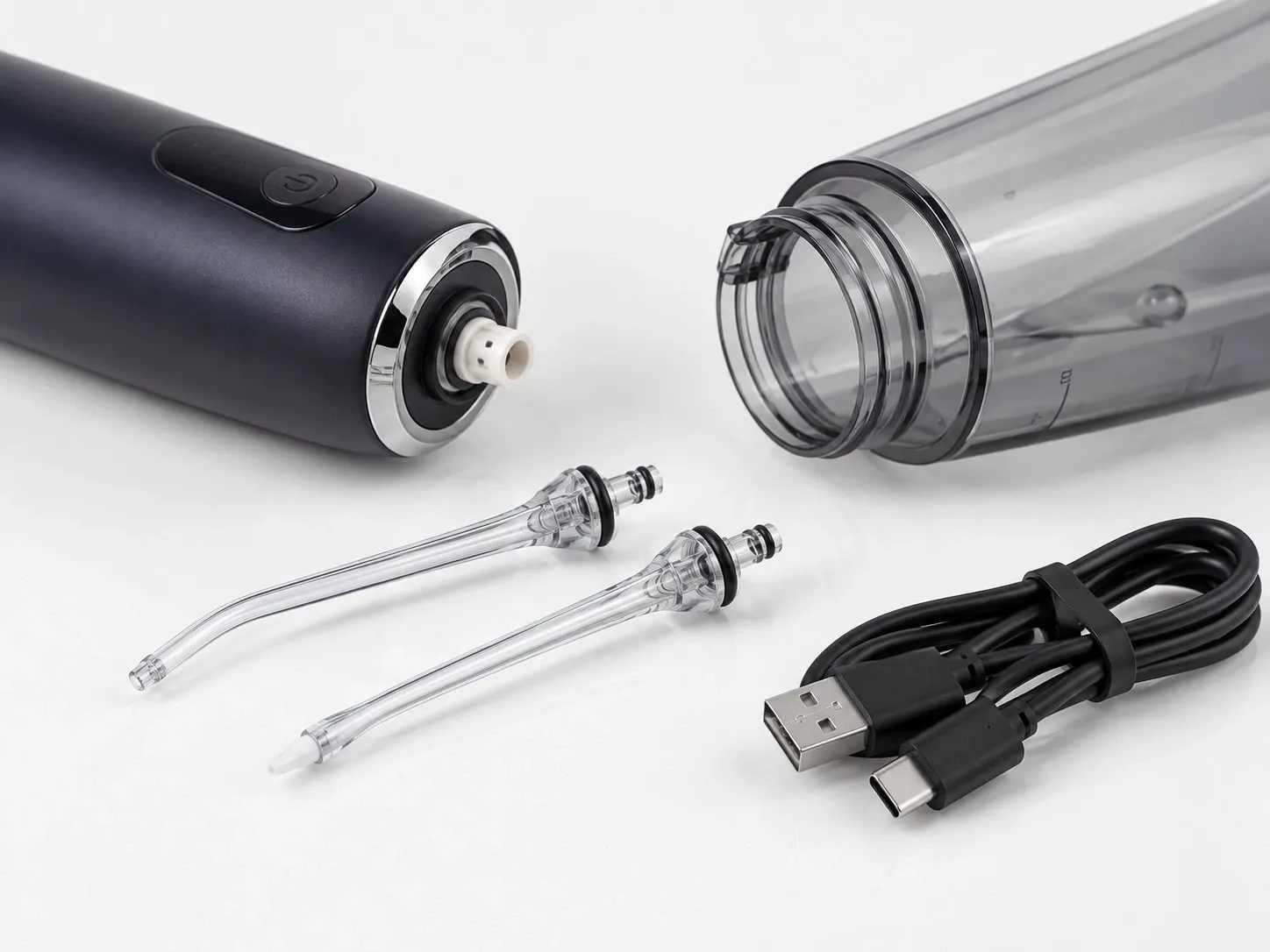
The nozzle is both a mechanical interface and part of the commercial product configuration.
Useful specification fields include:
Two suppliers both including four tips does not mean they are quoting the same nozzle system.
Nozzle configurations may be:
A 360° nozzle is not universally required.
Where rotation is part of the specification, confirm:
The key requirement is that the supplier’s stated configuration matches the approved sample.
Depending on the platform, nozzle interfaces may use:
Buyers should verify:
If nozzle retention is a controlled project requirement, agree on the verification method rather than copying an unsupported force figure from a generic catalog.
Nozzle quantity and type affect:
Some platforms may also offer different specialized nozzle configurations.
These should be treated as product configuration items rather than assumed to be equivalent.
Record the exact nozzle type and quantity in every quotation.
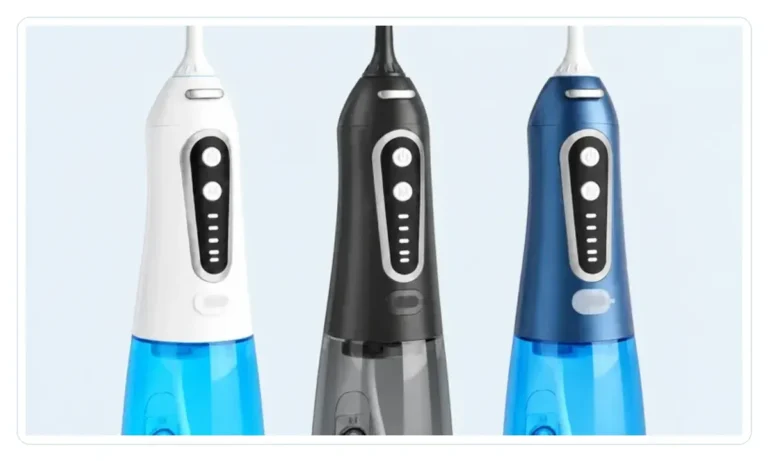
Water flosser controls may include:
The buyer should define where relevant:
Control logic is part of the product specification.
Two products with the same number of modes may still behave differently because of their control logic.
A water flosser may:
Do not assume which behavior applies.
Where relevant, record:
These details become especially important once the product is customized for a branded project.
Possible indicators include:
These are functional elements, not merely decorative details.
They should therefore be included in the approved product configuration where applicable.
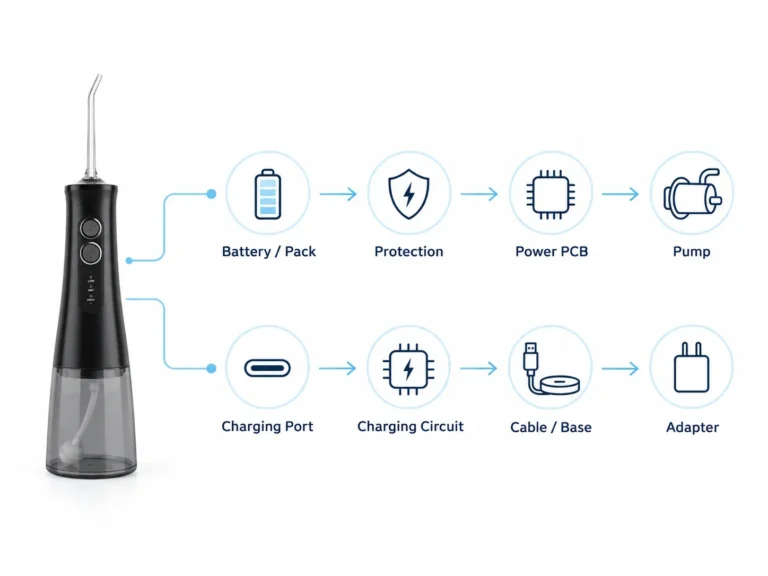
Battery capacity in mAh is only one input into total runtime.
Actual operating time can also depend on:
Do not compare two water flossers by battery capacity alone.
[Internal link: Water Flosser Battery & Charging Systems]
Runtime may be advertised as:
A statement such as “30 days” is incomplete without assumptions about:
For B2B comparison, ask for a runtime statement tied to defined operating conditions.
Possible charging configurations include:
The specification should distinguish:
A cable-only configuration and an adapter-included configuration have different:
USB-C describes a connector system. It does not automatically mean faster charging or a better platform for every project.
An IP rating describes enclosure protection under defined test conditions.
For example, IPX7 indicates a stated level of liquid-ingress protection, while the solid-ingress digit is not specified.
It should not automatically be interpreted as:
Buyers should confirm:
For dimensions, record where relevant:
Dimensions affect:
For weight, specify the basis:
Without a defined basis, two published weight figures may not be comparable.
A line such as:
“ABS + PC”
does not explain which component uses which material.
Where material identity matters, define the component scope:
For visible finish, record where relevant:
Motor and pump information may matter when:
But motor RPM alone does not define:
For most sourcing comparisons, finished-product output is more useful than an isolated motor-speed figure.
Depending on the product, possible protection functions may include:
Do not assume these functions are present.
Ask the supplier:
Any safety or protection claim should match the actual product configuration.
Possible accessories include:
Each item affects:
The same core product with a different accessory set is a different quotation.
Packaging fields may include:
These should be defined before final quotation rather than treated as an afterthought.
For packaging structure and buyer controls, see the Oral-Care Packaging Guide for OEM Projects.
A supplier spec sheet normally describes the supplier’s standard or catalog configuration.
A buyer spec sheet records the exact configuration approved for one project.
Once customization begins, these can diverge.
The buyer-approved version may differ in:
After customization begins, do not rely only on the supplier’s generic catalog page.
The buyer specification should become the reference for:
How much of the configuration the buyer defines and controls also depends on the development route. See OEM vs ODM for Oral-Care Products.
The same product parameter can appear in several types of records.
| Record Type | What It Tells the Buyer |
|---|---|
| Catalog Value | What the supplier markets |
| Engineering Nominal | What the design targets |
| Sample Observation | What the approved sample does |
| Test Result | What was measured under defined conditions |
| Production Requirement | What must remain controlled in production |
A catalog number is not automatically a production guarantee.
Buyers should understand which type of record supports each important specification.
A practical specification sheet can include:
| Field | Priority | What to Record |
|---|---|---|
| Model / Buyer SKU / Revision | Essential | Supplier model, buyer SKU, approved revision |
| Product Platform | Essential | Cordless, countertop, travel or collapsible |
| Reservoir Capacity | Essential | Value plus basis: nominal, fill-line or usable |
| Reservoir Type | Essential | Fixed, removable, slide-out, telescopic or external |
| Fill Method | Essential | Fill location, cap and seal |
| Pressure Range / Basis | Essential where claimed | Value, unit, mode and measurement condition |
| Pressure Levels / Modes | Essential | Mode names and output behavior |
| Pulse Frequency | Project-Specific | Supplier term, unit and mode condition |
| Flow Rate | Project-Specific | Value, mode, nozzle and measurement basis |
| Pump / Water-System Reference | Project-Specific | Controlled component reference |
| Nozzle Interface | Essential | Coupling type and compatibility |
| Nozzle Rotation | Essential where applicable | Range and behavior |
| Nozzle Retention / Release | Essential | Locking and removal method |
| Included Nozzles | Essential | Type and quantity |
| Controls | Essential | Layout, labels and sequence |
| Mode Memory | Essential where applicable | Power-on and memory behavior |
| Indicators / Display | Essential | LEDs, battery and charging indicators |
| Battery Type / Capacity | Essential | Chemistry, capacity and configuration |
| Charging Method | Essential | Connector, base, magnetic or inductive system |
| Charging Input | Essential | Input, cable, adapter and plug scope |
| Charging Time | Essential where claimed | Claimed time and condition |
| Runtime Claim | Essential | Claim plus usage assumptions |
| IP Rating | Essential where claimed | Rating, covered configuration and evidence |
| Dimensions | Essential | Measurement basis and storage/use size |
| Net Weight | Essential | Weight basis |
| Materials | Essential where relevant | Component-specific scope |
| Surface Finish | Essential | Color, finish and logo method |
| Accessories | Essential | Complete accessory BOM |
| Packaging | Essential | Unit box, insert, layout and carton |
| Approved Sample ID | Essential Before Production | Sample reference and revision |
| Applicable Documentation | Essential | Target-market/project documentation scope |
Not every engineering field needs to be mandatory for every project.
This distinction avoids both under-specification and unnecessary engineering overload.
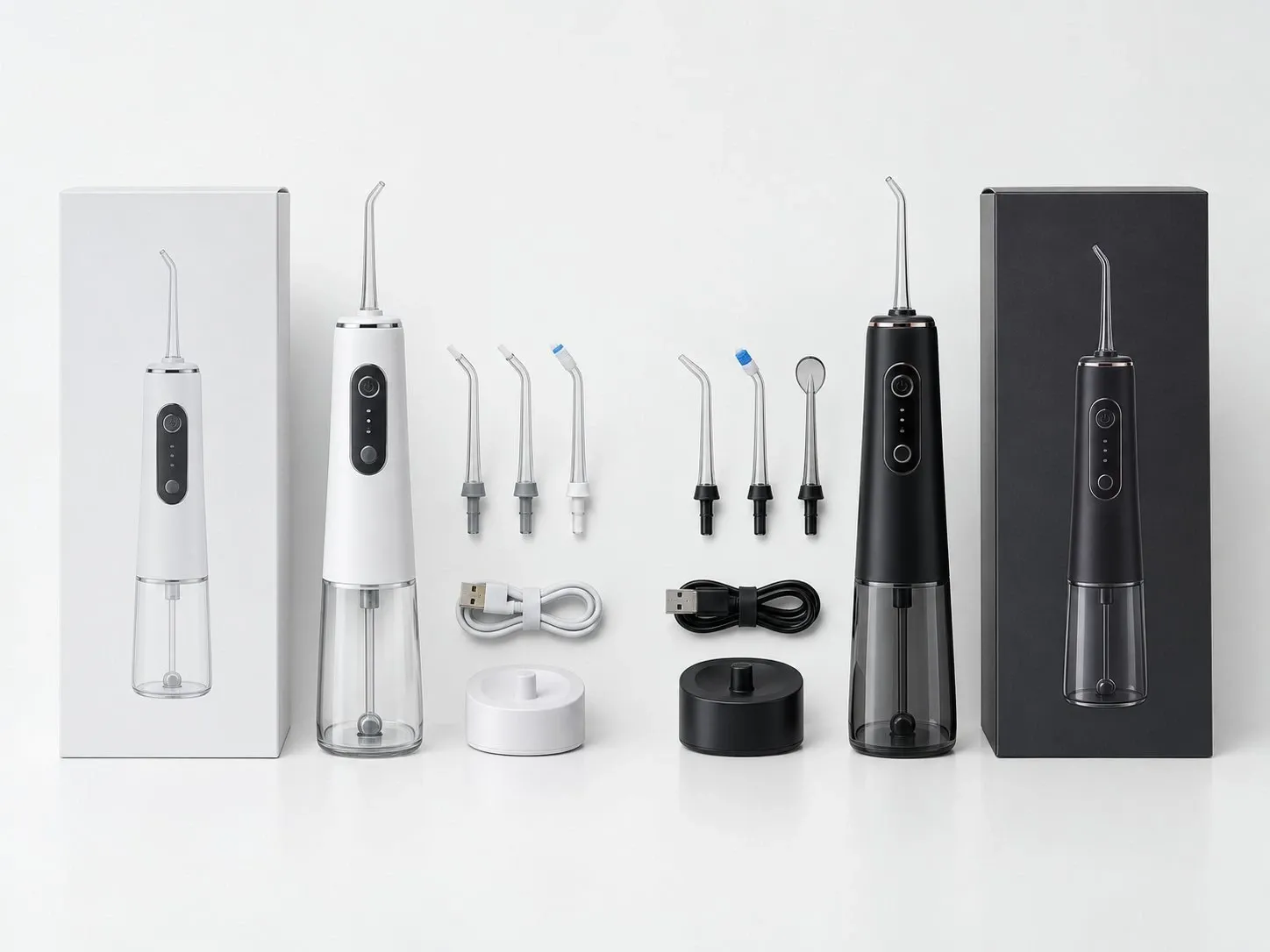
Before comparing prices, put each quotation into the same matrix.
| Comparison Field | Supplier A | Supplier B | Buyer Check |
|---|---|---|---|
| Platform | Same product architecture? | ||
| Reservoir | Same capacity basis and fill method? | ||
| Pressure / Modes | Same measurement basis and mode behavior? | ||
| Flow / Pulse | Same definitions and conditions? | ||
| Nozzle Interface | Same fit, release and rotation? | ||
| Included Nozzles | Same type and quantity? | ||
| Battery / Charging | Same battery, cable, adapter and input scope? | ||
| Runtime | Same stated operating conditions? | ||
| IP Claim | Same configuration and evidence? | ||
| Controls | Same buttons, memory and indicators? | ||
| Materials / Finish | Same component scope? | ||
| Accessories | Same BOM? | ||
| Packaging | Same box, insert and manual? | ||
| Documentation | Same target-market scope? | ||
| Quantity / Customization | Same order volume and customization scope? |
A lower quotation may simply reflect:
Compare the same configuration before comparing unit price.
Two product listings can both say:
and still differ in:
The marketing feature list does not define the complete product configuration.
A specification sheet defines what should be included.
A physical sample shows how that configuration actually behaves.
At sample stage, buyers can check:
This does not replace formal reliability or performance testing.
As a practical buyer-control step, confirm the production configuration before mass production starts.
Record:
This is a practical project-control method, not a formal industry-standard term.
It gives production, inspection and future orders a consistent reference. For how the approved sample and component list are controlled, see Golden Sample Approval for Oral-Care OEM Projects and BOM & Engineering Change Control.
A commercial product name may remain unchanged while internal or supplied components change.
Potential changes include:
Do not reorder only by commercial product name.
Reference the approved:
Any proposed substitution that could affect the approved product should receive a specification-impact review. Inspection at each order stage should then check against the same approved record. See Incoming, In-Process & Final Inspection for Oral-Care OEM Orders.
| Common Mistake | Better Approach |
|---|---|
| Comparing only mode count | Compare defined output behavior |
| Comparing only maximum pressure | Confirm the measurement basis |
| Treating pressure figures as directly comparable | Align test conditions first |
| Writing only “300 mL” | Define reservoir configuration and capacity basis |
| Ignoring the nozzle interface | Specify fit, release, rotation and replacement strategy |
| Assuming more modes means better | Compare actual control and output configuration |
| Using battery mAh as runtime | Define runtime conditions separately |
| Not defining cable and adapter | Include the charging accessory BOM |
| Comparing different nozzle sets | Normalize the accessory BOM |
| Treating IPX7 as universal waterproofing | Define the rating scope and evidence |
| Using the catalog page as the final specification | Create a buyer-approved specification |
| Approving a sample without a revision | Identify the model, revision and sample |
| Not freezing configuration before production | Record the approved configuration |
Before comparing water flosser quotations, define:
The objective is not to make every project unnecessarily technical.
It is to make sure Supplier A and Supplier B are quoting the same product configuration before price becomes the deciding factor.
If you are comparing water flosser platforms for OEM or private label sourcing, start by aligning the specification first and then compare the commercial terms.
For most projects, define the platform, reservoir, modes, controls, pressure claim where relevant, nozzle system, battery and charging configuration, runtime claim, waterproof claim, dimensions, accessories and packaging.
Also identify the supplier model and eventual approved revision.
Technical fields such as exact flow rate, pulse frequency or motor details can remain project-specific unless they are important to the product positioning or engineering requirement.
Not necessarily.
The stated value may refer to nominal tank volume, fill-line capacity or practically usable capacity.
Some water may remain in the system depending on tank geometry, intake position and operating orientation.
Duration per fill also depends on mode, flow and nozzle, so reservoir volume and operating time should be treated as separate specifications.
Compare pressure values only when their measurement basis is sufficiently aligned.
Confirm whether each figure represents minimum, maximum, peak or operating pressure, and identify the relevant mode, nozzle and operating condition.
Two identical PSI figures measured under different conditions may not be directly comparable.
Higher pressure also should not automatically be treated as better performance.
Pressure describes a force-related characteristic of the water jet.
Flow rate describes the volume of water delivered over time.
Pulse frequency describes how often the output pulses.
They are separate parameters. Two water flossers can have similar pressure claims while using different flow rates and pulse characteristics.
Not necessarily.
A mode may represent a fixed pressure level, a programmed output pattern or another manufacturer-defined operating behavior.
Names such as Soft, Normal or Pulse are not standardized industry categories.
Buyers should ask what each mode actually does rather than using the number of modes as the complete output specification.
Battery capacity is only one factor.
Pump load, selected mode, pressure level, power-management design, battery condition and usage assumptions also affect operating time.
Two products with similar battery capacities may therefore have different runtimes.
Compare a defined runtime claim under stated operating conditions rather than mAh alone.
IPX7 refers to a defined level of liquid-ingress protection under specified test conditions.
It should not automatically be interpreted as proof that every charging state, port-cover condition or immersion scenario is acceptable.
Buyers should confirm which finished product configuration the rating covers and what supporting evidence is available.
Accessories directly affect the BOM, packaging and documentation scope.
A quotation including two nozzles and a charging cable is not directly comparable with one that includes four nozzles, an adapter and a travel case, even if the core device is similar.
Normalize the accessory configuration before comparing unit price.
Yes, the specification should state whether an adapter is included.
If supplied, record the relevant plug and product configuration for the target market.
An adapter changes the BOM, packaging and potentially the applicable compliance scope.
“USB charging” by itself does not tell the buyer what is actually included.
A water flosser can keep the same commercial name while internal or supplied components change.
The pump, battery, firmware, nozzle, cable or packaging may be revised without changing the marketing name.
Referencing the approved model, revision and physical sample ties the repeat order to the configuration the buyer actually approved.