Start Your Electric Toothbrush Project
Tell us your product requirements and target market. We will review the details and reply with the relevant next steps.
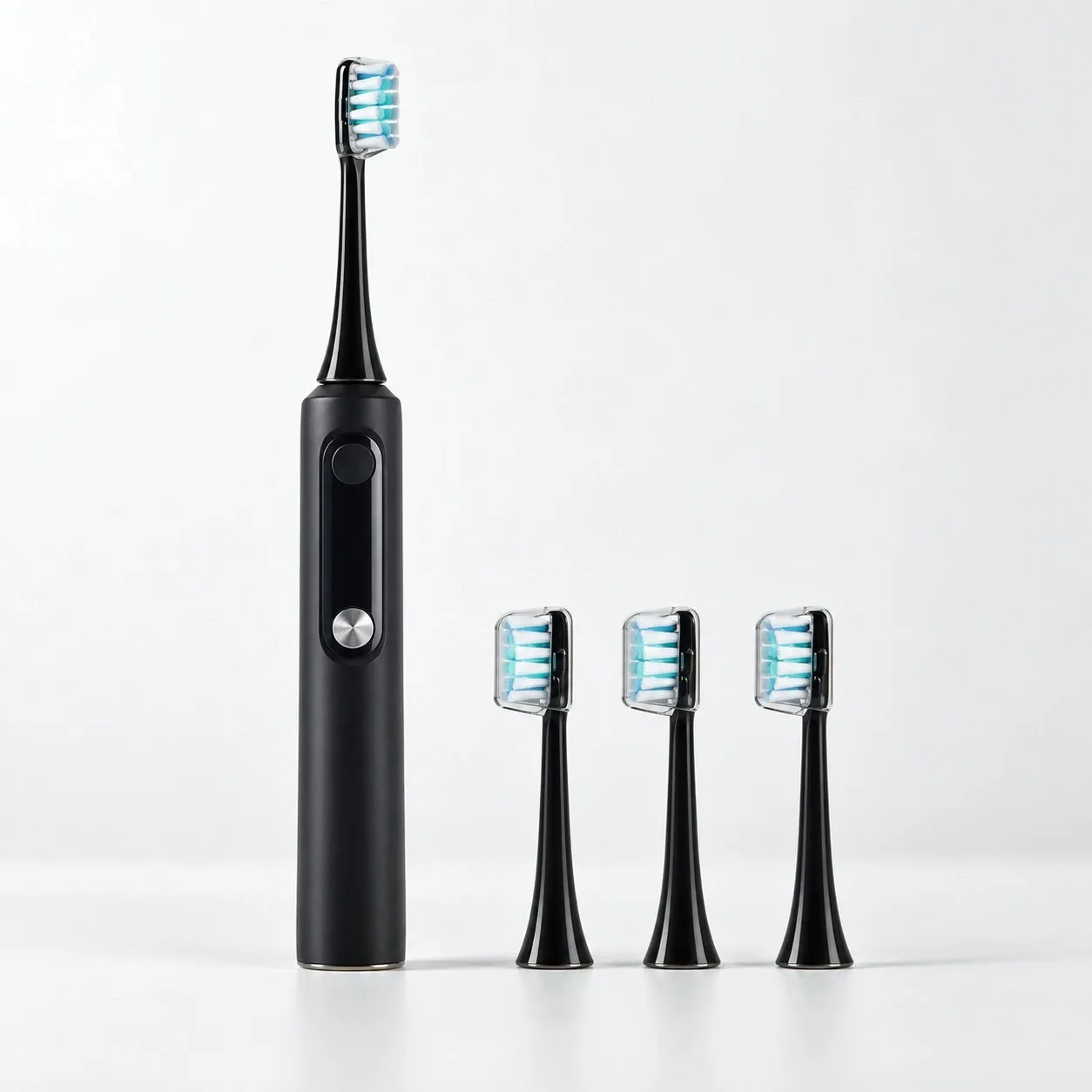
A replacement brush head is not fully compatible just because it slides onto the handle.
Before approving one for production, buyers should verify that it seats to the intended position, remains attached during operation, can be removed normally, does not show excessive play, transfers the intended movement and maintains the required clearance.
If the product will be marketed for several handle models, the same checks should also support every model or defined model family being claimed.
Compatibility should therefore be treated as a verified relationship between a specific brush-head revision and a specific handle model or platform, not simply as a visual match or supplier statement.
Replacement-head listings often use terms such as:
These may be useful commercial descriptions.
What they do not tell the buyer is how compatibility was established.
For example:
These questions matter when the same compatibility statement will later appear on packaging, marketplace listings or repeat orders.
Physical fit is only one layer of compatibility.
A practical buyer framework can separate compatibility into several checks:
| Compatibility Layer | Buyer Question |
|---|---|
| Geometric Compatibility | Can the head physically mount on the handle? |
| Seating Compatibility | Does it reach the intended stop or seating position? |
| Retention Compatibility | Does it remain securely attached during operation? |
| Removal Compatibility | Can it be removed normally without damage? |
| Motion-Transfer Compatibility | Does the drive system transmit the intended movement through the head? |
| Functional-Clearance Compatibility | Is there sufficient clearance between head, neck and handle during operation? |
| Durability Compatibility | Does the interface remain acceptable after relevant repeated mounting and use? |
There is also a broader question:
Model-Family Compatibility
Does the same result apply to every handle model the product actually claims?
A head that passes only geometric compatibility should not automatically be treated as fully compatible.
Mounting is where compatibility verification begins.
A brush head can physically fit in several incomplete ways.
For example:
A head can physically fit and still fail the compatibility requirement.
The buyer therefore needs to evaluate the complete head–handle relationship rather than only whether the head can be installed.
Powered toothbrushes do not all use the same head–handle interface.
At a high level, buyers may encounter:
Powered toothbrushes also use different movement architectures.
That means a replacement head should be evaluated against the actual drive and interface system of the target handle rather than assumed compatible because it resembles another head.
How the handle platform itself shapes these limits is covered in our electric toothbrush platform selection guide.
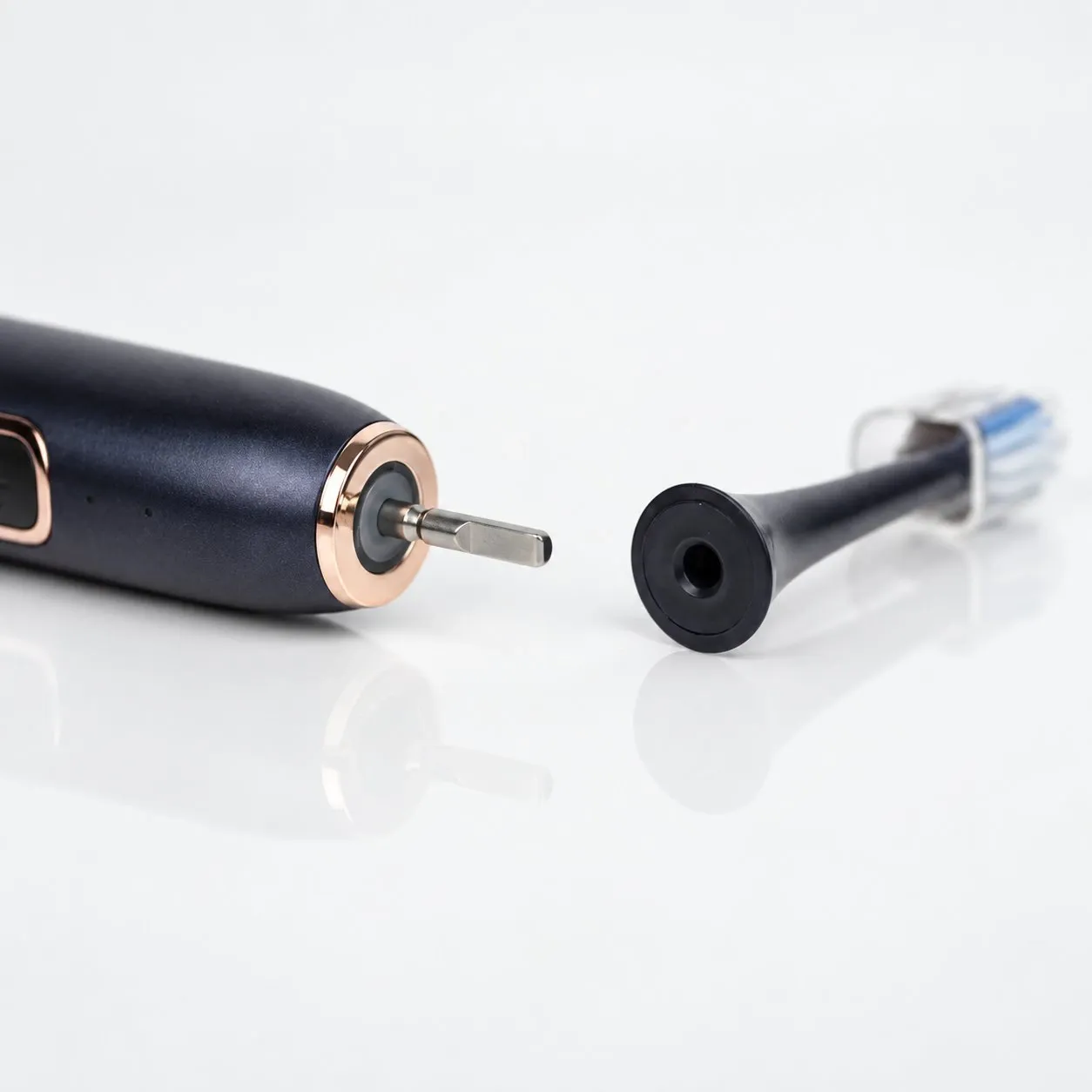
A shaft-mounted sonic interface may involve several interacting features:
For a successful fit, the head should:
Each of these can fail independently.
Shaft diameter alone does not define compatibility.
The supplier should confirm which exact handle interface the proposed replacement head is designed to match.
Oscillating or rotating systems rely on the correct drive coupling and movement path.
Buyer-relevant factors may include:
Because the drive engagement is partly internal, a head can appear to attach correctly while still failing to reproduce the intended movement.
Compatibility therefore needs to be confirmed functionally against the exact drive system.
External head shape alone is not enough.
Depending on the design, compatibility-critical dimensions may include:
No single dimension proves compatibility.
For example:
A correct shaft diameter with an incorrect stop position can still create a seating problem.
Correct seating with insufficient neck clearance can still cause rubbing.
The complete interface should therefore be treated as a system.
Compatibility depends on more than the nominal dimensions shown on a drawing.
Variation can come from:
Their combined effect can influence:
One well-fitting sample on one handle does not automatically prove compatibility across production.
Where the interface is molded, buyers should ask how compatibility-critical features are controlled during production as well as during sample approval.
A replacement head should install normally on the intended handle.
Excessive insertion resistance may lead to:
Too little resistance may indicate:
Neither tighter nor looser is automatically better.
The appropriate insertion behavior depends on the actual platform and should be compared with the approved handle–head reference.
Retention asks:
Does the head remain attached during operation?
Removal asks:
Can the user intentionally remove the head normally?
These are related but different requirements.
A head can stay securely attached while also being unnecessarily difficult to remove.
Likewise, a head that removes easily may not necessarily have sufficient retention during operation.
Buyers should evaluate both separately:
Several different retention concepts can appear in a powered brush head.
| Term | What It Refers To |
|---|---|
| Tuft Retention | Resistance of a filament bundle to pull-out from the brush-head body |
| Brush-Head Plate Retention | Retention of a plate or component within the powered brush-head assembly, where applicable |
| Whole Replacement-Head Retention | Ability of the complete detachable head to remain attached to the handle |
| Handle–Head Interface Retention | Retention created by the shaft, sleeve, locking feature or coupling geometry |
ISO 20127:2025 addresses physical properties of powered toothbrushes and includes tuft-retention and brush-head-plate-retention provisions.
Those concepts should not automatically be treated as one universal pull-off requirement for every complete detachable head-to-handle interface.
The buyer should ask:
Which retention requirement applies to which component, and does the available test evidence actually cover the mounting interface being ordered?
Bristle-side construction and tuft retention are covered separately here:
Bristle-side construction and tuft retention are covered separately in our guide to replacement brush head bristles and tufting.
Wobble or play refers to unwanted movement at the head–handle connection.
Possible causes include:
Buyer-level observations may include:
There is no single wobble value that should be applied to every toothbrush platform.
The appropriate comparison is the approved reference configuration and any agreed platform-specific acceptance criteria.
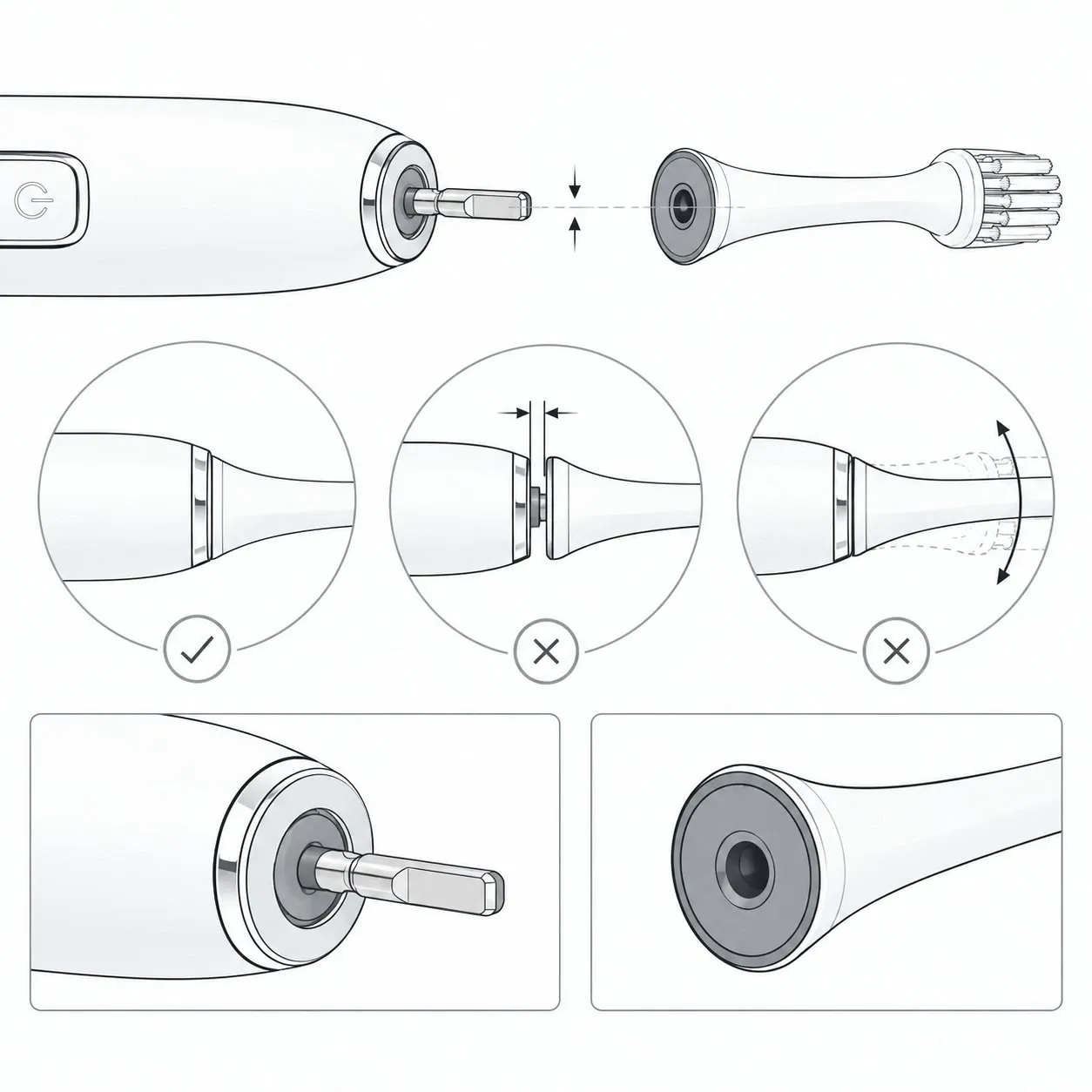
Seating depth is the position at which the brush head reaches its intended stop or engagement position on the handle.
If seating is incorrect:
“It goes on” is not the same as “it reaches the intended seating position.”
Seating should be checked against an approved reference handle and head combination.
Some powered toothbrush systems intentionally retain a visible gap between the replacement head and handle.
Depending on the design, the gap may support:
This is platform-specific.
Buyers should not assume that zero gap is always correct.
Instead, compare the sample with the approved reference:
A replacement head must do more than stay attached.
It also needs to receive and transfer the handle’s intended movement correctly.
Potential problems may include:
After mounting the head, a buyer-level functional check can confirm:
This is a functional compatibility check.
It is not a cleaning-performance evaluation.
Replacement heads are designed to be installed and removed during the product lifecycle.
Repeated mounting, removal and operation may affect components such as:
Possible changes may include:
There is no universal cycle count that applies to every project.
Where repeated-fit testing is relevant, the buyer and supplier should define:
Repeated-use evaluation sits alongside the wider verification work described in our guide to electric toothbrush reliability testing.
Head–handle interface parts may use molded plastics, elastomers, metal surfaces or inserts.
Buyer-relevant material properties may include:
A resin name by itself does not prove compatibility.
The buyer should control the approved construction, interface geometry and verified functional result on the intended handle.
Molded interface dimensions can be influenced by factors such as:
This does not mean compatibility variation is inevitable.
It means one approval sample should not automatically be assumed to represent every future part.
Compatibility-critical geometry may need both:
Dimensional Control
and
Functional Fit Verification
The buyer should understand how the supplier controls these features during production.
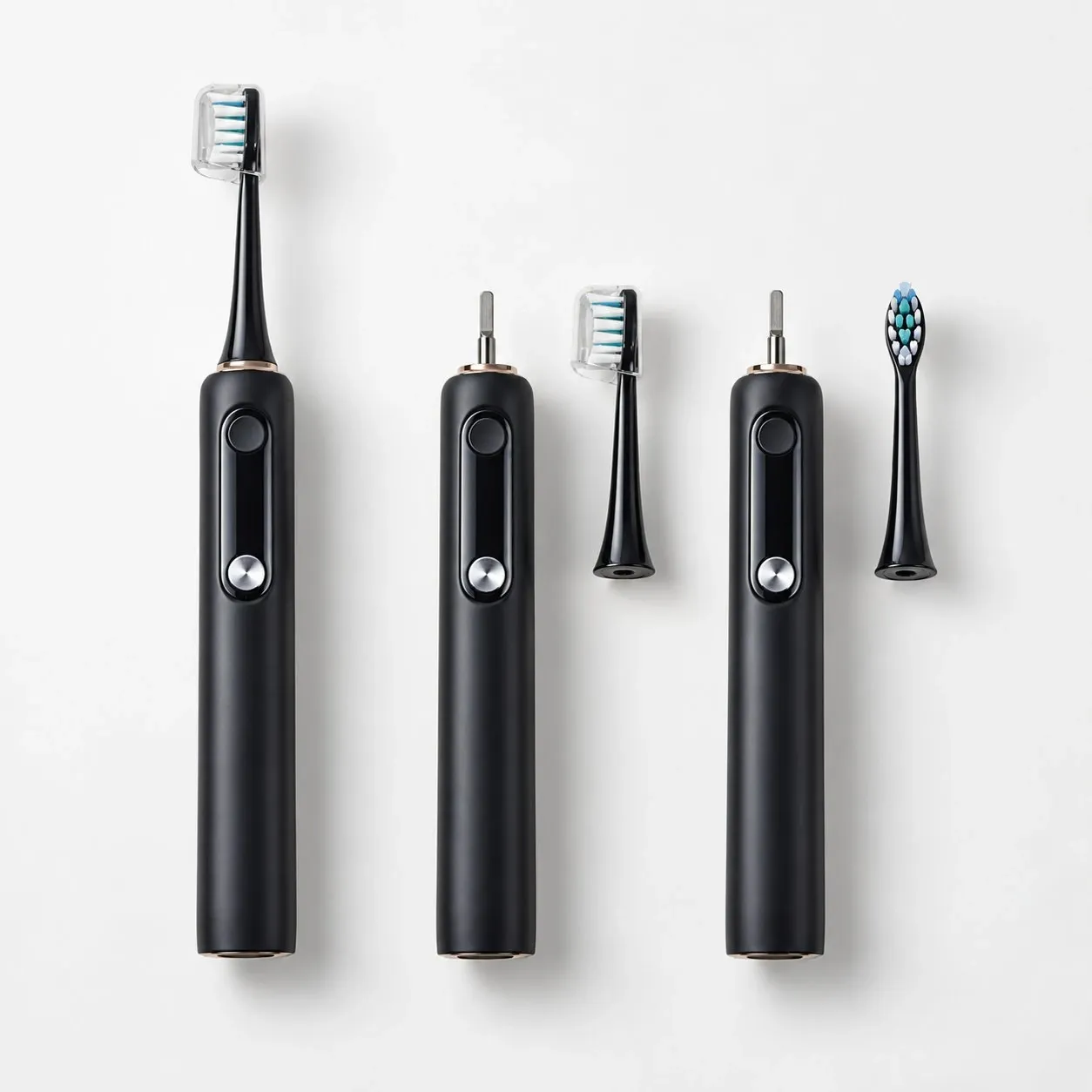
A single replacement head may legitimately work with several handle models.
The problem begins when that compatibility is extended from one tested handle to other models based only on appearance or family name.
Visually similar handles may differ in:
The safer sourcing approach is to define an exact model list or model family and verify compatibility against that scope.
A compatibility matrix helps control multi-model projects.
| Platform | Exact Handle Model | Generation / Revision | Market | Sample Tested? | Fit | Retention | Removal | Motion | Approved? | Notes |
|---|---|---|---|---|---|---|---|---|---|---|
| Platform A | Model A-01 | Rev. 2 | US | Yes | Accepted | Accepted | Accepted | Accepted | Yes | Reference retained |
| Platform A | Model A-02 | Rev. 1 | EU | Yes | Review Required | Pending | Pending | Pending | No | Neck clearance differs |
| Platform B | Model B-01 | Rev. 1 | UK | Yes | Rejected | — | — | — | No | Coupling geometry differs |
These rows are examples only.
The value of the matrix is that it makes clear:
This is much more controlled than a broad statement such as “fits the entire series.”
A consumer-facing model name may cover more than one hardware configuration.
Depending on the project, useful identification may include:
Not every project needs this level of identification.
A buyer sourcing replacement heads for its own controlled handle platform may already know the exact interface.
Third-party and multi-model compatibility projects usually require more careful model identification.
“Universal” does not necessarily mean compatible with every electric toothbrush.
It may mean compatible across:
The buyer should therefore ask:
Universal within which platform family, exact model list and generation range?
Packaging and listings should remain within the compatibility scope actually verified.
Physical handles can be especially useful when:
Photos and measurements can support early evaluation.
But final compatibility questions such as seating, retention, removal, wobble, clearance and motion transfer are physical and functional.
An interface may be evaluated using:
Buyers do not need to provide proprietary technical drawings they do not own.
Digital geometry helps define and discuss the interface.
Physical reference testing confirms whether the manufactured head actually works with the target handle.
The two methods support different parts of the verification process.
A retained reference handle provides a stable basis for sample approval and repeat orders.
A simple record may include:
This does not need to become a complicated control system.
The important point is simply that the compatibility approval identifies which physical handle was used.
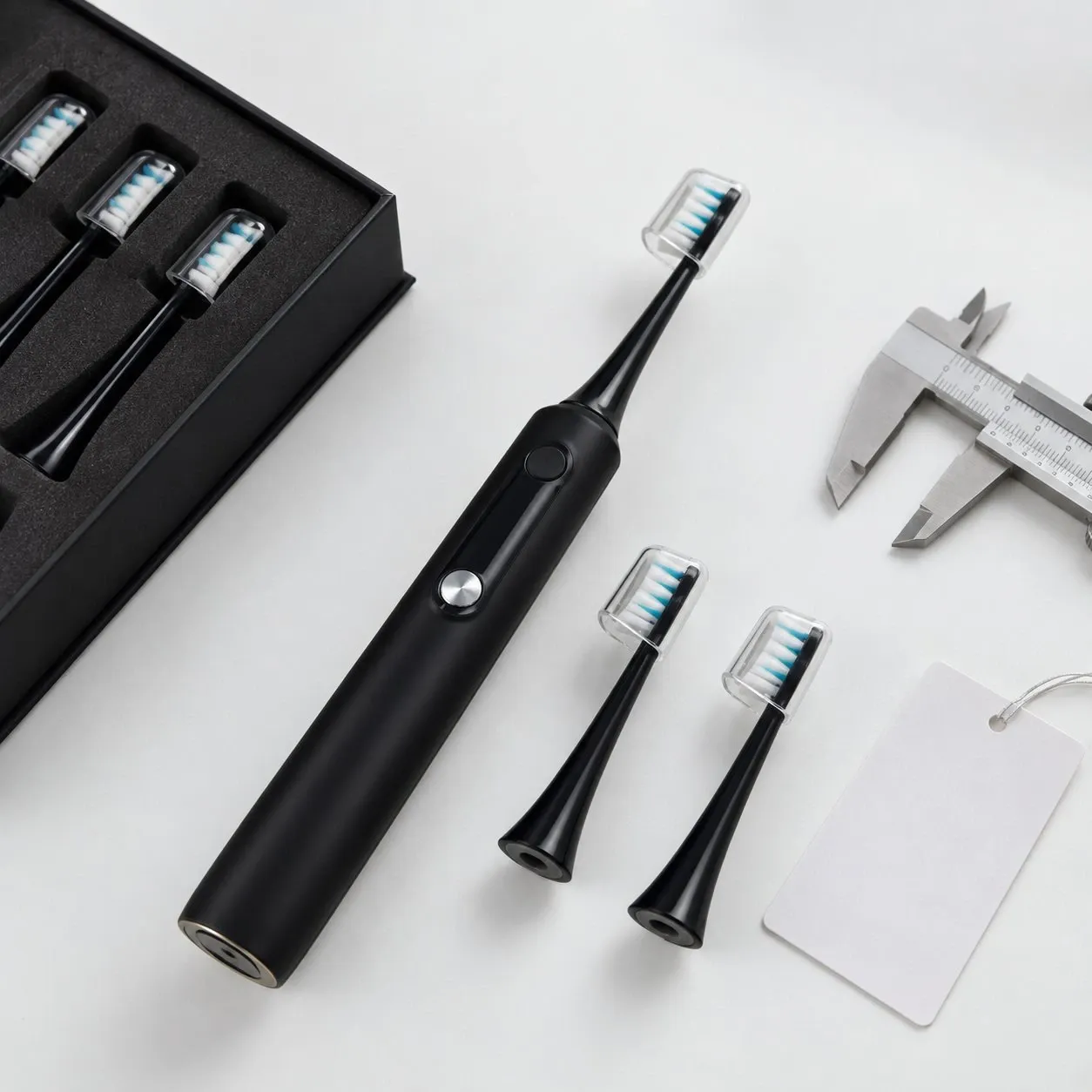
For a practical replacement-head compatibility review, confirm that the sample:
Where repeated-fit testing is part of the project, also confirm that the interface remains acceptable afterward.
This is a compatibility review, not a complete product reliability test.
A photo can show:
It cannot confirm:
Visual similarity is not compatibility evidence.
Photos can help identify obvious differences.
Final compatibility should be demonstrated using the intended reference handle or handles.
For important compatibility projects, the approved reference should identify both sides of the interface.
A simple record can include:
This complements the wider approved-sample system.
This complements the wider approved-sample system described in our guide to golden sample approval for oral-care OEM projects.
Compatibility may change after approval if the product or process changes.
Potential triggers include:
Not every change requires complete requalification.
But a compatibility-critical change should trigger an impact review.
Ask:
Could this change affect:
If the answer is yes or unclear, verify the revised configuration before production release.
How these changes should be documented and notified across orders is covered in our guide to BOM and engineering change control.
| Check | Main Question |
|---|---|
| Dimensional Inspection | Are compatibility-critical geometry features within the defined specification? |
| Functional Fit Check | Does the head actually install, seat, retain, remove and function on the intended handle? |
Both may be useful.
Dimensional inspection helps control the manufactured geometry.
Functional fit testing verifies the actual assembled relationship.
Neither automatically replaces the other.
A supplier may also use tools such as go/no-go gauges to control certain interface features in production.
The buyer does not need to design these controls, but should understand how compatibility-critical geometry is being monitored.
Where these checks sit within the wider order is covered in our guide to incoming, in-process and final inspection.
Replacement-head packaging may use wording such as:
The model list should match the scope actually verified.
If the packaging names several models, the compatibility record should support those models or clearly defined model families.
Brand and model-reference wording may also require separate review for the destination market and sales channel.
This article does not provide trademark or legal approval.
The sourcing principle is simpler:
The claim should not be broader than the compatibility evidence behind it.
A simple compatibility record can support sample approval, packaging development and repeat orders.
| Field | Purpose |
|---|---|
| Brush-Head Model | Identifies the head product |
| Brush-Head Revision | Identifies the approved geometry and construction |
| Target Platform | Identifies the compatibility family |
| Exact Handle Model | Prevents overly broad compatibility assumptions |
| Generation / Revision | Distinguishes similar-looking handle versions |
| Market | Records regional variation where relevant |
| Reference-Handle ID | Links the evaluation to a physical handle |
| Fit Result | Records whether the head mounts |
| Seating Result | Records intended depth, stop and gap condition |
| Retention Result | Records secure attachment outcome |
| Removal Result | Records normal intentional removal |
| Wobble / Play Observation | Records mechanical-fit observations |
| Motion-Transfer Result | Records functional operation |
| Repeated-Fit Test Reference | Links repeated-use review where applicable |
| Approved Sample ID | Identifies the approved physical head |
| Date / Notes | Supports repeat-order traceability |
This is particularly useful for:
| Common Mistake | Better Approach |
|---|---|
| Accepting “compatible” without an exact model list | Define the exact handle models or families |
| Approving from product photos | Verify physically on a reference handle |
| Checking only whether the head slides on | Verify seating, retention, removal and motion |
| Ignoring removal behavior | Evaluate removal separately from retention |
| Ignoring motion transfer | Perform a mounted functional check |
| Testing one model while claiming several | Build a compatibility matrix |
| Assuming similar-looking handles share an interface | Confirm exact model and generation |
| Relying only on shaft diameter | Review the complete interface |
| Keeping no reference handle | Identify a controlled reference where practical |
| Approving an unidentified sample | Record brush-head revision and Sample ID |
| Changing mold or material after approval without review | Trigger a compatibility-impact review |
| Packaging claims broader than available evidence | Match claims to the verified model list |
| Treating “universal” literally | Define the exact platform family and model range |
Before placing a replacement-head order, buyers should be able to identify:
Compatibility is only one part of replacement-head sourcing.
Bristle construction, packaging, sample approval and repeat-order controls also need to remain aligned with the final product.
The full set of sourcing steps around the head is covered in our replacement brush head sourcing checklist.
If you are sourcing replacement heads for your own electric toothbrush platform or for a defined compatible model family, start with the exact handle list and verify the physical head–handle relationship before production.
For OEM sourcing, compatibility should mean that a specific brush-head revision has been verified against a specific handle model or defined family.
The review may include mounting, seating, retention, normal removal, clearance and motion transfer.
Simply stating that the head can physically attach does not fully define compatibility.
Not necessarily.
Sliding onto the shaft only confirms basic geometric fit.
The head may still fail to reach its intended seating position, transfer movement correctly, maintain suitable clearance or remain stable during operation.
It may also be too difficult to remove.
Physical mounting is therefore the first compatibility check, not the final one.
Tuft retention refers to filament bundles remaining secured in the brush-head body.
Whole replacement-head retention refers to the complete detachable brush head remaining attached to the toothbrush handle.
They involve different parts of the product and should not be treated as interchangeable test results.
The head may attach externally while its internal engagement is incorrect.
Possible causes include incomplete seating, excess clearance, incorrect coupling geometry, interface deformation or drive mismatch.
That is why sample approval should include a functional check after installation rather than relying only on whether the head can be mounted.
Not necessarily.
Some systems intentionally include a visible gap for movement clearance, mechanical allowance or product design.
The correct comparison is the approved reference configuration: whether the head reaches its intended seating position, whether the gap is consistent and whether there is any unwanted contact during operation.
Yes.
One replacement head may work across several handles that share a compatible interface.
However, the model list should be verified rather than assumed.
Similar-looking handles can differ by generation, shaft geometry, locking feature, drive system or regional revision.
A compatibility matrix can help control which models are actually approved.
Consumer-facing product names can sometimes cover several hardware revisions or regional versions.
For third-party or multi-model compatibility projects, identifying the exact model, generation and market helps ensure that the compatibility claim refers to the handle actually tested.
Where needed, a physical reference handle provides an even clearer approval basis.