Start Your Electric Toothbrush Project
Tell us your product requirements and target market. We will review the details and reply with the relevant next steps.
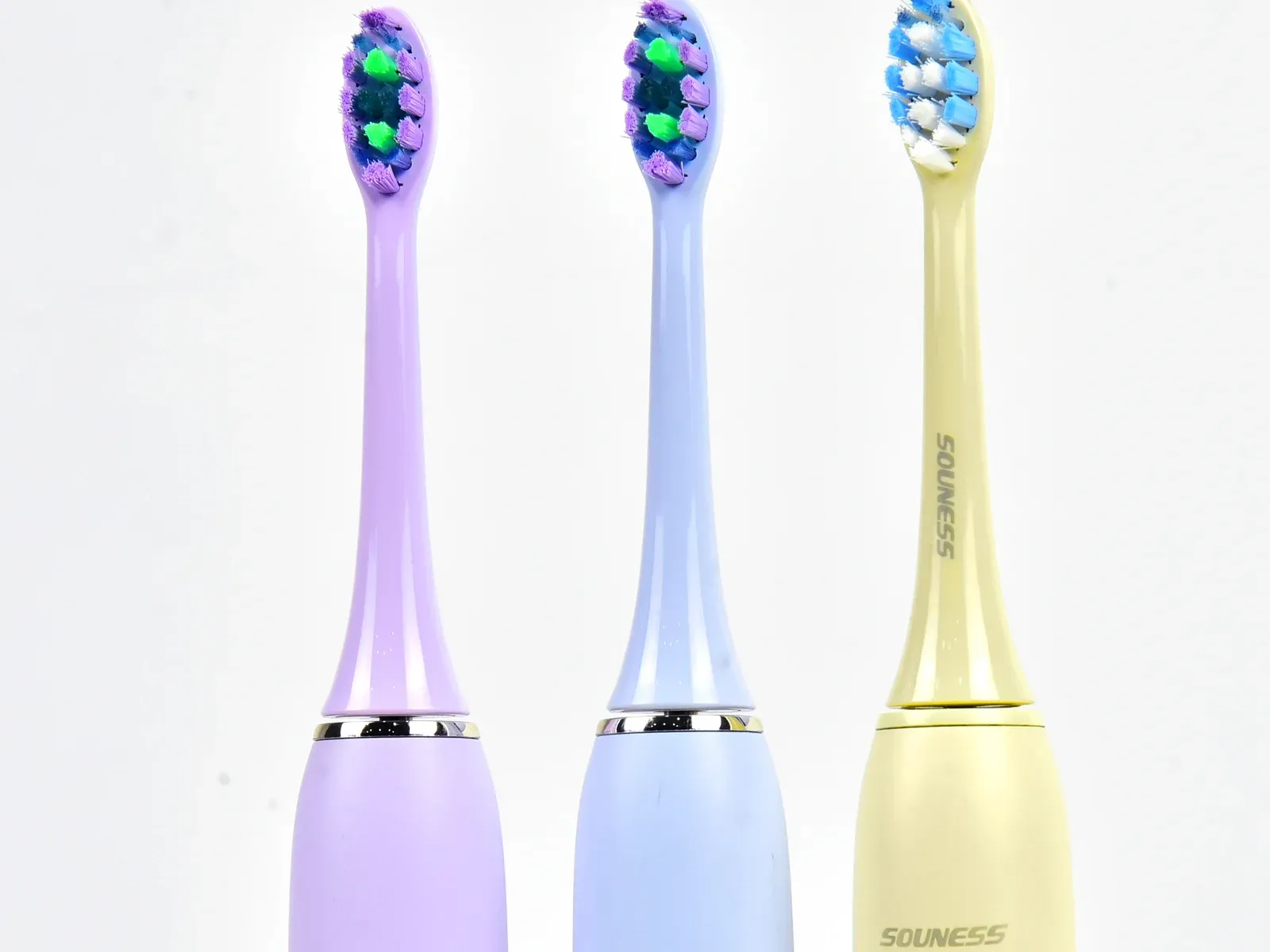
Most projects begin from a selected product platform. From there, branding, appearance, configuration and deeper product changes can be discussed.
Not every requested change follows the same route. Changes to functions, components, product structure or interfaces may require engineering or development review. Customization options depend on the selected product platform and confirmed project requirements.
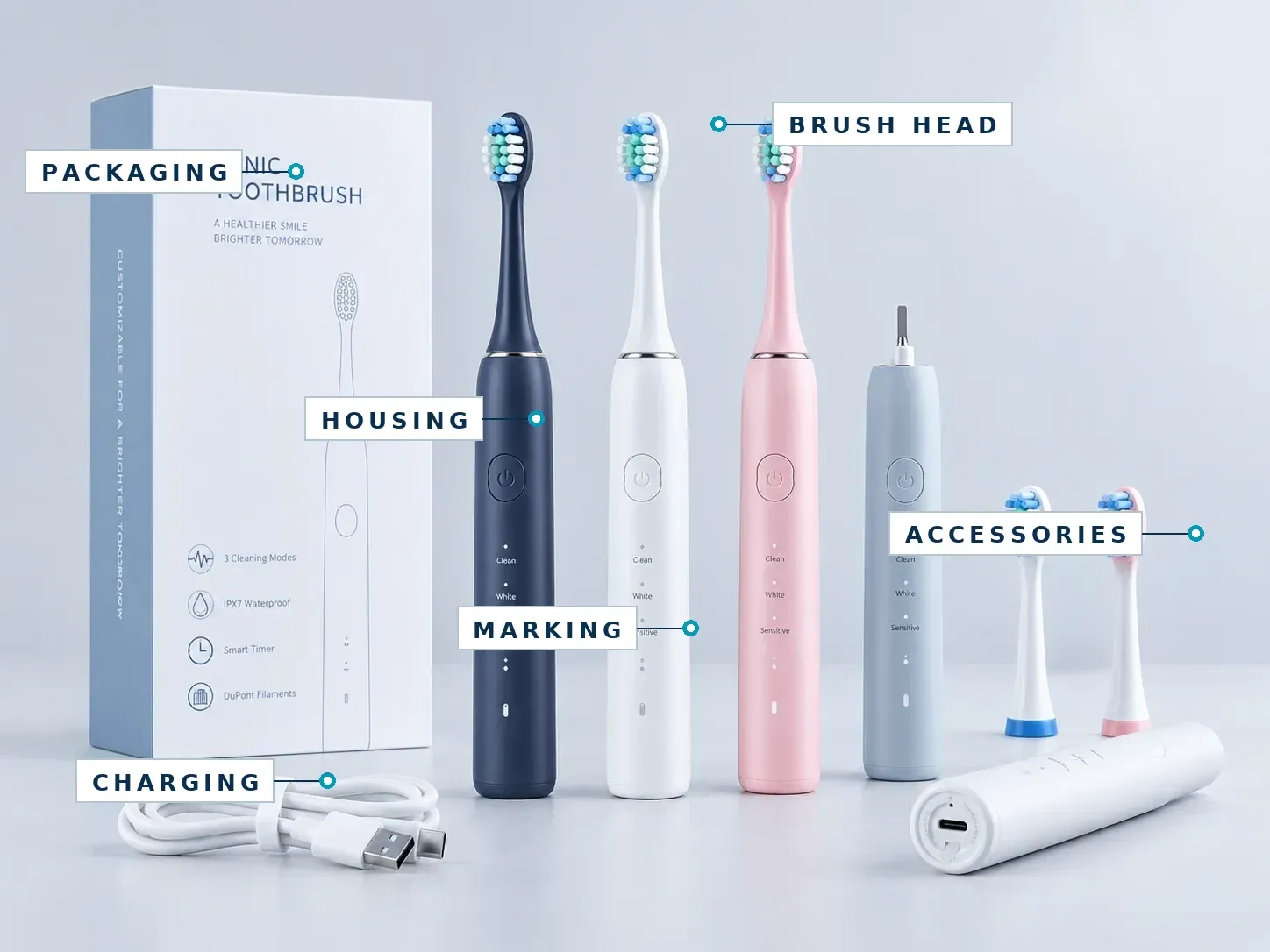
Available routes depend on the product platform and project scope.
01
Appearance & Identification
Housing color · Surface finish · Button or trim color · Logo · Product marking
02
Product Configuration
Selected brush-head or nozzle options · Accessory combinations · Travel-case options · Existing charging accessories · Retail set configuration
03
Functional Requirements
Mode-related requests · LED or indicator behavior · Battery or charging requests · Motor or performance-related requests
04
Structural Requirements
Housing geometry · Button position · Brush-head interface · Water tank structure · Nozzle connection · Internal mechanism
05
Branding & Retail Presentation
Logo · Product marking · Retail set · Packaging direction
Motor, battery, charging and other technical changes are reviewed according to the selected platform and engineering requirements.
Level 01Brand & Visual Identity
Logo · Product marking · Selected colors · Visual identification · Retail identity
Level 02Platform Configuration
Brush-head options · Nozzle sets · Accessories · Travel case · Existing charging accessories · Retail bundle
Level 03Engineering-Dependent Customization
Battery · Charging system · LED / display behavior · Mode logic · Motor-related requests · Bristle configurations · Nozzle-design requests · Special surfaces · Accessory fit
Level 04New Product Development
Handle geometry · New brush-head interface · New water-tank structure · New nozzle / water path · PCB / firmware architecture · Pressure sensing · New drive mechanism
Different oral care products have different constraints. The options below are typical discussion areas — availability depends on the specific model.
| Product | Typical Configuration Areas | When Engineering Review May Be Needed |
|---|---|---|
| Sonic Electric Toothbrushes | Colors, marking, brush-head options, mode / indicator requests, charging accessories, retail set | Mode logic, battery or motor-related requests |
| Kids Electric Toothbrushes | Colors, appearance, brush-head options, accessories, retail packaging | Housing geometry, battery requests, internal mechanism |
| Sweep Oscillation Electric Toothbrushes | Colors, marking, brush-head options, retail configuration | Drive mechanism or interface-related requests |
| Replacement Brush Heads | Bristle configuration options, colors, marking, packaging sets | New interface, nozzle design or material changes |
| Water Flossers | Colors, marking, nozzle sets, tank options, accessories, retail set | Water tank structure, pump or pressure-related requests, nozzle connection |
| Oral Care Sets & Accessories | Set combination, accessory selection, packaging direction | New accessory fit or structure |
A request usually becomes more than platform customization when it changes the product’s core structure, electrical architecture, mechanical interface, internal mechanism or key performance conditions.
Existing Platform
Question 01
Does the request stay within an existing option?
YESPlatform Customization
Question 02
Does it change a component, function, material, fit or behavior?
YESEngineering Review
Question 03
Does it change core structure, interface, electronics architecture, drive mechanism or water path?
YESProduct Development
A request usually becomes more than platform customization when it changes the product’s core structure, electrical architecture, mechanical interface, internal mechanism or key performance conditions.
| Requested Change | Engineering Review | New Sample | Tooling Review | Testing / Documentation Review | Packaging Impact |
|---|---|---|---|---|---|
| Color / finish | Project-dependent | May require | Depends on selected platform | Project-dependent | May require |
| Logo / product marking | Project-dependent | May require | Depends on selected platform | Project-dependent | May require |
| Accessory configuration | Project-dependent | May require | Project-dependent | May require | Direct packaging impact |
| Bristle configuration | Requires review | May require | Depends on selected platform | Requires review | May require |
| Brush-head interface | Requires review | May require | Requires review | Requires review | Project-dependent |
| Brushing modes / indicators | Requires review | May require | Project-dependent | Requires review | May require |
| Battery / charging | Requires review | May require | Project-dependent | Requires review | May require |
| Motor / drive | Requires review | May require | Requires review | Requires review | Project-dependent |
| Housing / tank structure | Requires review | May require | Requires review | Requires review | May require |
| Packaging configuration | Project-dependent | Project-dependent | Project-dependent | Requires review | Direct packaging impact |
Complete inputs allow the customization scope and technical review requirements to be defined before sampling is discussed.
Product category or model reference
Photos or a reference sample
Target market
Estimated order quantity
Required changes and functional expectations
Logo and artwork files
Preferred colors and appearance
Accessory requirements
Packaging direction
Required testing or documentation
Target launch timing
You can start with the information already available:
01
Requirement Review
The selected product platform, requested changes and target-market requirements are reviewed.
02
Feasibility & Scope Confirmation
We identify what may remain within an existing platform and what may require engineering or development review.
03
Sample Route
Once the scope is sufficiently defined, the appropriate sample route can be discussed.
Once the product configuration and sample route are defined, the next stage is to confirm the production version and move the project toward production readiness. Sampling to Mass Production
Common questions about what can change on an existing product platform — and where the boundary to engineering and development sits.u can start with the information already available:
Once the product configuration and sample route are defined, the next stage is to confirm the production version and move the project toward production readiness. Sampling to Mass Production
01
Requirement Review
The selected product platform, requested changes and target-market requirements are reviewed.
02
Feasibility & Scope Confirmation
We identify what may remain within an existing platform and what may require engineering or development review.
03
Sample Route
Once the scope is sufficiently defined, the appropriate sample route can be discussed.
Common questions about what can change on an existing product platform — and where the boundary to engineering and development sits.
Logo, product marking and selected colors are typical visual-identity discussion areas on existing platforms. Available options depend on the selected model, surface and marking method, and are confirmed per project.
Platform configuration works with existing options — brush heads, accessories, charging accessories and retail sets. Engineering-dependent customization changes components, functions or behavior, and therefore requires engineering review before it can be confirmed.
Usually when it changes the product’s core structure, mechanical interface, electronics architecture, drive mechanism or water path. At that point the request follows the development route rather than platform customization.
It depends on the selected platform and the marking or coloring method. Some visual changes stay within existing processes; others may require review. The impact is confirmed during feasibility review.
Existing brush-head, nozzle and accessory options can typically be combined into project-specific retail sets. New accessory designs or new fit requirements may require engineering review.
A product category or model reference, photos or a reference sample, target market, estimated quantity, the requested changes, logo and artwork files, appearance preferences, accessory and packaging requirements, and any testing or documentation needs.
Visual-identity changes can often be confirmed with fewer steps, while engineering-dependent changes may require a new sample or additional validation before the production version is defined.
Share the product reference, requested changes, artwork status, packaging direction and target timing as early as possible. Complete project inputs help define the customization scope and technical review requirements.
Send us your product reference, target market, requested changes and estimated order quantity. We will review the customization scope and confirm the appropriate project route.