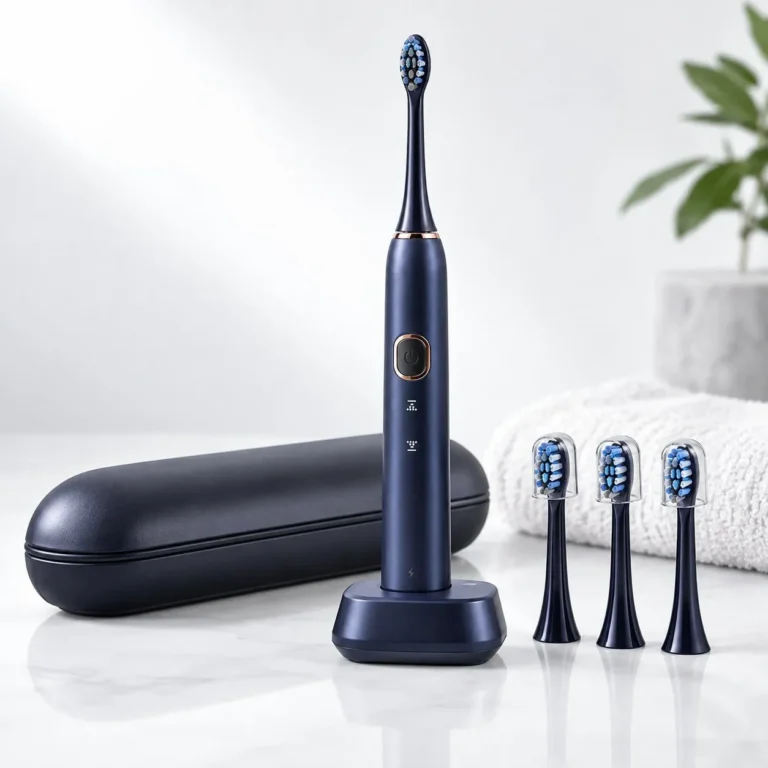
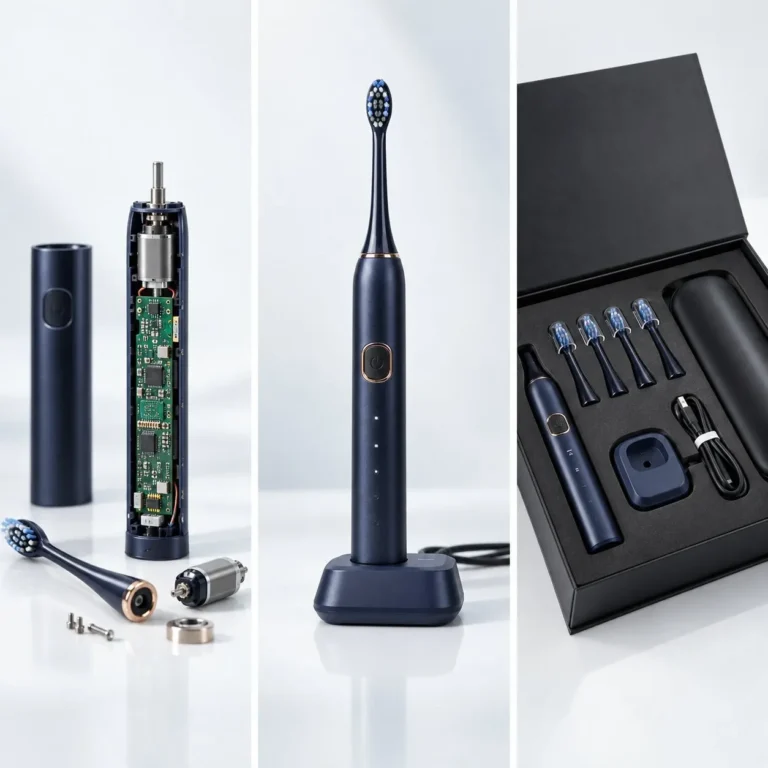
Start Your Electric Toothbrush Project
Tell us your product requirements and target market. We will review the details and reply with the relevant next steps.

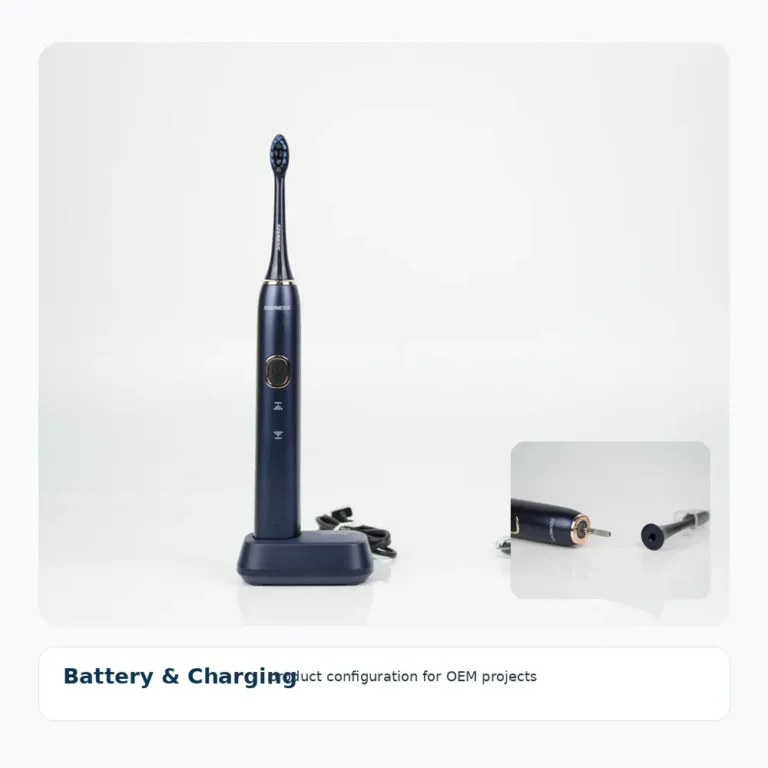
Before comparing modes, movement figures, battery capacity or colours, define the product platform first.
For an electric toothbrush OEM or private-label project, the platform includes the motion architecture, brush-head interface, handle system, battery and charging direction, control architecture, customization boundary and target-market configuration.
The practical sequence is:
Platform choice → Model shortlist → Detailed specification → RFQ and samples
This guide covers the first step. It does not rank one movement type as universally better than another. Its purpose is to help B2B buyers identify which architecture fits the intended refill strategy, product segment, charging direction, customization depth and market.
Two suppliers may both quote a “five-mode sonic toothbrush” while offering products built on different underlying systems.
The drive architecture may differ. The brush-head interface may differ. Battery, charging, electronics, accessory ecosystem and customization limits may also differ.
If those platform-level differences are not clarified first, the quotations are not directly comparable.
Features such as colour, logo, bundle and some user-interface settings may be configurable within an existing platform. Changes to the drive system, brush-head interface, charging architecture, PCB or housing structure usually require deeper engineering review.
Choose the architecture first. Then compare models and feature packages built on that architecture.
An electric toothbrush platform is the underlying reusable product system from which one or more sellable models can be configured.
Depending on the supplier, it may include:
| Term | Meaning in a B2B Project |
|---|---|
| Platform | The underlying reusable product architecture |
| Model | A supplier-defined implementation built on that platform |
| SKU | A specific sellable configuration, such as colour, region or bundle |
| Variant | A configuration difference within a model |
| Cosmetic customization | Logo, colour, finish, decoration or packaging changes that do not normally redefine the core architecture |
The boundary is not always sharp.
A new colour may simply create a new variant. A new motor, brush-head interface, PCB, charging system or housing geometry can require engineering review and may move the project beyond the original platform.
When discussing a supplier model, ask which elements are fixed and which are configurable.
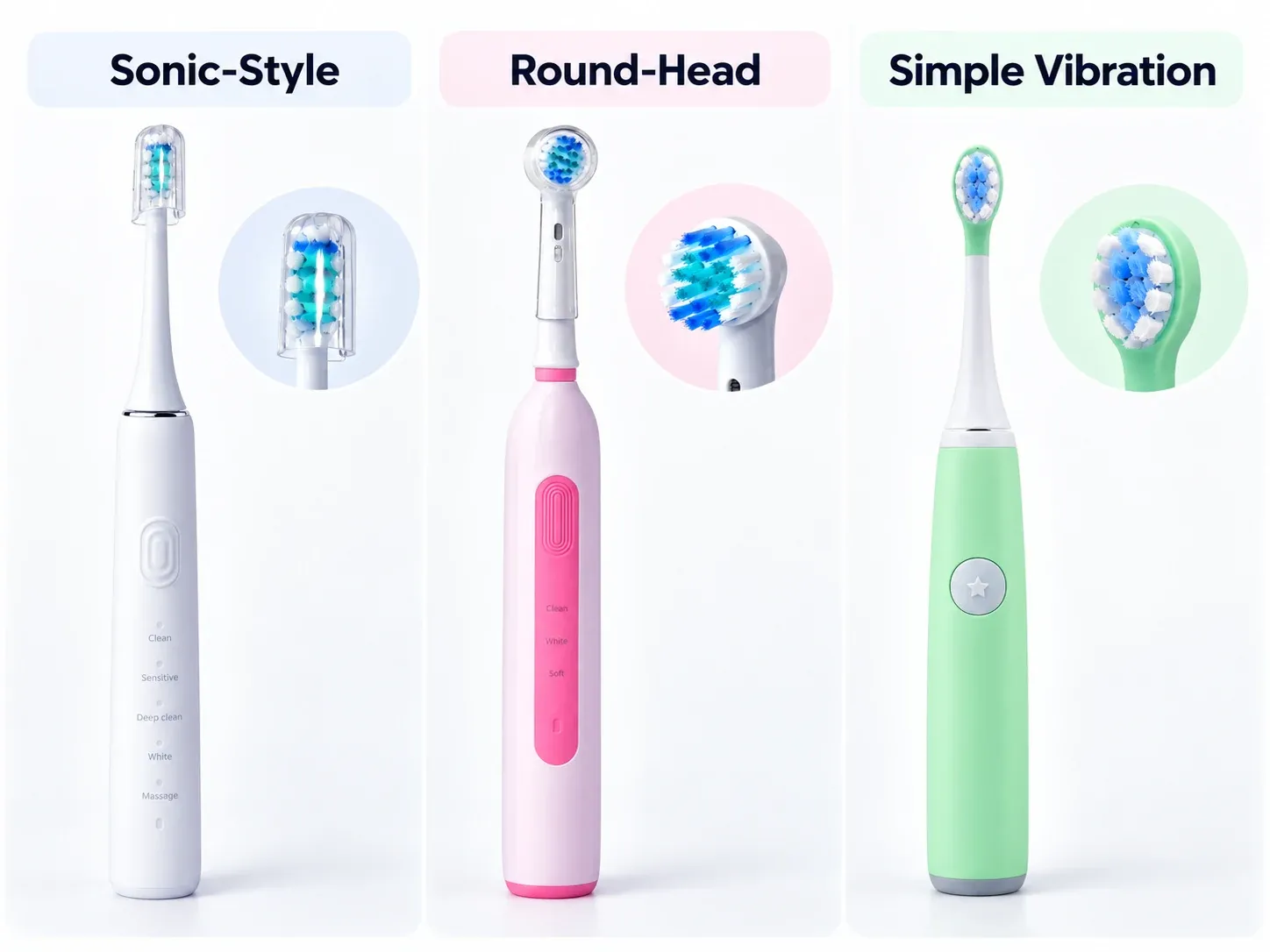
At a practical sourcing level, many electric toothbrush platforms can be grouped into three broad mechanical directions:
Other product directions cut across these mechanical families rather than replacing them.
These include:
A travel or kids model may be a dedicated platform or an adaptation of another platform. Verify the actual architecture rather than assuming the category name tells you how the product is built.
Sonic-style platforms generally use an elongated brush head with side-to-side movement.
At platform-selection stage, the important questions are not only the advertised movement figures.
Ask:
The word sonic describes a movement direction or product category, but supplier terminology is not always consistent.
If a supplier uses terms such as “sonic” or “ultrasonic,” verify the actual movement architecture rather than relying on the label alone.
Detailed movement definitions and model-level comparison fields belong to the specification stage. See Electric Toothbrush Product Specifications.
Round-head platforms commonly use a compact brush head driven through oscillating, rotating or related angular movement.
For sourcing purposes, “round head” is not enough to define the platform.
Review:
Two round brush heads that look similar do not necessarily share the same interface.
Attachment geometry can differ between suppliers and models. Treat compatibility as unverified until the exact interface has been confirmed.
Some products use a simpler vibration-driven architecture rather than a more complex sonic-style or round-head drive system.
These platforms may suit projects focused on:
A simpler architecture should not automatically be interpreted as lower manufacturing quality.
The sourcing question is whether the architecture fits the intended product position.
Confirm:
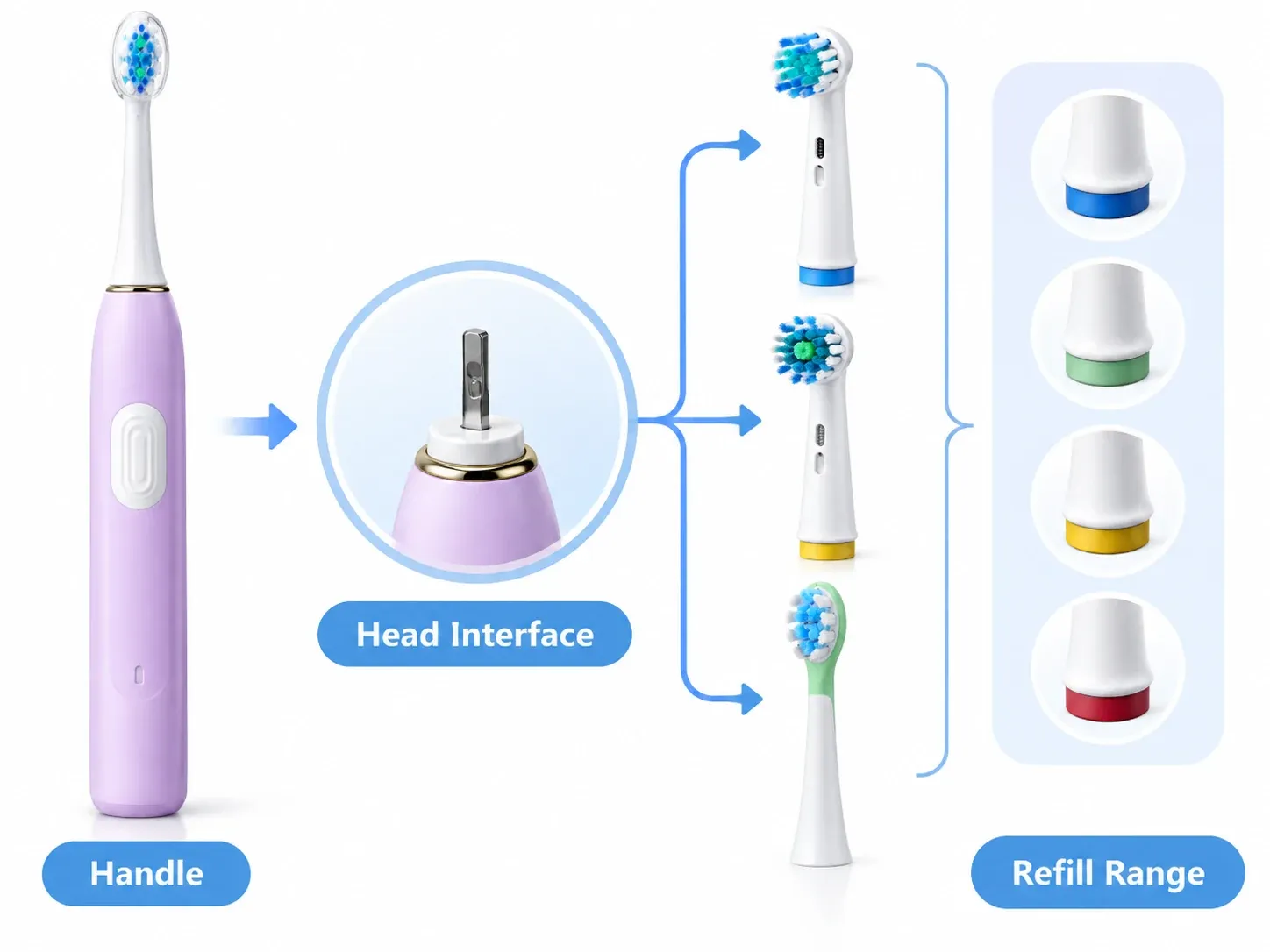
The brush-head system should be evaluated at the same time as the handle platform, not after the handle has already been selected.
For many oral-care brands, refill products create repeat-order opportunities and additional SKUs. That makes the brush-head interface commercially important beyond the first toothbrush sale.
Before shortlisting a platform, confirm:
An interface used across several handle models may make future range expansion easier because one refill family can potentially support more than one handle.
A model-specific interface can also be workable, but the commercial dependency is different.
The important point is to understand that dependency before selecting the handle.
Detailed verification of fit, bristle specification, compatibility wording and repeat-order consistency is covered in the Replacement Brush Head Sourcing Checklist.
At platform stage, the rule is simpler:
Shortlist the refill ecosystem together with the handle.
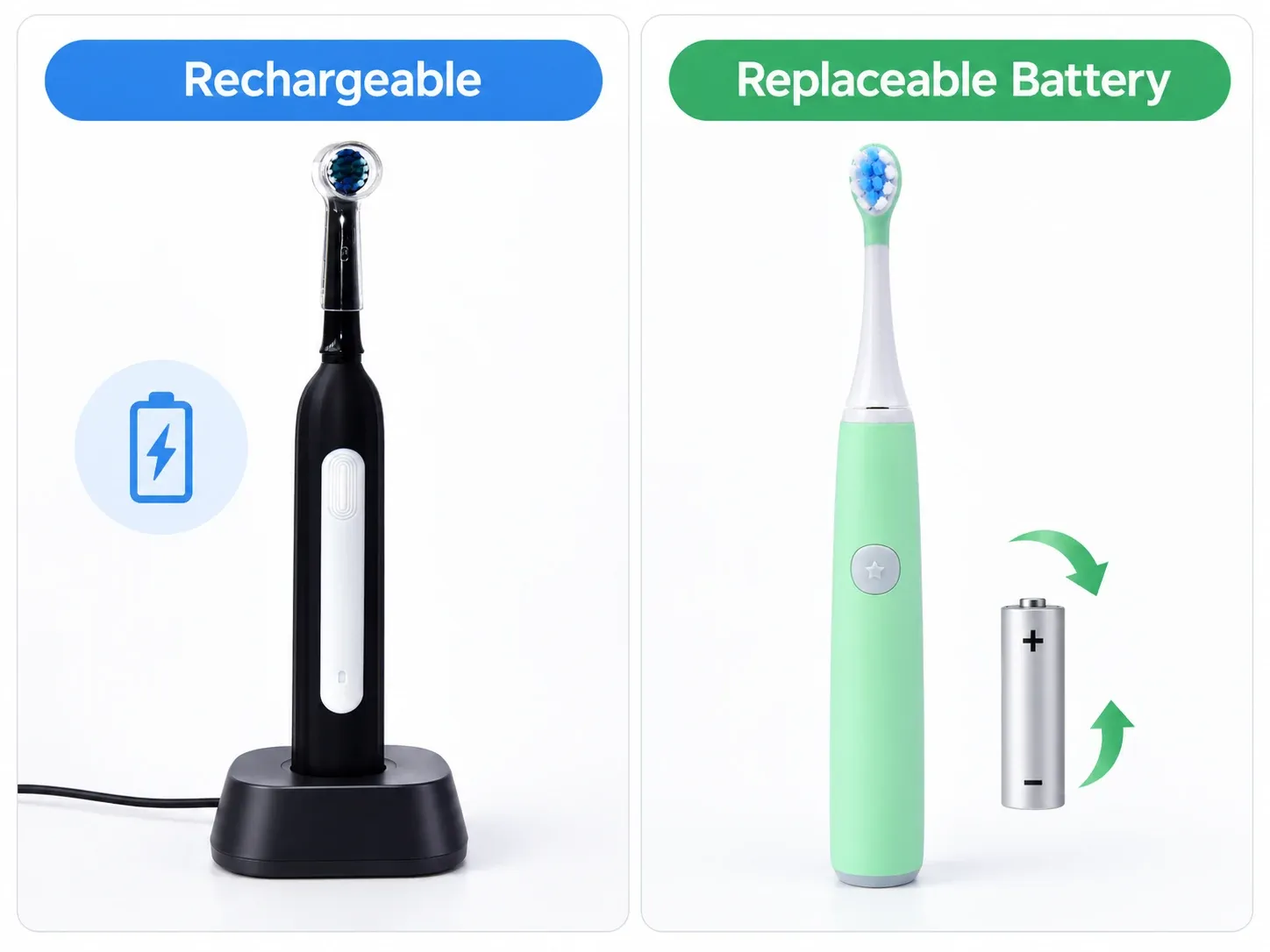
Battery direction is a platform-level decision because it affects more than runtime.
It can influence:
| Direction | Platform Implications | Buyer Questions |
|---|---|---|
| Rechargeable | Built-in battery and charging system; port, cable, base or dock; related sealing and accessory configuration | What charging method is used? What accessories are included? Which market configurations are available? |
| Replaceable battery | Battery compartment and replaceable-cell format; different housing and sealing requirements; no built-in charging ecosystem | What cell format is used? How is the compartment designed? What bundle and market assumptions apply? |
Neither direction is universally better.
Rechargeable platforms may suit products built around a charging ecosystem and broader feature set.
Replaceable-battery platforms may suit simpler, compact or travel-oriented products.
The important point is to set this direction before comparing detailed battery values.
Changing the battery architecture later may affect the housing, accessories, packaging and market configuration at the same time.
A kids electric toothbrush is not necessarily just an adult model in a different colour.
It may be:
Verify which applies.
Relevant platform questions include:
If character artwork or licensed branding is planned, artwork rights and brand assets are separate project inputs and should not be confused with the underlying product platform.
Travel positioning works the same way.
A compact product may require a different battery concept, case, charging accessory or refill bundle. Treat “travel” as a product configuration to verify rather than assuming it simply means a smaller handle.
Connectivity changes the project scope.
Bluetooth, app interaction, sensing, usage tracking or connected coaching can turn a relatively conventional hardware project into a hardware-plus-software program.
Before selecting a connected platform, clarify:
Connected capability may add meaningful differentiation, but it also adds software, maintenance and support dependencies.
Decide whether connected scope belongs in the project before the platform is locked.
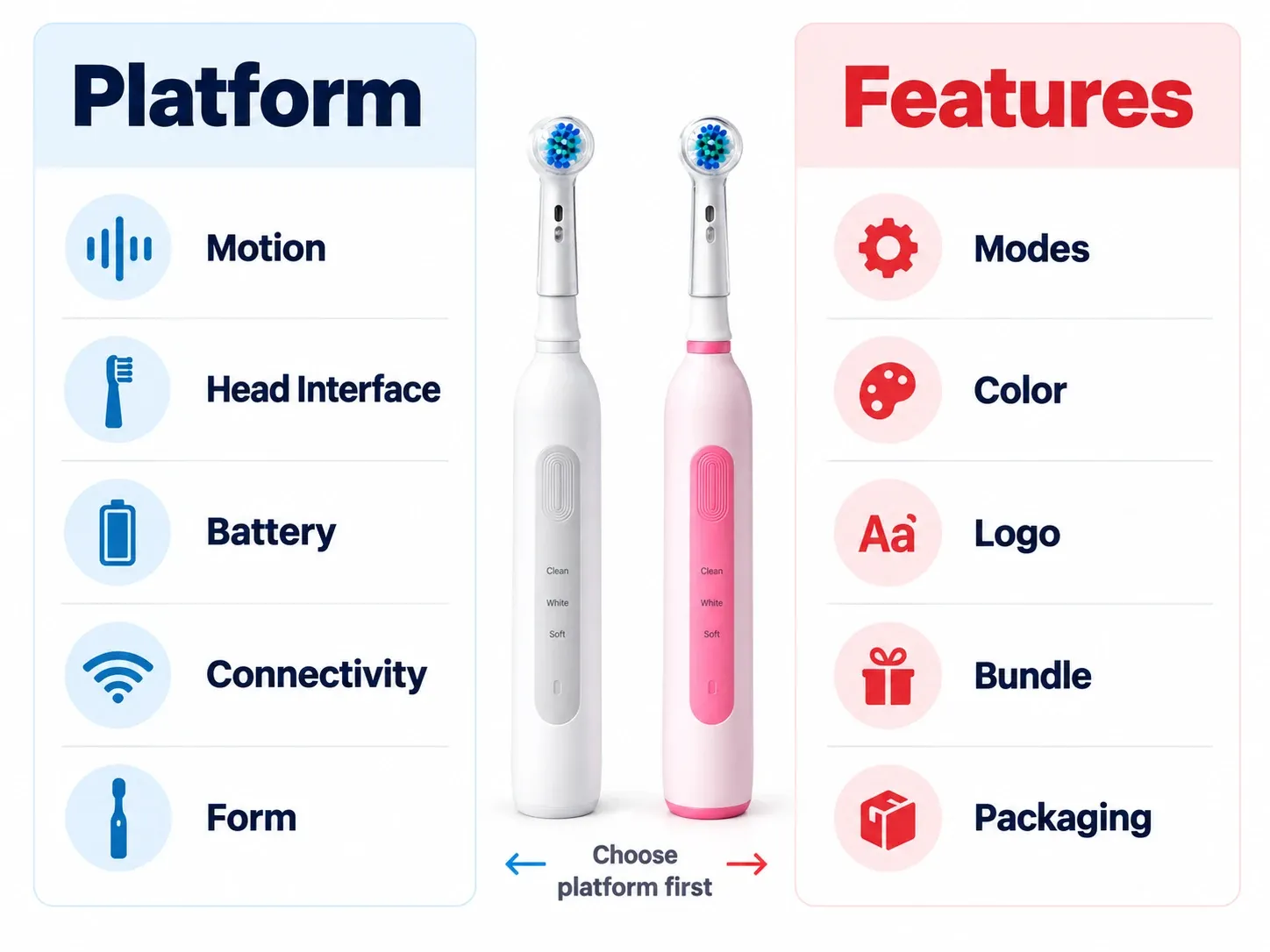
One of the easiest ways to improve supplier comparisons is to separate architecture decisions from feature-package decisions.
| Platform-Level Decision | Feature-Level Decision | Why the Difference Matters |
|---|---|---|
| Motion / drive architecture | Mode count or mode naming | Modes may be configurable; drive architecture is deeper |
| Brush-head interface | Head colour or bristle variant | Several head variants may share one interface |
| Battery / charging architecture | Included cable or charging accessory | Accessories can vary within the same electrical architecture |
| Handle architecture | Logo, colour, coating or trim | Cosmetic changes may leave the platform unchanged |
| PCB / firmware architecture | Timer setting or interface label | Some visible changes may be simple; others require firmware work |
| Connected capability | App screen design | Connectivity introduces software and support dependencies |
| Sealing / housing architecture | Surface finish or decoration | Structural changes may affect tooling and sealing |
This distinction prevents two common sourcing mistakes.
The first is choosing a platform because it advertises a large number of modes.
The second is rejecting a platform because the first sample is not in the preferred colour or accessory bundle.
Those are usually later configuration questions.
Platform selection also helps define how deep the project needs to go.
Depending on the supplier architecture, changes that may remain within an existing platform can include:
Changes that typically require deeper engineering review include:
Platform choice and development route are related, but they are not the same question.
For the broader project-route decision, see OEM vs ODM for Oral-Care Products.
Tooling is another separate decision.
A private exterior housing can still use an existing internal platform, while similar exterior housings do not automatically mean identical internals.
See Public Mold vs Private Tooling for that distinction.
When speaking with suppliers, ask about:
1. Exterior tooling
and
2. Internal product architecture
as separate questions.
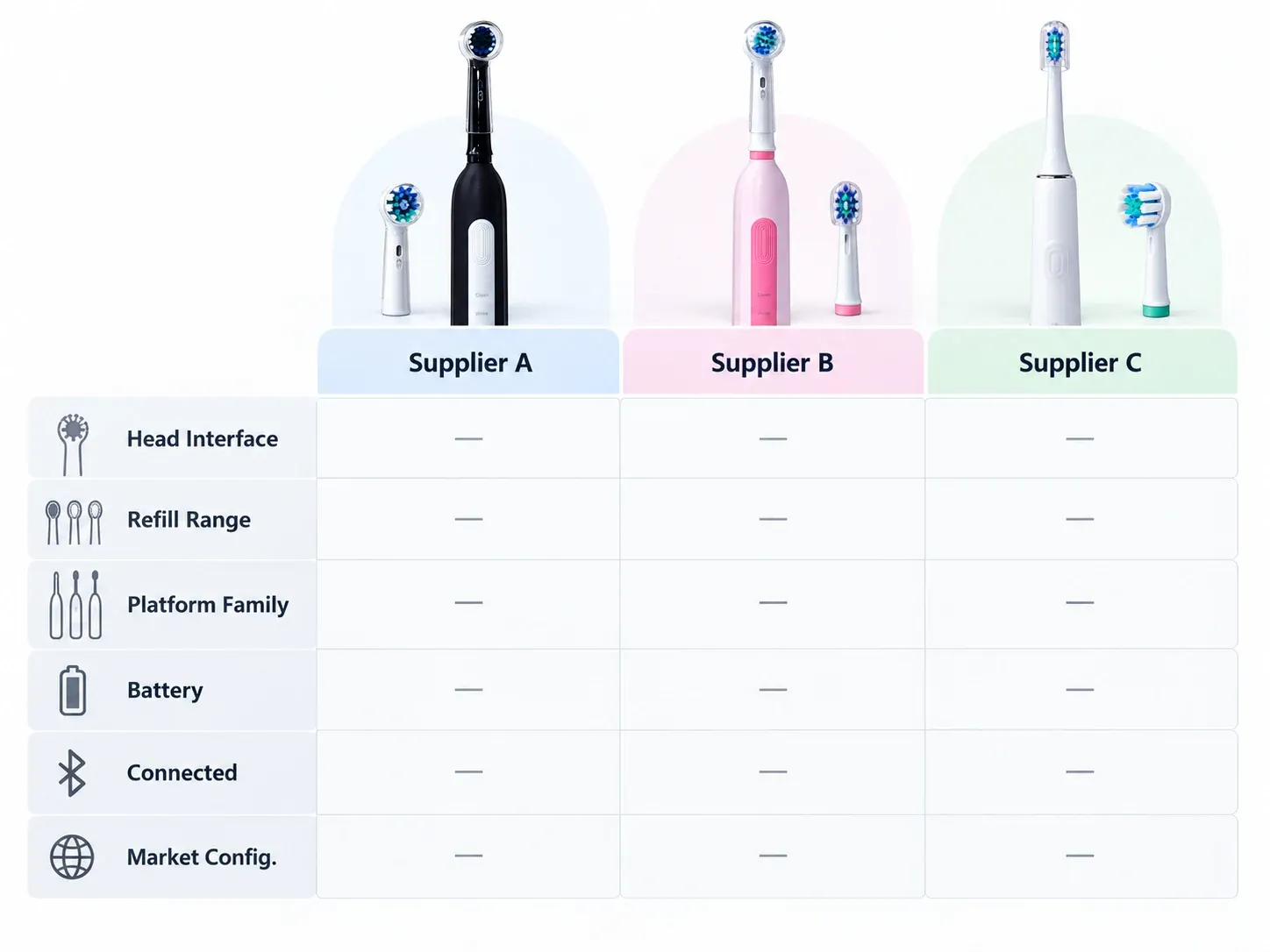
Before comparing detailed specifications or quotations, build a platform comparison matrix.
The first three fields should focus on the brush-head ecosystem because they can materially change the commercial value of the shortlist.
| Comparison Field | Supplier A | Supplier B | Supplier C |
|---|---|---|---|
| Brush-head interface | |||
| Available refill-head range | |||
| Interface shared across other handles? | |||
| Platform family | |||
| Motion architecture description | |||
| Rechargeable / replaceable-battery direction | |||
| Charging architecture options | |||
| Smart / connected scope | |||
| Cosmetic customization boundary | |||
| Engineering-dependent change boundary | |||
| Handle form factor | |||
| Standard housing options | |||
| Platform maturity / current status | |||
| Sample availability | |||
| Product-documentation scope | |||
| Target-market configuration options | |||
| Open questions / assumptions |
Keep the table blank until suppliers provide actual answers.
Do not fill important architecture fields from product-category pages or visual assumptions.
Two products with similar marketing descriptions may still use different refill systems, drive architectures or charging configurations.
Normalize the platform first. Compare quotations second.
A practical decision sequence is:
This framework does not identify one universal “best platform.”
It narrows the field to platforms that fit the intended product program.
From there, use Electric Toothbrush Product Specifications for model-level comparison.
You can also review available platform directions on the Electric Toothbrushes category page.
| Buyer Mistake | Why It Matters | Better Practice |
|---|---|---|
| Starting with appearance | Similar housings can hide different drives, interfaces, batteries and electronics | Identify the platform and refill strategy first |
| Comparing movement figures before architecture | Suppliers may use different terminology or measurement definitions | Clarify architecture before comparing controlled specification fields |
| Assuming all “sonic” products are equivalent | Head interfaces, motors, charging and electronics may differ | Ask for platform-level details |
| Assuming all round-head systems share an interface | Attachment geometry varies | Verify the exact interface and refill range |
| Choosing the handle before the refill strategy | Future refill options may become constrained | Evaluate handle and refill ecosystem together |
| Choosing based on mode count | Mode count is often a feature-package field | Choose architecture first |
| Changing battery direction late | Housing, accessories, packaging and market assumptions may all be affected | Set the battery direction early |
| Treating a kids version as a colour change | Head, controls, power system and housing may differ | Verify the actual kids configuration |
| Adding connectivity late | Firmware, app and support responsibilities expand project scope | Decide connected scope before platform lock |
| Confusing private tooling with new architecture | Exterior tooling and internal architecture are separate decisions | Ask about each separately |
| Comparing prices before normalizing scope | Suppliers may be quoting different platforms and bundles | Complete the platform matrix before RFQ |
It is the underlying reusable product system from which one or more models are configured.
It can include the motion architecture, brush-head interface, handle system, battery and charging concept, electronics, sealing approach and accessory ecosystem.
They use different movement architectures.
Sonic-style platforms generally use an elongated brush head with side-to-side movement, while oscillating or rotating platforms commonly use a compact round head driven through angular or rotational movement.
Their transmissions and brush-head interfaces can also differ.
Not necessarily.
“Vibration” is a broad description. Suppliers may use different terminology for different drive systems.
Verify the actual movement and drive architecture rather than relying only on the product label.
The terms should not be treated as automatically interchangeable.
If a supplier uses either term, ask how the product actually operates and what movement architecture is being described.
The brush-head interface and refill range should be evaluated together with the handle.
For brands planning refill sales, subscriptions or multiple handle models, the refill ecosystem can materially affect the long-term product program.
It can affect the architecture significantly.
Battery direction influences housing, sealing, charging accessories, packaging and market configuration, so it should be treated as a platform-level decision rather than only an accessory choice.
No.
It may be a dedicated children’s platform, an adaptation of another platform or a simpler battery-driven design.
Verify which applies before assuming the refill system or customization boundary.
It always changes the project scope because it introduces firmware, software and support dependencies.
Whether the connected version uses the same underlying mechanical platform depends on the supplier architecture.
Often, yes.
Many platforms support multiple cosmetic and feature configurations, subject to the supplier’s hardware, firmware and manufacturing boundaries.
That is why platform comparison should come before feature-package comparison.
Define the motion architecture, refill ecosystem, battery direction, connected scope, segment and target-market configuration before requesting quotations.
Then use the comparison matrix to normalize supplier answers before comparing individual models or prices.
For project-stage templates and sourcing checklists, see Project Resources.