Start Your Electric Toothbrush Project
Tell us your product requirements and target market. We will review the details and reply with the relevant next steps.

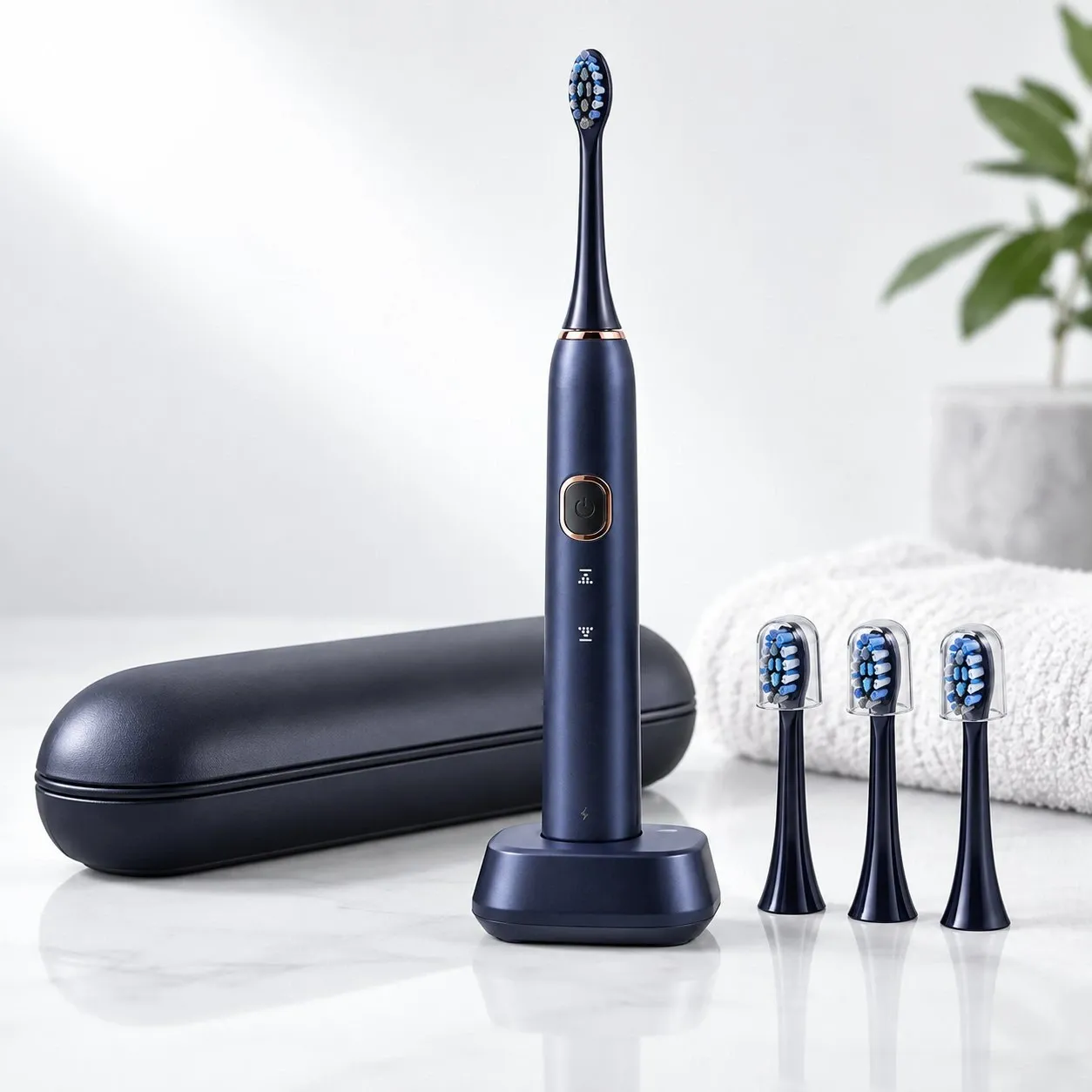
The risk changes after the first successful electric toothbrush production run.
During the first order, the main challenge is defining the product correctly. On repeat orders, the bigger risk is configuration drift: a battery cell is substituted, firmware is updated, a PCB revision changes, a new motor source is introduced or a material or process changes without being obvious from the outside.
A golden sample remains important, but it cannot identify every hidden component or internal version.
OEM buyers therefore need a simple way to define the approved configuration, identify critical items and review material changes before they enter production.
First-order problems are usually easier to see.
The product may still have:
Everyone is actively defining the product.
Repeat orders are different.
Once the first shipment has been completed successfully, both buyer and supplier may assume the product is already stable.
But changes can still happen:
Each change may be reasonable.
The sourcing risk appears when the change is not connected back to the product version the buyer originally approved.
For repeat orders, the buyer is no longer only selecting a product.
The buyer is protecting an approved configuration.
A few terms are useful, but buyers do not need to turn the project into an engineering-document system.
A product specification defines what the finished product should do and how it should appear.
An EBOM describes components associated with the engineering design.
An MBOM or production BOM is manufacturing-oriented and may contain internal sourcing, process and production information.
An AVL, or Approved Vendor List, identifies approved sources for selected components.
A golden sample is the approved physical reference.
A test report provides evidence for a defined product configuration and test condition.
For most private-label buyers, the objective is not to obtain the factory’s entire internal MBOM.
The more practical objective is to identify the components and versions that could materially affect:
A useful buyer-facing tool is therefore a:
Controlled Critical Component List
This records the important configuration items without requiring disclosure of every screw, resistor, process consumable or confidential sourcing detail.
These records should work together.
They are not substitutes for one another.
| Record | What It Controls Well | What It Cannot Control Alone |
|---|---|---|
| Product Specification | Functions, appearance, accessories, packaging, intended configuration and buyer requirements | Hidden component identity unless specifically recorded |
| Critical Component List | Important supplier/model/specification information, revisions and approved alternatives | Appearance, tactile feel and workmanship |
| Golden Sample | Appearance, fit, feel, basic operation, visible accessories and packaging assembly | Battery identity, PCB revision, firmware build or hidden supplier changes |
| Test Reports | Evidence for a defined configuration under stated test conditions | Proof that later production still uses the same configuration |
| Artwork / Packaging Files | Model information, claims, included accessories and printed content | Whether the current technical configuration still supports those statements |
A golden sample is especially useful for controlling what can be seen, handled and compared.
But it cannot reliably reveal whether the battery manufacturer, PCB revision or firmware version has changed.
A stronger approved baseline is therefore:
**Controlled Specification
How the sample itself is approved and frozen is covered in Golden Sample Approval for Oral-Care OEM Projects.
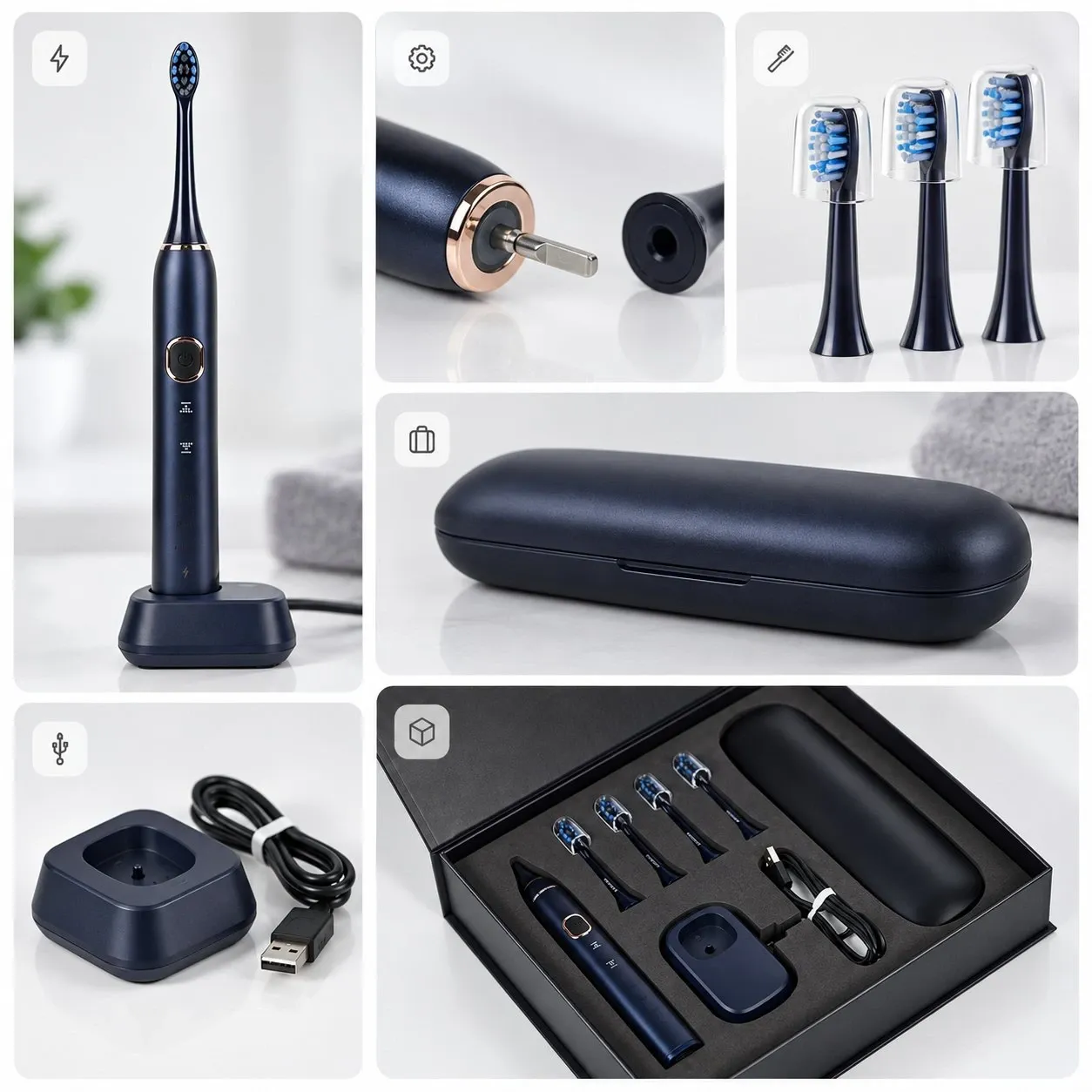
Not every component needs the same level of control.
A practical OEM project can divide them into three groups.
This is a buyer-oriented risk framework, not a universal industry classification.
These deserve tighter identification when changes could affect product function, reliability, documentation or compatibility.
Depending on the platform, examples may include:
These may not need to remain with one supplier if the required characteristics are clearly controlled.
Examples may include:
The buyer may control:
rather than one exact supplier.
Some items can normally remain under the supplier’s internal purchasing and QC system.
Examples may include:
The important point is that classification follows function, not the name of the component.
A normally low-risk screw may become important if it affects sealing.
A packaging insert may become important if it is required to prevent transport damage.
There are three main ways to control a component.
The useful principle is:
Use the least restrictive control that still protects the approved product.
This may make sense when component identity materially affects:
Possible examples include:
This works better when several suppliers can meet a defined requirement without materially changing the finished product.
Examples may include:
For critical components, an alternative can sometimes be reviewed before a shortage occurs.
The record may identify:
This is different from an emergency substitution introduced while production is already waiting.
The goal is to avoid two extremes:
“Anything equivalent is acceptable.”
and:
“Every low-risk component must remain frozen forever.”
“Equivalent” is not a complete technical description.
The relevant question is:
Equivalent in what way?
Depending on the component, the comparison may need to consider:
The buyer does not need to perform the engineering analysis personally.
The supplier should provide enough information for the proposed change to be reviewed.
Useful information may include:
| Supplier Says | Buyer Should Ask |
|---|---|
| “Same specification” | Which specifications are the same? What are the old and new component identifiers? |
| “Equivalent battery” | Are chemistry, voltage, capacity, dimensions and protection configuration equivalent? |
| “Same motor performance” | How was this confirmed on the final assembled product? |
| “New PCB supplier” | Does the PCBA revision or component configuration change? |
| “Firmware updated” | What is the new version, what changed and which production lot will use it? |
| “Material upgraded” | Which material changed and could it affect fit, sealing, appearance or documentation? |
The objective is not to challenge every change.
It is to make material changes visible before production.
An approved alternate is different from a supplier simply having another possible source.
It has already been identified and reviewed for the intended product.
For critical items, buyers may ask:
Not every component needs a second source.
The concept is most useful where a component shortage could interrupt an important repeat order.
Buyers may encounter several engineering-change terms.
Common interpretations include:
Terminology differs between companies.
A private-label buyer does not need to impose one vocabulary on every supplier.
What matters is that the actual workflow is clear:
Propose → Assess → Approve or Reject → Implement → Verify → Record Effective Lot
If the supplier’s process covers those steps, the name of the form is secondary.
Buyer notification should be considered when a change may affect:
For electric toothbrush projects, the most relevant change areas include:
Notification does not automatically mean rejection.
It means the change enters review before it becomes an unnoticed production change.
Different changes deserve different levels of review.
A practical buyer framework is:
| Change Level | Example | Possible Buyer Action |
|---|---|---|
| A — Administrative | Internal file or documentation change with no product impact | Record only |
| B — Controlled Equivalent | Approved cable source or low-risk packaging source within defined specifications | Document and review if required |
| C — Product-Affecting | Motor source, PCBA revision, seal, bristle specification, firmware behavior or charger change | Notification, sample and focused technical review as appropriate |
| D — Major Configuration / Documentation Affecting | Battery architecture, wireless change, charging architecture, waterproof construction or major electronics redesign | Approval before use and review of relevant validation and documentation |
This is not a formal certification classification.
It is a practical way to scale the review to the risk.
A higher-level change does not automatically mean repeating every previous test from the beginning.
It means deciding what needs to be rechecked before the revised configuration is accepted.
A replacement battery may show the same headline capacity and still differ in important ways.
Possible differences include:
When a replacement battery is proposed, useful review fields include:
The detailed battery configuration is covered separately in Electric Toothbrush Battery & Charging Systems.
Changes to internal electronics may not create any visible change on the outside of the toothbrush.
But they can affect:
Useful control fields may include:
This turns statements such as “firmware updated” into something that can actually be reviewed and traced.
The technical background is covered in Electric Toothbrush Motor, PCB & Firmware.
A BOM does not describe every factor that determines the finished product.
For example, material changes may involve:
These can affect:
Process changes can matter as well.
Examples include:
This leads to an important sourcing principle:
Same BOM does not always mean same finished product.
A material or process change that can affect a controlled product characteristic should enter the same review process as a component change.
A test report should be reviewed against the configuration it covers.
After a material product change, useful questions include:
There is no single retesting rule that applies to every change.
The review depends on the component, the function and the relevant documentation.
How to run this applicability review is covered in How to Review Oral-Care Product Test Reports Before OEM Approval.
Technical changes can also affect commercial claims.
Examples include:
A practical control chain is:
Configuration Change → Claim Impact Review → Artwork or Specification Update if Needed
Packaging from an earlier product revision should not automatically be reused if the technical configuration supporting its claims has changed.
Claim and artwork control is covered in Oral-Care Packaging Artwork & Label Planning.
Golden samples remain essential.
They provide a reference for:
But they cannot reliably reveal:
For this reason, the strongest control set is:
**Golden Sample
Each record controls something the others cannot.
How the sample itself is approved and frozen is covered in Golden Sample Approval for Oral-Care OEM Projects.
A buyer does not necessarily need access to:
A more realistic solution is a Controlled Critical Component List.
| Field | Purpose |
|---|---|
| Product / SKU | Identifies the finished product |
| Product Revision | Identifies the approved configuration |
| Component Category | Battery, motor, PCBA, firmware, charger, seal, brush head, etc. |
| Manufacturer / Supplier | Identifies the source where relevant |
| Model / Key Specification | Identifies the controlled component |
| Approved Alternative | Records an accepted substitution route |
| Related Revision | Connects PCB, firmware, tooling or component version |
| Change Notification | Defines whether notice or approval is expected |
| Supporting Reference | Links to sample, test report, datasheet or validation record |
This gives the buyer visibility over the parts that matter without requiring disclosure of the factory’s entire internal production system.
Before releasing a repeat PO, run a short configuration review.
Confirm:
If a material change occurred, determine whether a new or focused validation sample is appropriate.
An unchanged repeat order does not need to be developed again from the beginning.
The purpose of the review is simply to identify change before production starts.
Change control does not require complicated software.
A basic change log can be enough.
| Revision | Date | Changed Item | Previous Configuration | New Configuration | Reason | Review Required | Approval Status | Effective Lot |
|---|---|---|---|---|---|---|---|---|
| Rev. B | [Date] | Battery | [Old Model] | [New Model] | Supply change | Battery / document review | Approved / Pending | [Lot] |
More complex projects can maintain additional internal records.
The basic requirement is simple:
The buyer should be able to identify which configuration was used in which production lot.
Traceability should also be proportional to product risk.
A basic private-label project may track:
A more technically differentiated product may also track:
This does not mean every toothbrush needs an individual serial number.
The objective is enough information to connect a shipment or production lot to the configuration that was actually manufactured.
| Common Mistake | Better Approach |
|---|---|
| Relying only on the golden sample | Pair it with controlled component and version records |
| No defined product revision | Assign a revision to the approved baseline |
| Accepting “equivalent” without identification | Compare the current and proposed component |
| Approving substitutions only verbally | Record the decision and effective production lot |
| No firmware version record | Record the approved firmware build |
| No PCBA revision record | Tie the approved product to a defined PCBA revision |
| Assuming repeat orders automatically remain unchanged | Run a short reorder configuration review |
| Reviewing reorder samples only by appearance | Check both configuration and function |
| Ignoring test-document applicability | Review whether existing evidence still matches |
| Keeping claims after technical configuration changes | Review affected claims and artwork |
| Freezing every low-risk commodity component | Apply control according to risk |
| Demanding the entire confidential factory MBOM | Control critical components instead |
The whole process can be reduced to seven steps:
Define → Freeze → Identify → Notify → Review → Approve → Trace
Define
Specify the product and the requirements that matter.
Freeze
Approve the baseline through specifications and samples.
Identify
Record the relevant product, component, PCB, firmware and artwork revisions.
Notify
Make material changes visible before implementation.
Review
Check their effect on function, reliability, documentation and commercial claims.
Approve
Record the decision and any conditions.
Trace
Connect the approved configuration to the production lot in which it was used.
This is a practical sourcing framework, not a certification system.
For a repeat electric toothbrush order, the most useful check is simple: compare the current specification, approved sample, critical-component record and latest change log before production is released.
If these records still point to the same approved configuration, the reorder is under control.
For projects still at the supplier-selection stage, the overall workflow is covered in How to Source Electric Toothbrushes for Private Label & OEM Projects.
Usually, the buyer’s real requirement is not the supplier’s complete internal manufacturing BOM.
A more practical solution is to identify the components and versions that materially affect product function, reliability, documentation or compatibility.
A Controlled Critical Component List can record items such as the battery, motor, PCBA, firmware, charger, seals and brush-head interface without requiring disclosure of every internal manufacturing detail.
The product specification defines what the finished product should do and how it should appear.
A BOM or critical-component record identifies important parts and versions used to create it.
The golden sample is the approved physical reference for appearance, fit, feel and observable function.
These records complement one another rather than replacing one another.
Exact manufacturer and model control is most useful where component identity can materially affect the approved product.
Depending on the design, this may include the battery, motor or actuator, PCBA, selected electronics, charging system, wireless module or critical interface components.
Lower-risk parts may instead be controlled through dimensions, materials or performance specifications.
It should mean more than sharing one headline specification.
A meaningful equivalence review may compare electrical characteristics, dimensions, materials, compatibility, function, documentation and interaction with the final product.
The supplier should identify both components, explain why the change is proposed and provide evidence appropriate to the risk before the substitution enters production.
An approved alternate is a specific replacement component or source that has already been reviewed for use in the product.
It differs from a generic second source or emergency substitution because its identity, specification and intended use are already recorded.
Approved alternates can reduce supply risk for selected critical components without requiring the buyer to freeze every component to one supplier.
A new or focused validation sample may be appropriate when the change could affect product function, fit, reliability, appearance, compatibility or a commercial claim.
Examples can include changes to the motor, PCBA, firmware behavior, battery, sealing system or charging configuration.
Low-risk administrative changes or substitutions already covered by an approved specification may not require a new sample.
Record the approved PCBA revision and firmware version during product approval.
Before the repeat order, ask the supplier to confirm the current versions and identify any changes since the previous production lot.
Depending on the agreed traceability level, production records, PCB markings, firmware programming records or other controlled records can then be used to confirm the production configuration.