Start Your Electric Toothbrush Project
Tell us your product requirements and target market. We will review the details and reply with the relevant next steps.
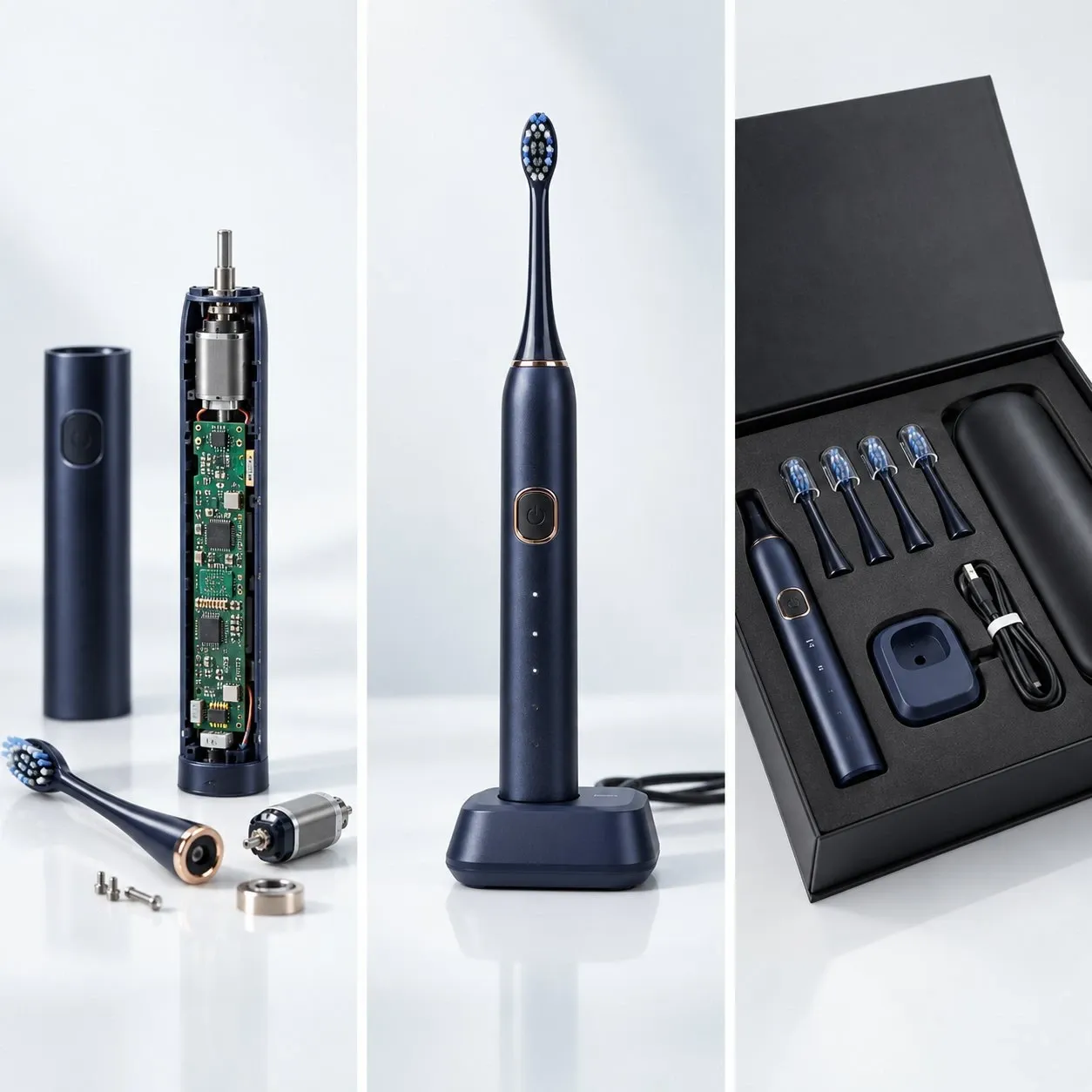
Two electric toothbrushes can quote the same vibration frequency and still behave differently.
The final product is a system: the motor or actuator creates movement, the mechanical structure transfers it to the brush head, the PCB controls the electronics, and firmware determines functions such as modes, timers and indicators.
For an OEM buyer, a specification such as “sonic motor, 5 modes, 38,000 vibrations/min” still leaves important questions unanswered.
Before approving development or production, buyers should understand which characteristics are fixed by the platform, which can be adjusted through firmware, and which require PCB or mechanical changes.
Three different concepts are often grouped under the word “motor.”
They should be considered separately.
The motor or actuator converts electrical energy into mechanical movement.
Depending on the platform, this may involve a conventional motor or another electromagnetic drive structure. The exact architecture varies between products.
The movement architecture determines how that mechanical energy becomes brush-head motion.
Depending on the product, the final movement may be:
The actuator itself does not fully describe the final brush-head movement.
The control method describes how the electronics drive the motor or actuator.
This includes the driver circuit, control timing and any feedback functions supported by the platform.
For sourcing purposes, “sonic motor” is therefore not a complete technical description.
The buyer should first understand the movement architecture and whether the motor and control method are part of the supplier’s standard platform.
The wider platform decision is covered in the Electric Toothbrush Platform Selection Guide.
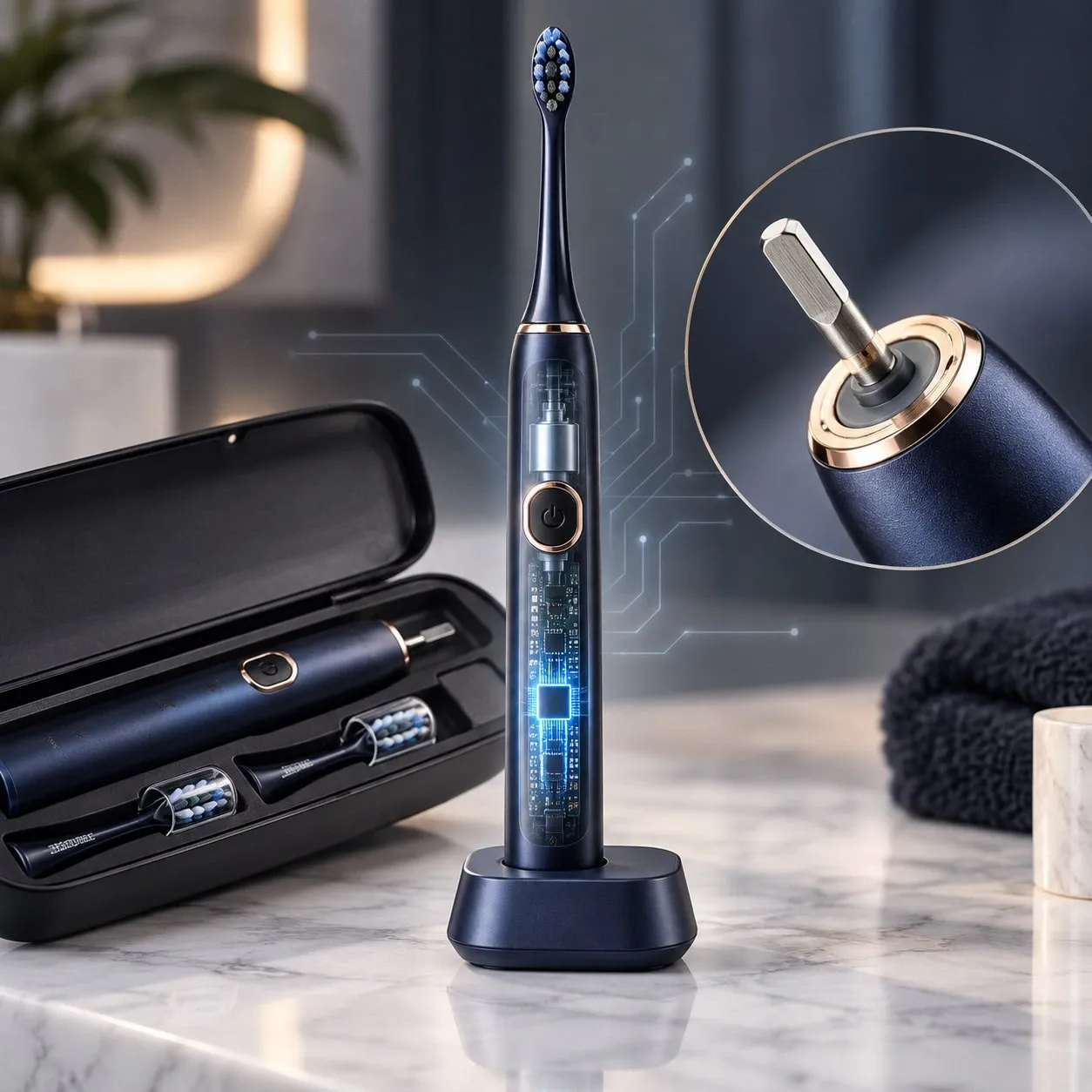
Vibration or movement frequency is one of the most commonly quoted electric toothbrush specifications.
It is also easy to misunderstand.
Supplier descriptions such as:
are not automatically directly comparable.
Several factors matter.
Different platforms may produce different types of movement. Suppliers may also use terms such as “vibrations,” “strokes” and “movements” differently.
Measurement conditions matter as well.
A no-load frequency figure does not describe:
IEC 63174 provides methods for measuring characteristics of electrically operated toothbrushes, including vibration frequency and rotation speed.
It does not define one “best” vibration frequency or rank products according to the highest number.
| Supplier Claim | What the Buyer Should Ask |
|---|---|
| “38,000 vibrations/min” | What movement is being counted, in which mode, and using what measurement method? |
| “High-frequency sonic motor” | What movement architecture does the platform use? |
| “Quiet motor” | Under what operating condition is noise evaluated? |
| “High torque” | What characteristic is actually being measured and under what load? |
| “Strong performance” | Which measurable product characteristic supports the claim? |
The practical rule is simple:
Do not compare headline frequency numbers until you know what is being measured and how.
The motor is only one part of the electromechanical system.
Even when two products use similar motor or actuator components, their final behavior can differ because of:
Different platforms may also use different control methods.
Depending on the design, these can involve transistor or MOSFET switching, H-bridge control, timed drive signals or feedback systems.
These details are engineering-level decisions. OEM buyers do not normally need to design the circuit themselves.
What matters commercially is that the motor model alone does not define the product.
Sample evaluation should therefore focus on the complete assembled toothbrush rather than on a motor specification in isolation.
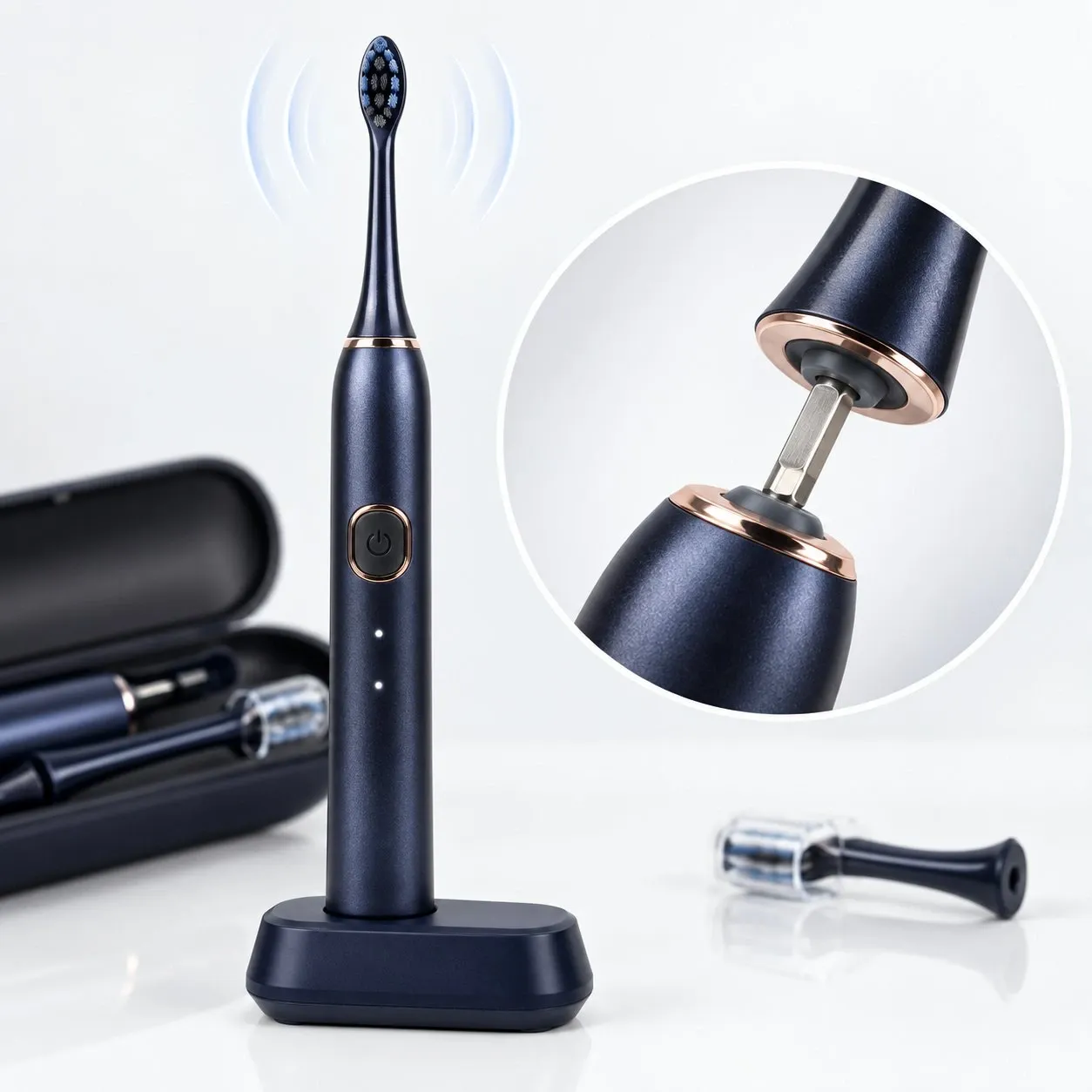
There is no single standard electric toothbrush PCB architecture.
The board may control several product functions, depending on the complexity of the platform.
Possible functional areas include:
A simpler electric toothbrush may use one controller to manage most of the product logic.
A more complex platform with sensors, displays or wireless connectivity may require additional components and more firmware.
For OEM sourcing, the important question is:
Does the existing PCB already support the functions you want?
If it does not, a request that sounds like a simple feature change may actually require electronics development.
Many private-label projects can remain on an existing electronics platform.
Typical changes that may stay within a standard PCB include:
Deeper electronics development becomes more likely when the buyer requests hardware that the existing board does not contain.
Examples may include:
Even a request that sounds like “software” should not automatically be assumed to be firmware-only.
Whether it can be implemented without changing the PCB depends on the existing controller, available inputs and outputs, firmware architecture and hardware already present.
The buyer should therefore ask:
Is this change supported by the existing platform, does it require firmware modification, or does it require a PCB revision?
How this choice relates to the overall development route is covered in OEM vs ODM for Oral-Care Products.
Mode names are labels.
They do not fully describe product behavior.
Two electric toothbrushes can both offer:
while behaving differently in each mode.
The actual firmware specification may need to define:
| Firmware Field | What the Buyer Should Confirm |
|---|---|
| Mode list | Names, sequence and SKU applicability |
| Motor behavior | Relative behavior or intensity by mode |
| Session logic | Duration and automatic shutoff |
| Timer / pacer | Interval behavior and response to mode changes |
| Mode memory | Whether the previous mode is remembered |
| Indicators | LED or display behavior in each relevant state |
For OEM projects, “5 modes” should therefore be converted into a written function matrix.
That matrix can then be checked against the sample and used again during production approval.
One physical platform may support several levels of customization.
A useful sourcing framework is:
| Level | Typical Configuration | Engineering Impact |
|---|---|---|
| 1 | Standard PCB + standard firmware | Existing electronics and functions remain unchanged |
| 2 | Standard PCB + modified firmware | Function logic changes within the existing hardware |
| 3 | Modified PCB + existing product platform | Additional sensor, display, wireless function or other component change |
| 4 | New PCB or motor-control architecture | Deeper electronics and product-development work |
This is a practical sourcing framework, not a formal IEC classification.
The electronics and firmware remain unchanged.
Customization focuses mainly on branding, packaging and other non-electronic elements.
The existing PCB remains, but supported behavior may change.
Examples may include:
Firmware version control and functional validation become important.
The existing product architecture remains broadly similar, but hardware changes are introduced.
Examples may include:
A new PCB revision and additional validation may be required.
A substantially different motor, actuator, driver or electronics concept moves the project beyond simple platform customization.
At this level, the project should be treated as product development rather than a minor OEM modification.
The key buyer question is not simply:
“Can you customize this function?”
It is:
What level of engineering change is required to create it?
A pressure or load-warning function usually involves more than software.
At a high level, the chain is:
Mechanical load or sensor → PCB signal → firmware logic → product response
The exact sensing method varies by platform.
If a supplier offers a pressure-sensing feature, buyers should clarify:
If the sensing hardware is not already present, the request may require more than a firmware change.
A dedicated sensor and smart-feature guide can examine this topic in greater detail.
Timer and user-interface behavior can look minor during sourcing but become visible immediately after the product reaches the market.
These behaviors should therefore be documented.
Useful questions include:
There is no reason to assume that every electric toothbrush handles these functions in the same way.
If the behavior matters to the brand, it should appear in the approved specification.
Connected features are not simply additional menu options.
Functions such as:
may require changes to the electronics architecture.
Depending on the product, this may involve:
The main sourcing question is whether the requested function already exists on the platform.
If not, the project may move from firmware customization into PCB-level or broader electronics development.
Detailed connected-product architecture belongs in a separate smart-feature guide.
“Quiet motor” is not really a motor-only characteristic.
The final sound and vibration of an electric toothbrush can be influenced by:
For this reason, two products using similar motor components may still sound different.
Buyers do not need to invent a universal decibel requirement.
Instead, establish a repeatable evaluation condition.
For example:
Production evaluation should also watch for abnormal:
The approved assembled product is a more useful reference than the motor specification alone.
Electric toothbrush electronics may use additional protection against moisture.
Depending on the platform, this can include:
These measures can help protect electronic components.
They do not replace the waterproofing strategy of the complete product.
Ingress protection also depends on:
A coated PCB should therefore not be treated as proof that the toothbrush itself meets a claimed waterproof performance level.
A full waterproof-design review belongs in a separate article.
Battery capacity is only one part of runtime.
Power consumption can also be affected by:
This is another reason why two products using similar batteries can still deliver different runtimes.
Battery chemistry, capacity, charging systems and runtime claims are covered separately in Electric Toothbrush Battery & Charging Systems.
Two externally identical electric toothbrushes can contain different electronics.
For that reason, visual approval alone is not enough to control an OEM product configuration.
The approved engineering or golden sample should correspond to identifiable electronics.
Depending on the project, useful identifiers may include:
This does not mean the buyer needs to control every resistor and capacitor in the product.
The purpose is simply to identify the electronic configuration that has actually been approved.
How these identifiers are frozen into the approval is covered in Golden Sample Approval for Oral-Care OEM Projects.
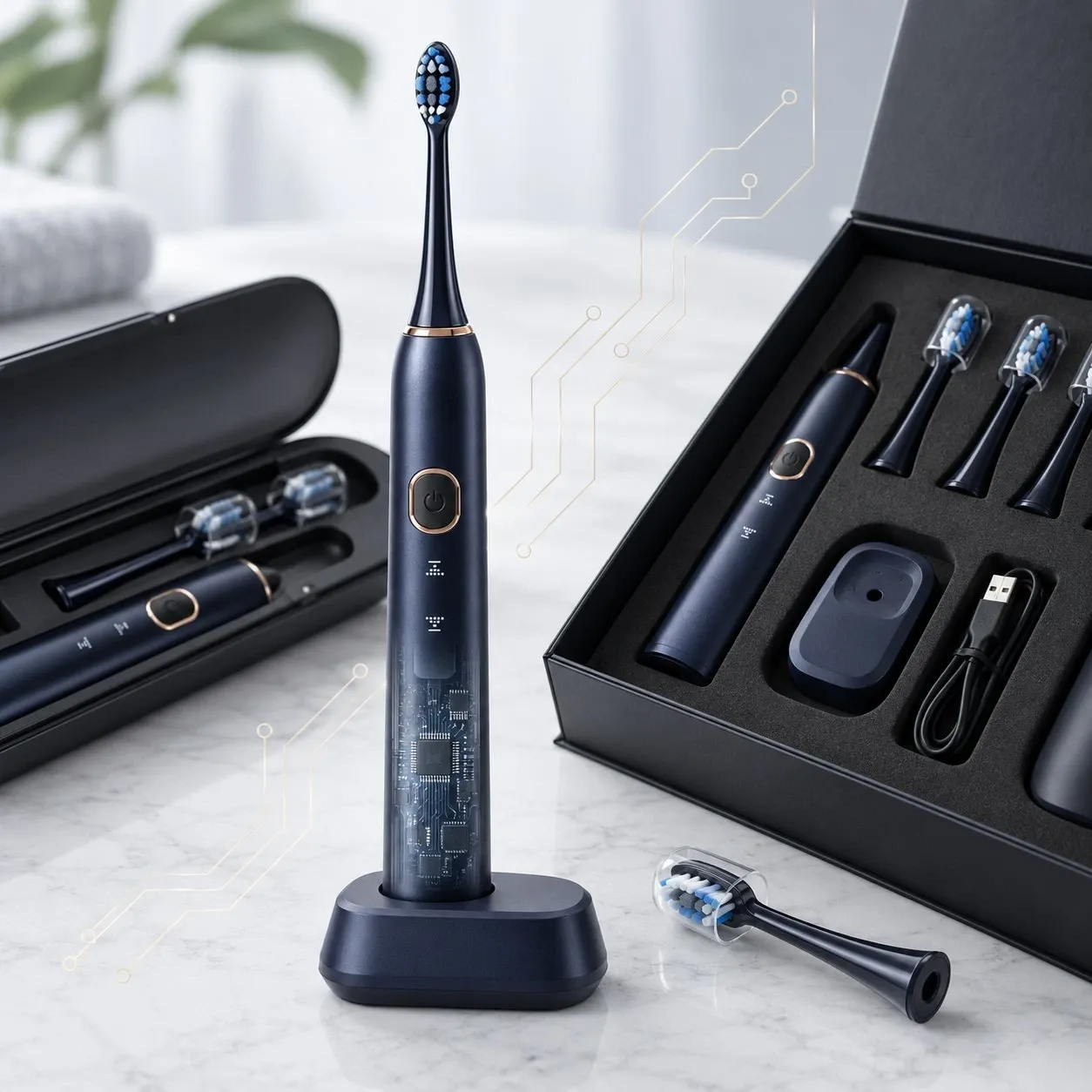
An OEM project may move through several stages:
Stock Sample → Engineering Sample → Golden Sample → Pilot / Pre-Production → Mass Production
The electronics should become progressively more controlled through these stages.
Use the stock sample to evaluate the baseline platform:
It proves only what that particular sample contained.
The engineering sample should represent the intended customized configuration.
At this stage, confirm items such as:
The golden sample becomes the approved product reference.
The related electronics identifiers should be recorded together with the approved functions.
Confirm that production parts and programming methods can reproduce the approved product consistently.
Production should follow the approved electronics and firmware configuration unless an authorized change has been accepted.
If the supplier later proposes a change to the:
the change should trigger review.
That does not automatically mean every previous test must be repeated.
The necessary review depends on what changed and whether it affects performance, safety, functionality or existing documentation.
Where these checks sit in the inspection process is covered in Incoming, In-Process & Final Inspection for Oral-Care OEM Orders.
Testing should distinguish between development and production.
The purpose is to confirm that the selected architecture works as intended.
Relevant checks may include:
The purpose is to evaluate whether the product remains stable through the agreed validation program.
The exact conditions depend on the platform and project requirements.
Production checks confirm that manufactured units behave like the approved product.
Depending on the QC plan, this may include:
Acceptance limits, test duration, cycle counts and sample sizes should be defined for the actual project rather than copied from generic examples.
IEC 63174 can provide relevant performance-measurement methods, but it is not a complete product approval standard.
The broader testing framework is covered in Electric Toothbrush Reliability Testing: What OEM Buyers Should Verify Before Mass Production.
Test reports describe a particular product configuration.
If major electronic characteristics change, buyers should review whether existing documentation still represents the product being manufactured.
Changes that may justify review include:
The key sourcing principle is:
The documentation should correspond to the final production configuration.
Do not assume that a report associated with an earlier electronic version automatically applies after a configuration change.
How to check report applicability against the final configuration is covered in How to Review Oral-Care Product Test Reports Before OEM Approval.
| Area | What to Define |
|---|---|
| Movement | Movement category and general platform architecture |
| Frequency | Supplier-reported figure, terminology and measurement basis |
| Modes | Required mode concept and relative behavior |
| Noise / vibration | How the product will be evaluated |
| PCB scope | Standard platform or requested electronics customization |
| UI | Buttons, LEDs, display and indicator requirements |
| Sensors | Whether sensing features are required |
| Connectivity | None, Bluetooth or other connected function |
| Firmware | Timer, pacer, memory, shutoff and indicator concept |
| Area | What to Confirm |
|---|---|
| Motor / actuator | Approved model or configuration where controlled |
| PCB | Approved board revision |
| Firmware | Version and release date |
| Mode matrix | Final function and behavior by mode |
| UI logic | Timer, memory and indicator behavior |
| Sensors | Approved response where applicable |
| Reference behavior | Approved frequency, function and noise references |
| Production control | Programming and change-notification process |
| Common Mistake | Better Approach |
|---|---|
| Comparing platforms only by vibration frequency | Confirm what is measured and compare the complete system |
| Assuming the same motor means the same behavior | Evaluate the assembled product |
| Treating mode names as a firmware specification | Create a written mode-function matrix |
| Approving a sample without recording PCB revision | Tie the approved sample to a defined PCB version |
| Not recording firmware version | Freeze the approved firmware build |
| Allowing unreviewed electronics substitutions | Treat relevant substitutions as configuration changes |
| Assuming a pressure feature is firmware-only | Confirm whether the required hardware already exists |
| Relying only on no-load performance figures | Evaluate final product behavior separately |
| Assuming identical appearance means identical electronics | Verify through records and functional checks |
Before approving development or mass production, the buyer should be able to answer:
Once these items are documented, the electronics are no longer a hidden part of the handle.
They become part of the controlled OEM product specification.
For an electric toothbrush OEM or private-label project, AileCare can review the target platform, required functions, mode logic and customization scope before samples and electronics changes are finalized.
No.
Frequency measures repetitions over time. It does not by itself describe movement amplitude, torque, mechanical architecture or performance under brushing load.
Supplier figures may also use different terminology or measurement conditions.
IEC 63174 provides methods for measuring characteristics such as vibration frequency, but it does not rank products according to the highest frequency.
The motor or actuator generates mechanical movement.
The movement mechanism transfers that movement to the brush head, for example through rotary, reciprocating or vibratory architecture.
The motor driver is part of the electronics that controls how the motor or actuator is energized.
All three can affect the final behavior of the toothbrush.
It depends on the platform.
The PCB may control the MCU, motor driver, buttons, timers, modes, indicators, charging interface, sensors, displays and wireless functions.
Simple toothbrushes may use relatively basic electronics, while sensor-rich or connected products require more hardware and firmware.
A firmware-only change may be possible when the requested behavior is already supported by the existing electronics.
Examples can include changing mode sequence, timer behavior, mode memory or indicator logic.
If the requested feature requires new sensors, displays, wireless hardware or another unsupported electronic function, a PCB change may also be required.
Yes, when those items are important to the approved product configuration.
Externally identical toothbrushes can contain different boards or firmware.
Recording the approved PCB revision and firmware version helps connect the golden sample, production specification and future change review to the same electronics configuration.
Because the motor is only one part of the system.
Driver settings, firmware, mechanical transmission, brush-head mass, shaft design, housing resonance and assembly tolerance can all change the final motion, sound and feel.
OEM evaluation should therefore focus on the assembled product rather than the motor component alone.
It depends on the existing platform.
If the required hardware is already present, some changes may be possible through configuration or firmware.
If the platform lacks the required sensor input, wireless hardware, antenna or related components, a PCB revision or deeper electronics development may be necessary.
The supplier should confirm the required customization level before development begins.