Start Your Electric Toothbrush Project
Tell us your product requirements and target market. We will review the details and reply with the relevant next steps.
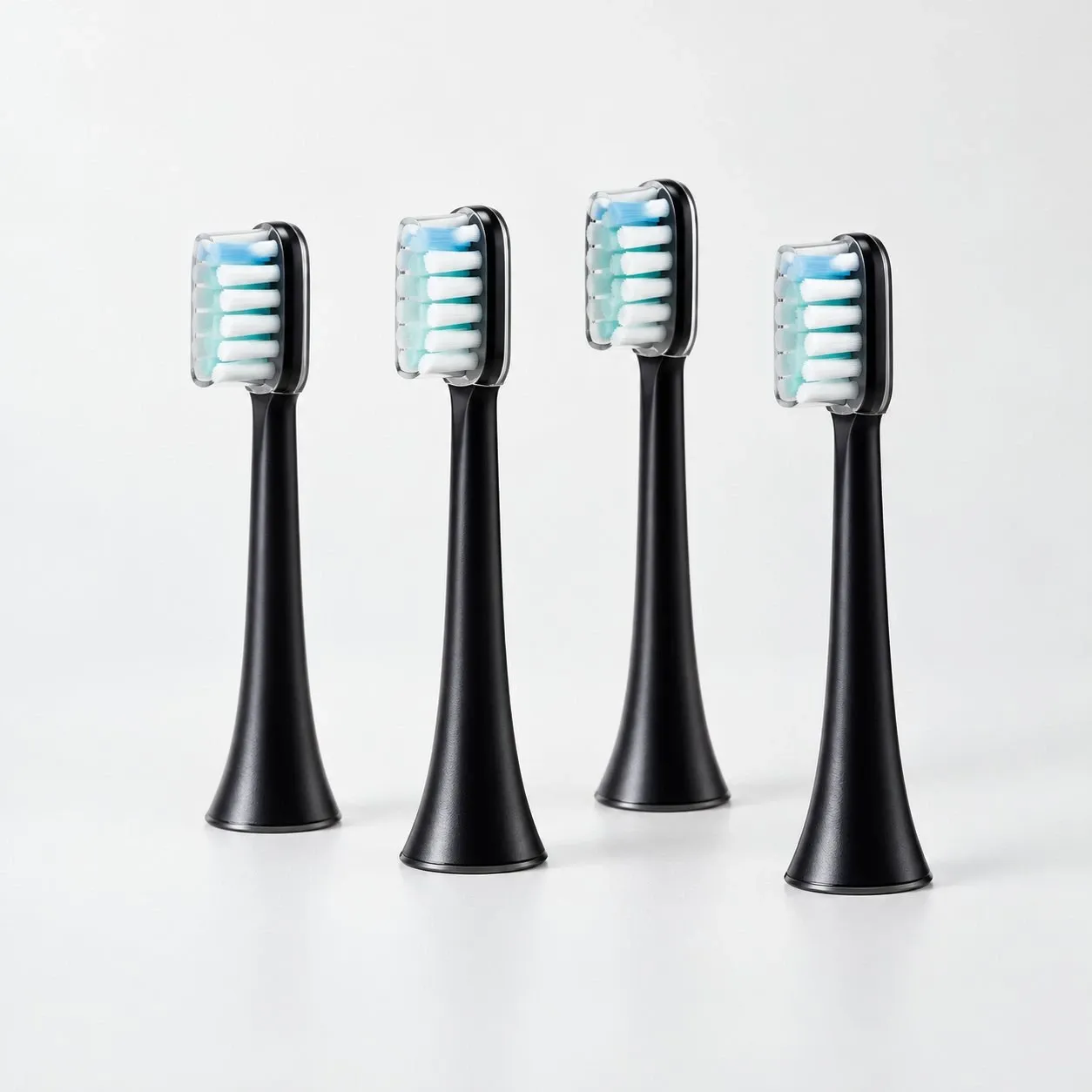
A replacement brush head may look simple from the outside, but its construction can include several separately controlled parts: the molded head body, neck, internal sleeve, interface or retention feature, insert, bristle carrier or head plate, elastomer features, decorative parts and the joining structure that holds them together.
Two heads can look almost identical while using different internal components, material grades or assembly methods.
For OEM sourcing, approving only the color, exterior shape, bristles and handle fit is not enough. Buyers should understand what the approved head is actually made of, which components are controlled, and which changes require review before repeat production.
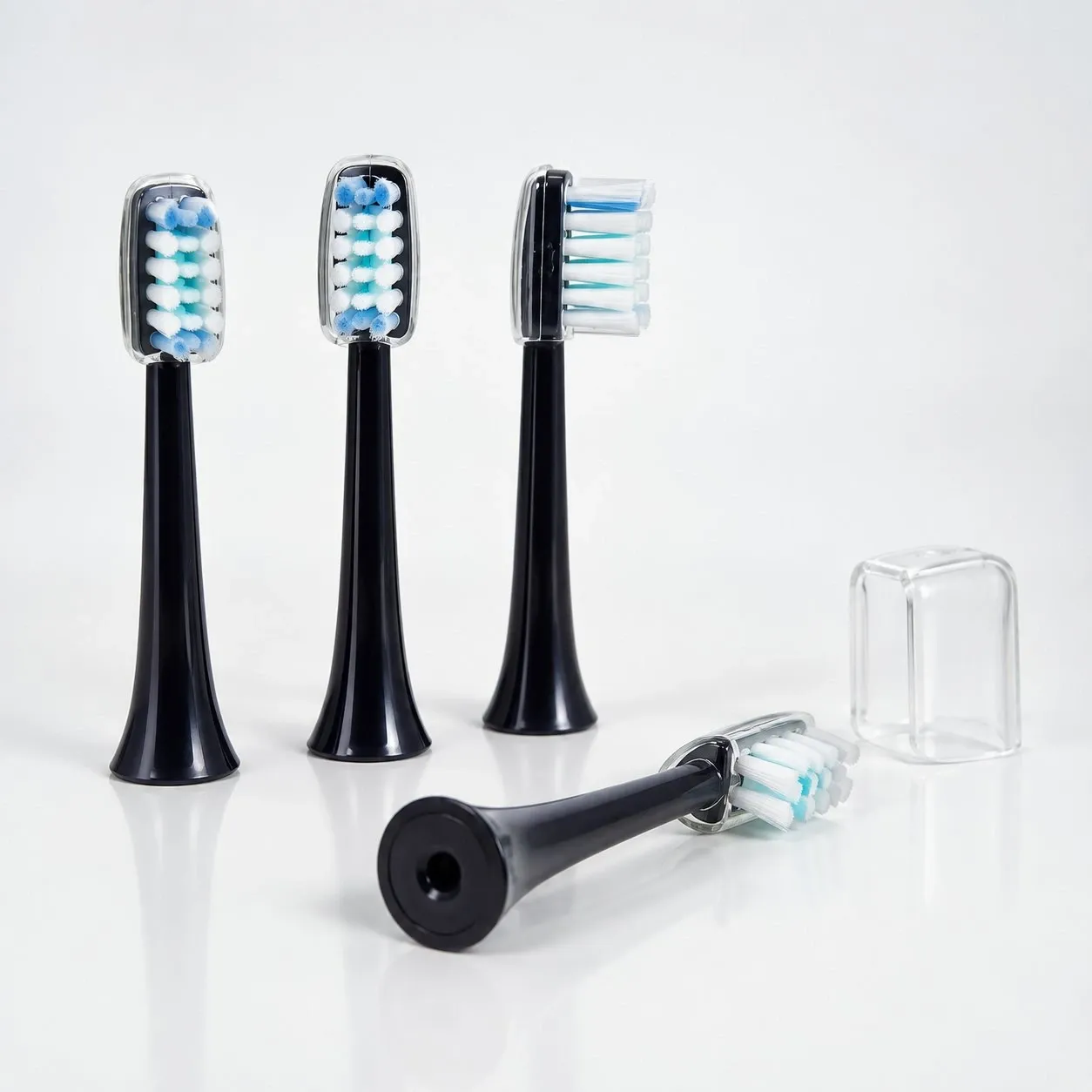
Depending on the platform, a replacement head may include some of the following components.
Not every replacement head uses every component. This is a buyer-oriented component map, not a universal brush-head architecture.
| Component | Main Function | Typical Construction Role |
|---|---|---|
| Head Body | Provides the exterior shape and supports the structure | Usually molded |
| Neck | Connects the head region to the handle-interface region | Usually integral or molded |
| Bristle Carrier / Head Plate | Holds the tufted bristle field in some designs | Molded, sometimes separately assembled |
| Internal Sleeve | Interfaces with the shaft or coupling in some heads | Integral, separately molded or assembled |
| Drive-Engagement Feature | Transfers handle movement into the head | Molded geometry or separate component |
| Retention Feature | Helps keep the head attached to the handle | Integral feature, insert or elastomer component |
| Insert | Provides controlled fit, wear surface or structural function | Assembled or overmolded |
| Elastomer Feature | Flexible fin, cup or soft molded zone | Overmolded or assembled |
| Decorative / ID Ring | Provides visual or user differentiation | Separate or integral |
| Protective Cap | Protects the head during storage or packaging | Separate molded part |
| Bristles / Filaments | Form the tufted brushing field | Tufted into the carrier or body |
| Internal Linkage | Transfers movement in some rotating or oscillating designs | Assembled where applicable |
The supplier should identify which of these components exist in the quoted head and which are separately controlled rather than integral parts of the molded structure.
A replacement brush head may use:
Neither architecture is automatically better.
The important buyer question is:
What components make up the approved head, and which of those components are separately controlled?
That determines what can change internally without producing an obvious visual difference.
Different structural parts may use different thermoplastic materials depending on the design.
Buyer-relevant considerations may include:
Material families such as PP, ABS or POM/acetal may appear in oral-care hardware, but no single material family should be assumed to define every powered brush head.
The useful sourcing question is not:
“Is this good plastic?”
It is:
“Which material is used for each important structural component, and how is that material controlled?”
Terms such as:
describe broad material families.
They do not define:
Two grades within the same material family can behave differently during molding and assembly.
A polymer-family name does not define the approved part construction.
For a standard existing platform, a supplier-controlled internal material reference may be sufficient.
For a compatibility-critical or customized component, buyers may need a more specific material reference, such as the controlled supplier grade or the supplier’s internal approved material specification.
The neck connects the brushing area to the head–handle interface.
Depending on the design, it may influence:
For this reason, a change to the neck geometry, wall structure or material should not automatically be treated as a cosmetic change.
Even when the bristle field remains unchanged, the structural implications may need engineering review.
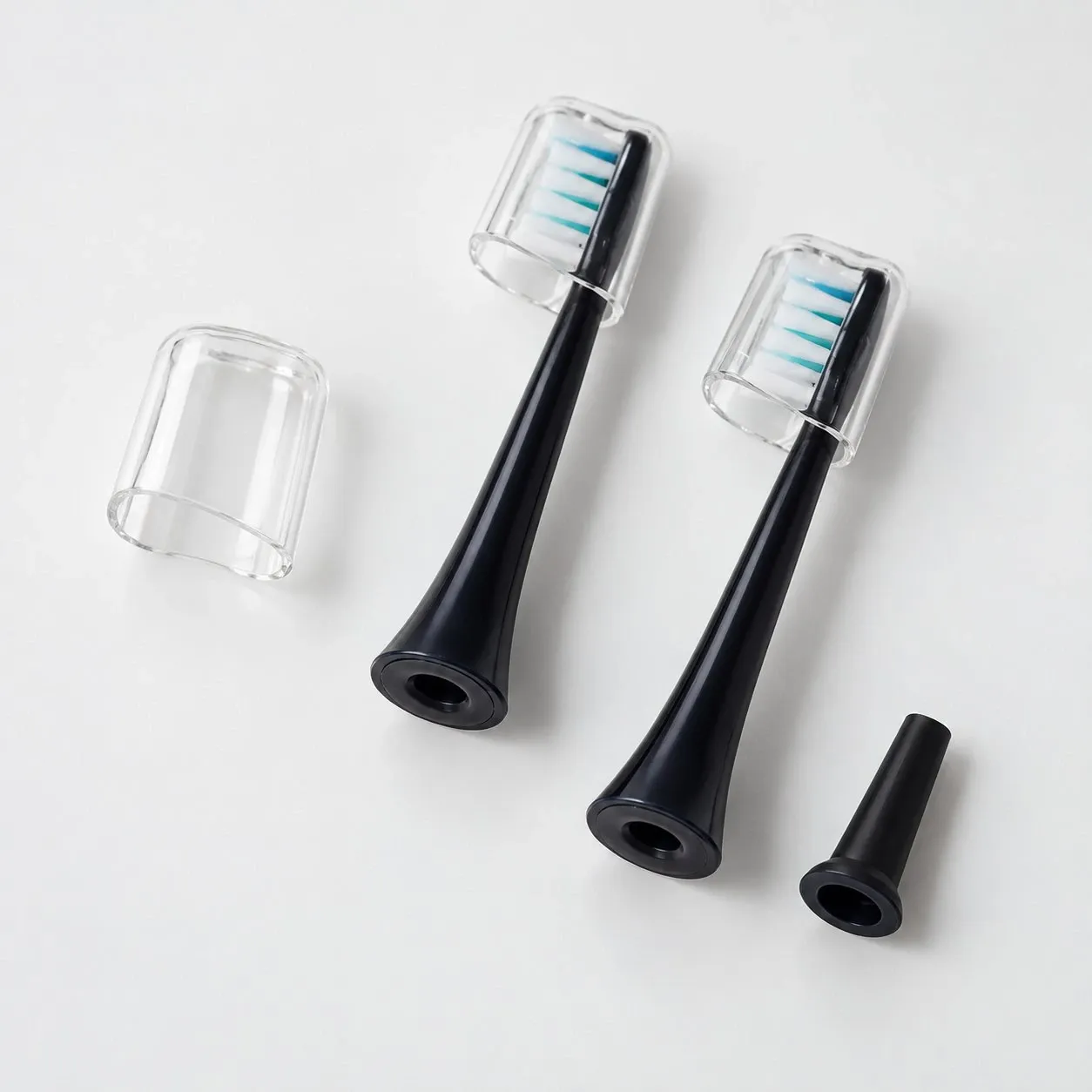
Some replacement heads use interface geometry molded directly into the head body.
Others may use a separate:
These components may provide:
The exterior body and the internal interface may use different materials and separate components.
This is why two visually similar replacement heads can behave differently on the same handle.
Buyers should confirm whether the interface is:
How these interface details are verified against an actual handle is covered in our guide to replacement brush head compatibility and retention.
Where inserts are used, they may include:
Not every head contains these parts.
But when an internal insert is compatibility-critical, changing it can affect:
The buyer does not need to specify every hidden feature at RFQ stage.
The important control is to identify critical internal components and tie them to the approved BOM, drawing or structural revision.
Replacement heads may include non-filament features such as:
These may be:
They should therefore be controlled as structural components rather than grouped together with the bristle specification.
Relevant fields may include:
For filament and tufting specifications:
Filament and tufting specifications are covered separately in our guide to replacement brush head bristles and tufting.
Overmolding and two-shot molding combine more than one material within the same component or assembly.
Depending on the design, this may support:
For buyers, this can mean greater importance for:
Overmolding should not automatically be treated as a quality grade.
It is one possible construction architecture.
Some designs use a separate component to hold the tufted bristle field.
| Term | Meaning |
|---|---|
| Bristle Carrier / Head Plate | Component holding the tufted field in certain brush-head architectures |
| Complete Replacement Head | Full user-replaceable head assembly |
| Head-to-Handle Retention | How the complete replacement head stays attached to the handle |
| Tuft Retention | How filament bundles remain fixed in their tuft positions |
These terms should not be mixed.
ISO 20127:2025 addresses brush-head plate retention where the relevant detachable component exists, but that does not mean every powered brush head contains a separate head plate.
Where a head plate or carrier exists, buyers should confirm whether it is integral, snapped, welded, pressed or otherwise retained.
Depending on the architecture, structural components may be joined using methods such as:
No method should automatically be treated as superior.
The joining approach may affect:
Where the joining method affects the finished structure, it should remain part of the approved structural revision.
Ultrasonic welding joins suitable thermoplastic components using localized heat generated through mechanical vibration.
Where this method is used, changes to the following may affect the joint:
Buyer-visible issues may include:
The buyer does not need to manage welding parameters.
But if a welded component changes material or geometry, that change should not automatically be treated as neutral.
Snap-fit and press-fit structures depend on the interaction between:
A material-grade or geometry change can alter how these features assemble even while the exterior appearance remains unchanged.
Buyers do not need to design these features.
They do need the approved geometry and relevant material reference captured in the product revision.
Material substitutions may involve:
Potential effects may include:
Material substitution should trigger a specification-impact review.
This does not mean every substitution requires full redevelopment.
The buyer and supplier should determine whether the change affects:
How these changes are documented and notified between orders is covered in our guide to BOM and engineering change control.
A molded component may achieve its color through:
A component can therefore look almost identical while using a different:
Color approval and material approval should remain separate controls.
Where these details matter, the product record should distinguish the approved appearance from the underlying controlled material.
These terms may appear in supplier material descriptions, but they are not complete structural specifications.
BPA-Free
Addresses a specific substance. It does not identify the complete resin formulation or prove suitability for every market or application.
Food-Grade
Is not a complete engineering definition by itself. Its relevance depends on the applicable regulation, market, contact condition and supporting documentation.
Medical-Grade
Should not be treated as a universal self-proving regulatory classification for the finished brush head.
The sourcing approach is therefore:
A broad marketing term should not replace the material specification.
Depending on the target market, material and customer requirements, documentation may include:
There is no universal documentation package for every replacement-head project.
The required scope depends on:
Replacement brush heads may be exposed to:
The sourcing point is not to prescribe one universal test protocol.
It is to ensure that the selected materials, joining methods and component construction are suitable for the intended product environment and are validated within the agreed project scope.
What that validation can involve is covered in our guide to electric toothbrush reliability testing.
Dimensional stability can be especially important for:
Small dimensional changes can affect fit or assembly without producing an obvious visual difference.
That is why compatibility-critical material and geometry should be tied to controlled drawings, BOM records, approved samples and change-control records.
Molded materials can behave differently depending on:
A material substitution can therefore change the final molded dimensions even when the tool remains unchanged.
Buyer-level implications may include:
A material change does not automatically mean new tooling.
It means the effect on the existing part and process should be reviewed.
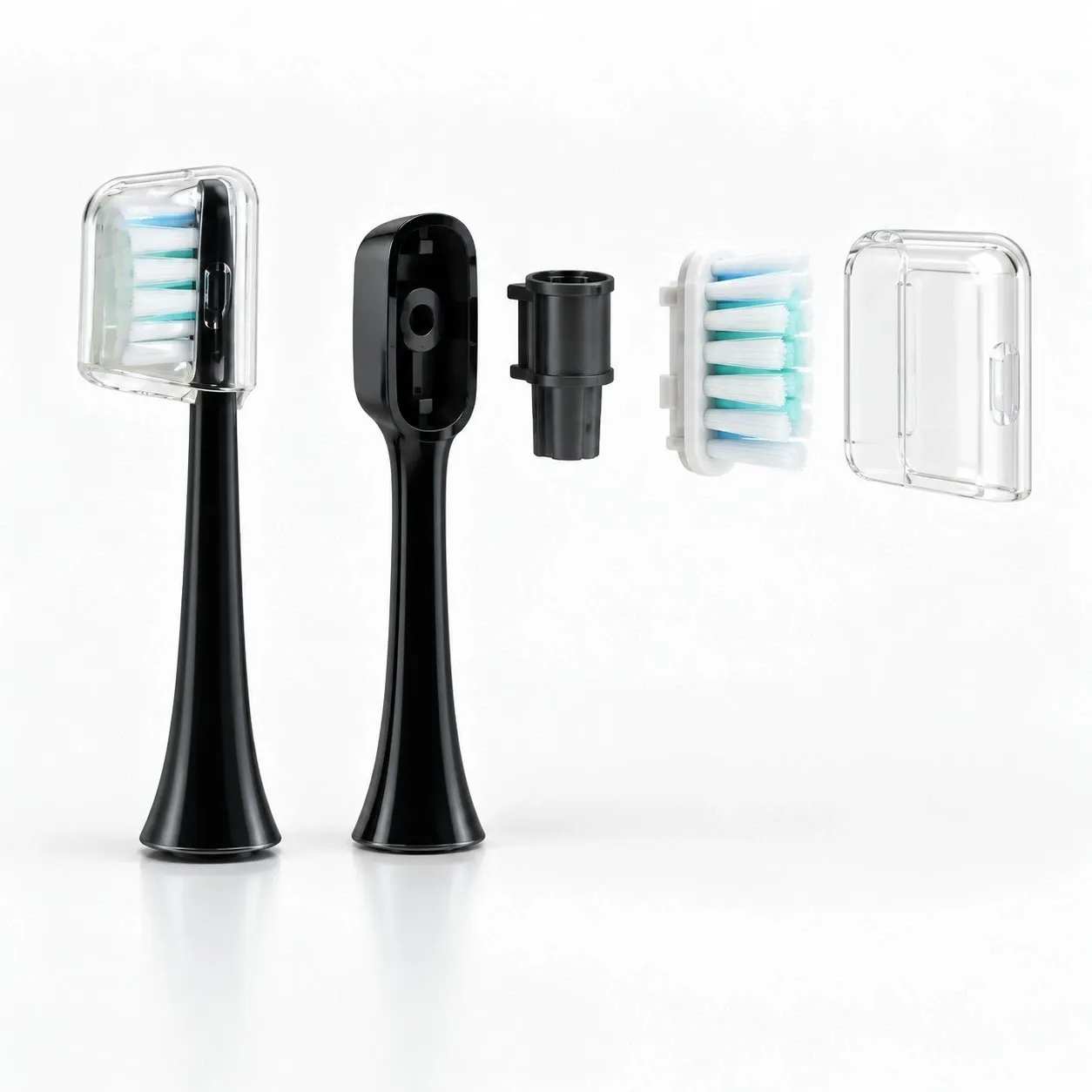
Two replacement heads can look identical externally while differing in:
External appearance does not define internal construction.
A product photo can confirm:
It cannot confirm:
When internal construction matters, buyers need more than photography.
A useful sourcing distinction is:
| Commonly Controlled by Molded Geometry | May Sometimes Change Within the Existing Platform* |
|---|---|
| Head Outline | Molded Color |
| Neck Geometry | Supported Material Option |
| Interface Geometry | Decoration |
| Integral Sleeve Cavity | Separate Cap Color |
| Tuft-Hole Pattern | Separate Ring Color |
| Elastomer Location | Certain Insert Options |
| Internal Ribs | Packaging |
| Snap / Locking Features | Certain Bristle Constructions |
| Head-Plate Seating Features | — |
*Depends on the existing tooling, material options and supplier process.
This is a sourcing framework, not a universal rule.
The supplier should confirm feasibility against the actual brush-head platform.
An existing mold may support another approved material where:
A tooling or process review becomes more important when the material change affects:
Feasibility is platform-specific and should be confirmed rather than assumed.
Examples include:
These changes may require:
The correct path depends on the existing tool design, geometry, material and supplier capability.
Which requests stay inside an existing platform is set out in our guide to electric toothbrush OEM customization levels, and the tool-ownership side is covered in public mold vs private tooling.
The following is a practical buyer framework, not an official industry classification.
| Level | Scope | Typical Implication |
|---|---|---|
| 1. Existing Platform | Existing molded head and internal construction; color, bristles or packaging change | Main structural tooling normally remains unchanged |
| 2. Semi-Custom Material / Component | Existing head with a supported material, ring, cap or component option | Supplier material/process review may be needed |
| 3. Internal Component Modification | Existing exterior form with revised sleeve, insert or retention component | Engineering and compatibility review |
| 4. Modified Molded Structure | Changed neck, internal geometry, retention feature or elastomer location | Tool modification or insert change may be needed |
| 5. New Structural Development | New head geometry, interface or component architecture | New tooling and broader development likely |
The purpose of this framework is to separate a simple existing-platform customization from a structural-development request before quotation.
A buyer-level structural BOM does not need to contain every internal factory process parameter.
It should identify the components that define the approved product.
| Component | Material Reference | Process / Construction | Revision | Critical Function |
|---|---|---|---|---|
| Head Body | Controlled Thermoplastic | Molded | Rev. B | Exterior and neck structure |
| Internal Sleeve | Controlled Polymer Insert | Molded / Assembled | Rev. A | Fit and motion transfer |
| Elastomer Feature | Controlled Elastomer | Overmolded | Rev. A | Feature location and appearance |
| Head Plate / Carrier | Controlled Polymer | Molded / Assembled | Rev. A | Supports the bristle field |
| Decorative Ring | Controlled Polymer | Separate Molded Part | Rev. A | Product / SKU differentiation |
| Protective Cap | Standard Controlled Polymer | Separate Molded Part | Rev. A | Packaging accessory |
These are generic examples, not material recommendations.
The objective is to identify what makes up the approved product and which components cannot change unnoticed.
Useful structural records may include:
A product photo is useful for the exterior.
A component map or sectional drawing can identify:
This becomes more important as customization depth increases.
A sectioned or cutaway sample can make hidden construction visible.
Depending on the design, it may show:
This is not necessary for every project.
It may be useful when the exterior appearance does not provide enough evidence to confirm the internal construction being approved.
At the structural sample stage, buyers may review:
Detailed handle-fit, retention and motion-transfer checks belong in:
Detailed handle-fit, retention and motion-transfer checks belong in the compatibility and retention review rather than here.
The purpose here is to confirm that the physical sample represents the agreed structural BOM and drawing.
Repeat production can change structurally even when the exterior still looks familiar.
Possible changes include:
The approved product should therefore connect to:
A structure- or compatibility-critical change should trigger an impact review before it enters repeat production.
Routine production checks then confirm that the approved construction is being followed, as set out in our guide to incoming, in-process and final inspection.
Routine production checks then confirm that the approved construction is being followed.
A practical specification can include:
| Field | Why It Matters |
|---|---|
| Brush-Head Model | Identifies the product |
| Product Revision | Identifies the controlled construction version |
| Head-Body Material | Defines the main molded structural material |
| Material Grade / Supplier Where Controlled | Separates the material family from the approved reference |
| Neck Construction | Records integral or multi-part structure |
| Interface Construction | Records integral, sleeve, insert or coupling construction |
| Internal Sleeve / Insert | Controls compatibility-critical internal component where present |
| Head Plate / Bristle Carrier | Records whether separate and how it is retained |
| Elastomer Features | Records material, location and construction |
| Decorative Ring | Records separate or integral decorative component |
| Protective Cap | Defines accessory and SKU configuration |
| Joining Method | Records welding, snap, press, overmold or other relevant joining method |
| Mold / Tool Reference | Links structure to the approved platform/tool |
| Color | Separates visual requirements from material identity |
| Approved Drawing | Defines geometry and assembly |
| Approved Sample | Provides physical production reference |
| Applicable Test Evidence | Links validation to the relevant product revision |
| Revision Date | Supports repeat-order control |
Not every project needs every field.
The objective is to control the finished structure without unnecessarily micromanaging the factory’s manufacturing process.
Useful questions include:
| Field | Buyer Input |
|---|---|
| Target Handle / Platform | Existing compatible system or development platform |
| Existing Brush-Head Model | Reference model, if available |
| Target Market | Destination or customer program |
| Existing Mold Acceptable? | Yes / no / subject to review |
| Head Shape | Existing sample, drawing or new concept |
| Neck Construction | Existing / modified / new |
| Interface Construction | Integral / sleeve / insert / unknown |
| Internal Sleeve | Existing standard / controlled reference / new request |
| Material Preference | Requirement if already defined |
| Elastomer Features | None / existing / new request |
| Decorative Ring | None / standard / customized |
| Protective Cap | Required / not required / standard |
| Color | Component-level color requirements |
| Required Structural Changes | Non-negotiable changes |
| Components That May Remain Standard | Acceptable existing-platform features |
| New Tooling Acceptable? | Yes / no / quotation required |
| Required Documentation | Drawing, BOM, material declaration, sample record, etc. |
| Approved Reference Product | Existing sample, handle or brush-head reference |
Separate the request into three groups:
Must Change
May Remain Standard
Supplier Recommendation Welcome
This helps the supplier understand whether the project is a standard platform adjustment or structural development.
| Common Mistake | Better Approach |
|---|---|
| Specifying only “ABS head” | Identify the controlled material and the component it applies to |
| Assuming a polymer family defines the exact material | Record supplier/grade or controlled internal reference where relevant |
| Approving only exterior appearance | Review the component map and internal structure |
| Not identifying the internal sleeve | Confirm whether the interface is integral or separate |
| Changing material without fit review | Run a specification-impact review |
| Confusing elastomer features with bristle material | Control elastomer as a separate structural component |
| Assuming the same color means the same resin | Separate color approval from material control |
| Changing an interface insert without compatibility review | Treat critical insert changes as compatibility-impacting |
| Assuming the same exterior means the same internal construction | Control BOM, drawings and revision |
| Not recording the joining method | Include it where structurally relevant |
| Accepting “food-grade” as the complete material specification | Request material identity and appropriate documentation |
| Allowing material substitution without review | Establish change notification and impact review |
| Using product photos as the only record | Use drawing + BOM + approved sample |
Before production, the buyer should be able to identify:
The goal is not to make the sourcing process unnecessarily technical.
It is to make sure that the product approved during development is the same structural product that reaches repeat production.
For the wider sourcing sequence:
The wider sourcing sequence around the head is covered in our replacement brush head sourcing checklist.
If you are sourcing replacement brush heads, define the internal construction and controlled material references before repeat production rather than relying only on the exterior appearance.
There is no single universal material.
Depending on the design, structural components may use different thermoplastic materials, while elastomers may be used for flexible features and separate filament materials are used for the bristle field.
Buyers should identify the material used for each important component rather than asking only for one generic material name for the complete head.
Both types exist.
Some heads use a largely integral molded structure, while others may include separate internal sleeves, inserts, bristle carriers, elastomer features, rings or other assembled components.
Neither construction is automatically better.
The important sourcing question is which components make up the approved product and which are separately controlled.
Where used, an internal sleeve forms part of the interface between the replacement head and the handle’s shaft or drive system.
It may help control fit, retention, wear, motion transfer or dimensions.
Because the sleeve is hidden inside the head, it can change without producing an obvious difference in external appearance.
Because the external shape is only one part of the construction.
Internal sleeve geometry, inserts, retention features, material grade, molded dimensions and joining structure can all affect fit.
Two products may therefore look almost identical in a photograph while behaving differently on the same toothbrush handle.
Sometimes.
An existing tool may support another approved material if the molding process remains compatible and the finished dimensions, assembly and fit remain acceptable.
However, a material change can affect shrinkage, flow, interface dimensions, welding, overmold bonding and stiffness.
The supplier should review the exact platform before confirming whether tooling changes are needed.
These are softer material regions formed onto or together with a harder structural substrate.
Examples may include flexible fins, cups or other molded zones.
Overmolding can create integrated multi-material construction, but it also adds material, bonding, tooling and process considerations.
It should be treated as a construction method rather than automatically as a quality level.
No.
The term alone does not identify the resin, grade, supplier or the exact regulation and conditions being referenced.
Similar caution applies to terms such as “BPA-free” and “medical-grade.”
For OEM sourcing, buyers should ask for the actual material identity, intended claim scope and supporting documentation appropriate to the target market.