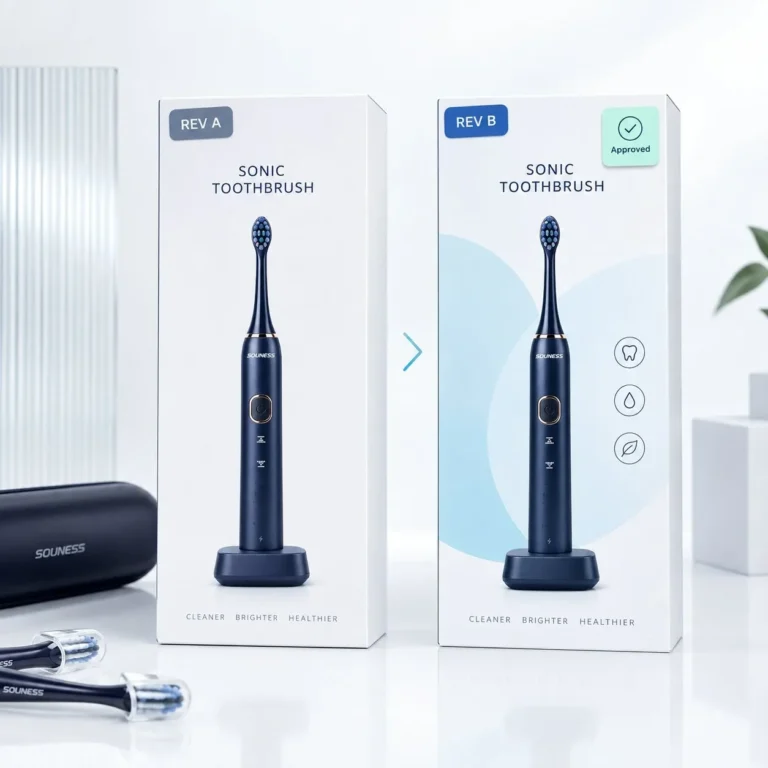
Start Your Electric Toothbrush Project
Tell us your product requirements and target market. We will review the details and reply with the relevant next steps.

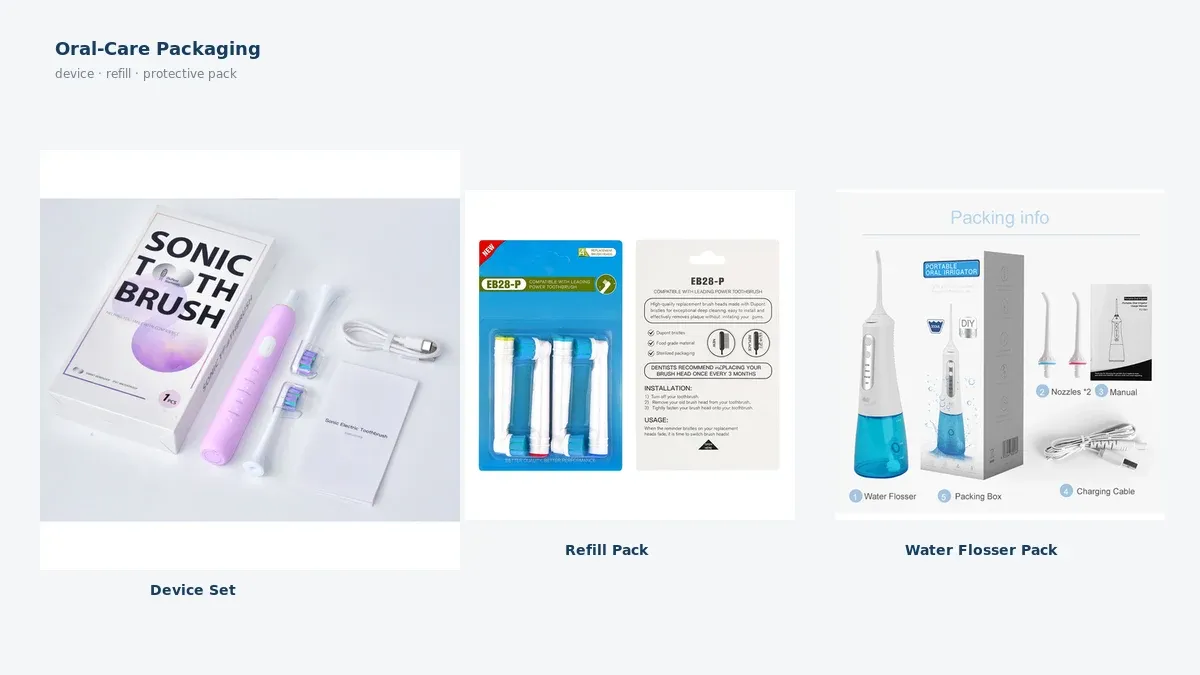
Packaging should be chosen after the product configuration and sales channel are reasonably defined, and before structural artwork work begins.
The right format balances product protection, retail presentation, parcel handling, pack count, SKU clarity, information space and launch logistics. Packaging is a commercial and launch-readiness decision, not simply an artwork exercise.
For many oral-care brands, packaging needs to work across more than one channel. The practical question is not simply “retail or e-commerce?” but whether one packaging architecture can support both—or whether separate channel-specific formats are justified.
This guide explains that decision for electric toothbrushes, replacement brush heads, water flossers and oral-care sets.
Packaging decisions depend on what is actually in the box.
That can include:
Until the product configuration is reasonably stable, any dieline or artwork remains provisional.
A late change to accessory count, adapter type, travel case or manual can affect the insert, carton dimensions and artwork layout.
The first packaging decision is therefore not the graphic style or box color.
It is confirming the included components, identifying fragile or transparent parts and defining which sales channels the pack needs to serve.
No packaging format is inherently best.
The choice should follow:
| Format | Typical Oral-Care Use | Main Trade-Off |
|---|---|---|
| Folding carton | Electric toothbrushes, water flossers, multipacks, sets | Flexible branding surface; protection depends on structure, insert and shipping method |
| Window carton | Handles, starter kits, selected retail sets | Adds product visibility but introduces additional surface and structural considerations |
| Rigid box | Presentation-led or gift sets | Strong presentation but usually adds volume and packaging complexity |
| Blister pack | Replacement brush heads, small accessories | High product visibility for retail; exposed or semi-exposed components still need protection |
| Tray + sleeve | Refill packs, curated kits, gift sets | Organizes the product well but adds packaging components and assembly steps |
| Molded pulp or paper insert | Devices, travel cases, accessory sets | Can retain and separate components; finish, abrasion and moisture behavior should be reviewed |
| Thermoformed plastic tray | Multi-part devices, water flossers | Precise retention; contact points should be reviewed for scratching or marking |
| Corrugated insert or mailer | Parcel-shipped devices and bundles | Prioritizes shipping protection over retail presentation |
| Compact refill carton or mailer | Brush-head and nozzle replenishment | Can reduce pack volume while still needing adequate bristle, cap and item-count control |
Before adding a window or blister, ask whether customers genuinely need to see the physical product.
Visibility is a commercial decision with a protection trade-off, not a default requirement.
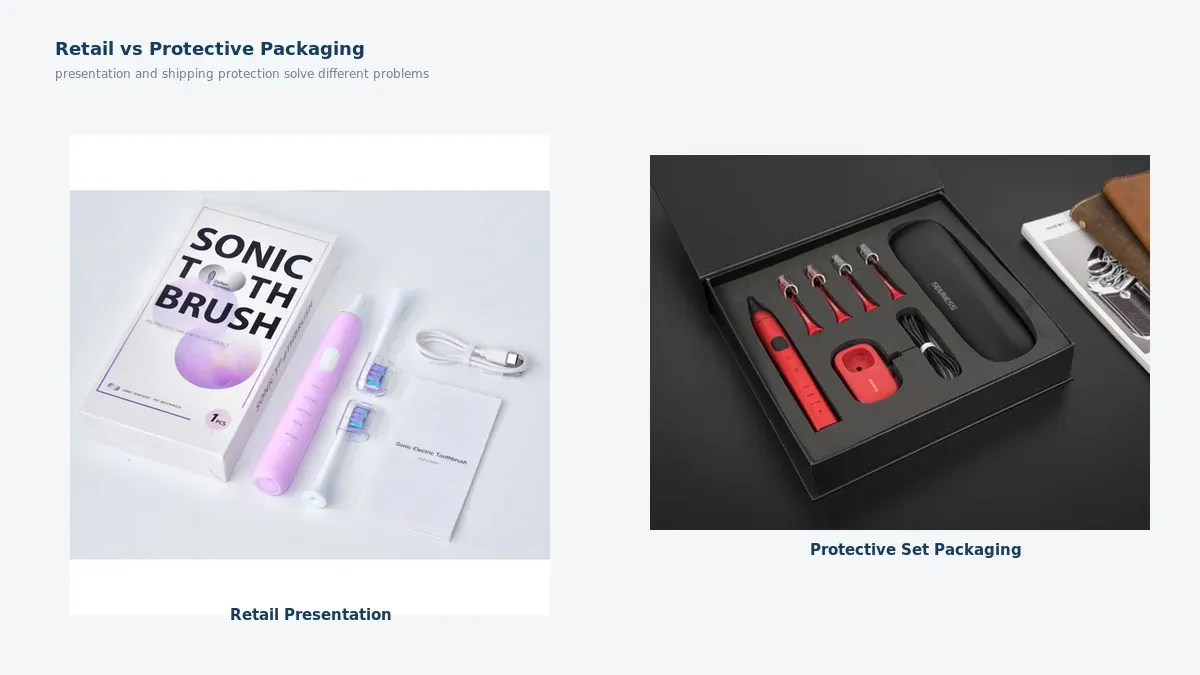
Retail packaging works as a shelf-facing display and information unit.
Relevant considerations can include:
E-commerce packaging has a different job.
It may need to address:
A retail carton that presents well on a shelf may still need additional protection when shipped through a parcel network.
Marketplace and retailer programs can also apply their own packaging-performance requirements. These requirements vary by program, region and fulfillment method.
For an omnichannel project, the practical decision is:
Can one retail pack support e-commerce shipping with an outer protective layer?
Or does the project justify separate retail and ship-ready packaging architectures?
Either approach may be appropriate.
The problem is leaving that decision until after the structure and artwork are already finished.
Packaging may need to organize:
A handle-only SKU, a handle-plus-two-heads set and a travel-case bundle are different sellable configurations.
Their internal layout, box size, identification and master-carton planning may also differ.
They should not automatically be treated as the same packaging structure with only an artwork change.
The main packaging decisions include:
Compatibility wording should have enough space to identify the verified platform or model clearly.
Avoid overly broad compatibility lists or wording that could imply affiliation where none exists.
For the compatibility and sourcing side of refill programs, see the Replacement Brush Head Sourcing Checklist.
Start with the complete configuration:
Transparent reservoirs can be scratched, nozzles can bend and loose accessories can move during handling if the internal structure does not control them adequately.
Packaging decisions should therefore consider both product retention and contact points between components.
For product-side configuration decisions, see the Water Flosser Sourcing Guide.
Sets and bundles can create unnecessary SKU complexity if they are planned too early.
Before creating separate boxes and artwork, decide which bundles are genuinely separate commercial offers.
For example:
Each additional configuration can affect packaging, barcode planning, inventory and warehouse handling.
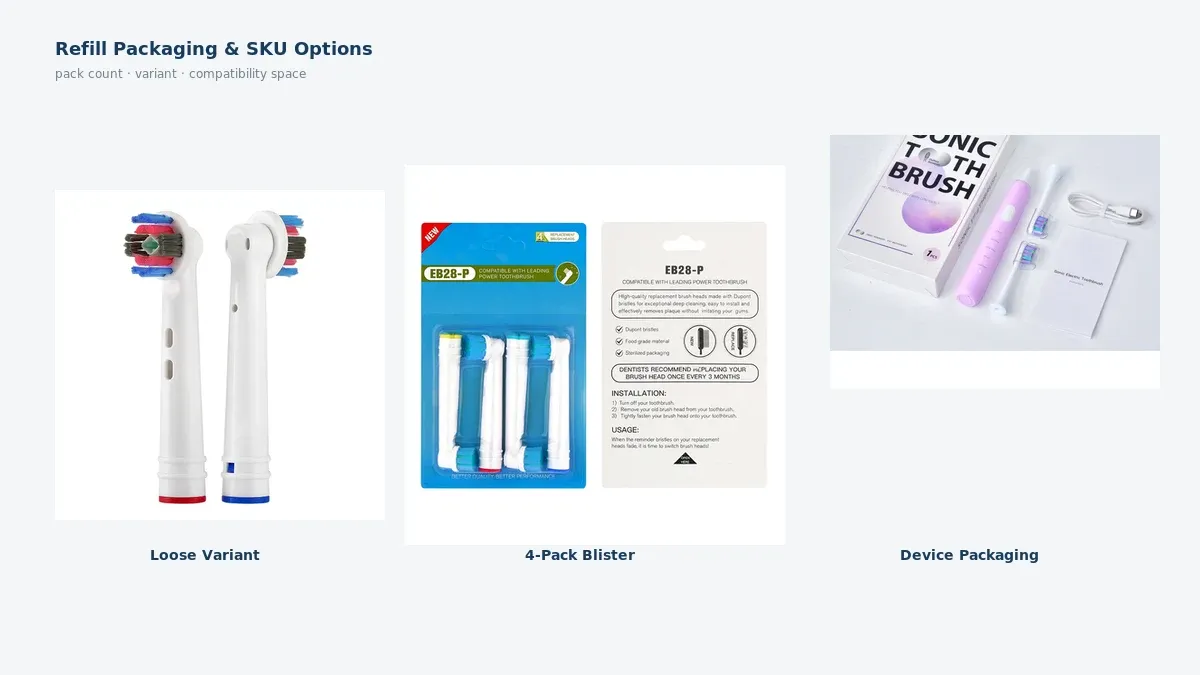
Refill packaging is part of the repeat-purchase model.
It should not simply be treated as a smaller version of the main device box.
Define the refill proposition first:
Pack count is a commercial decision.
A 2-pack, 4-pack and larger multipack can serve different price points, shelf footprints, shipping models and replenishment patterns.
There is no universal right pack count.
Different pack counts, compatibility platforms, bundles or sellable variants may also require separate SKU and product-identification decisions.
Compact refill packaging can improve parcel and storage efficiency, but only if it still protects:
Color coding and clear compatibility identification can also help reduce picking and customer-selection errors.
Windows, blisters and semi-exposed presentations can make the physical product easier to see on shelf.
They can also create additional protection requirements.
Potential issues include:
The buyer should ask:
Does the customer need to see the physical product for this channel?
If yes, the packaging structure should protect the exposed or visible areas appropriately.
If not, a closed carton with clear printed product communication may provide a simpler packaging architecture.
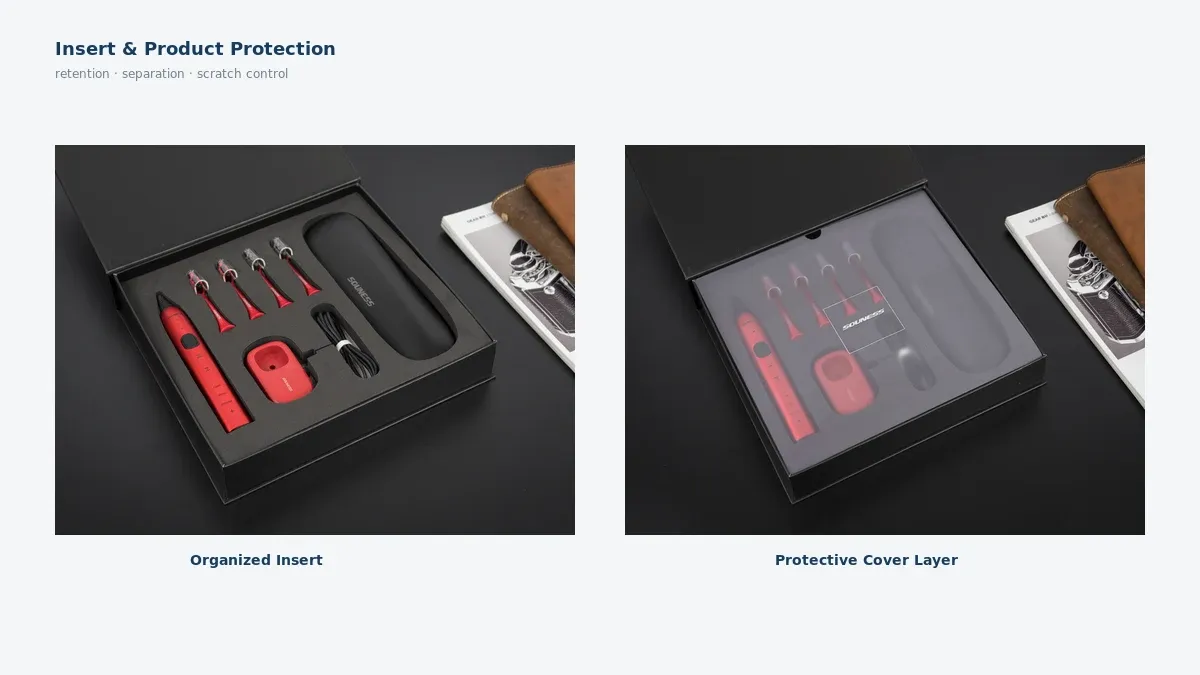
Choose internal inserts based on function.
Can retain and separate components.
Review:
Can organize lightweight components and reduce internal movement.
Review:
Can provide precise retention for complex configurations.
Review:
Can be useful where parcel protection and spacing are more important than presentation.
For oral-care products, the insert should help prevent:
The objective is adequate protection and organization without unnecessary complexity.
Packaging needs enough space for required and commercially useful information before artwork begins.
Depending on the product and destination market, that can include:
There is no single mandatory information list that applies to every oral-care product in every market.
The final requirements depend on:
SKU and product-identification planning should also happen before artwork lock.
A different pack count, bundle composition or sellable variant may require a separate commercial SKU and may require a separate GTIN or other identifier depending on applicable GS1 rules and retailer requirements.
Do not wait until final artwork to decide this structure.
Environmental terms should be treated as claims, not decoration.
Words such as:
should not be added simply because they sound positive.
Before using environmental wording, confirm:
A specific, supported statement about a defined packaging component is usually clearer than a broad environmental claim about the entire pack.
Destination-market requirements should also be checked because packaging rules and environmental-claim requirements can change.
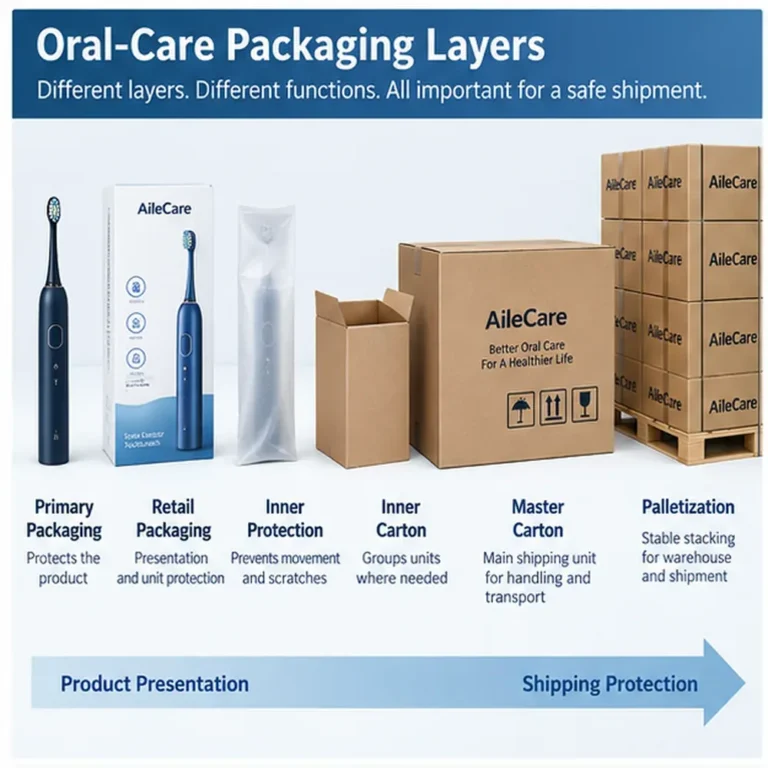
Packaging dimensions affect more than appearance.
They can influence:
At planning stage, decide whether products will move as:
Also consider whether accessories are creating unnecessary empty volume.
For distributor and wholesale routes, the master carton becomes especially important.
Relevant planning factors include:
Smaller packaging is not automatically cheaper.
Freight rating, protection needs, carton utilization and product geometry all interact.
Packaging dimensions should therefore be evaluated against the actual product and logistics route.
Artwork rework often begins with poor sequencing.
A practical decision sequence is:
Starting artwork before the handle, accessory count, adapter, manual or packaging dimensions are stable increases the chance of obsolete files and unnecessary revisions.
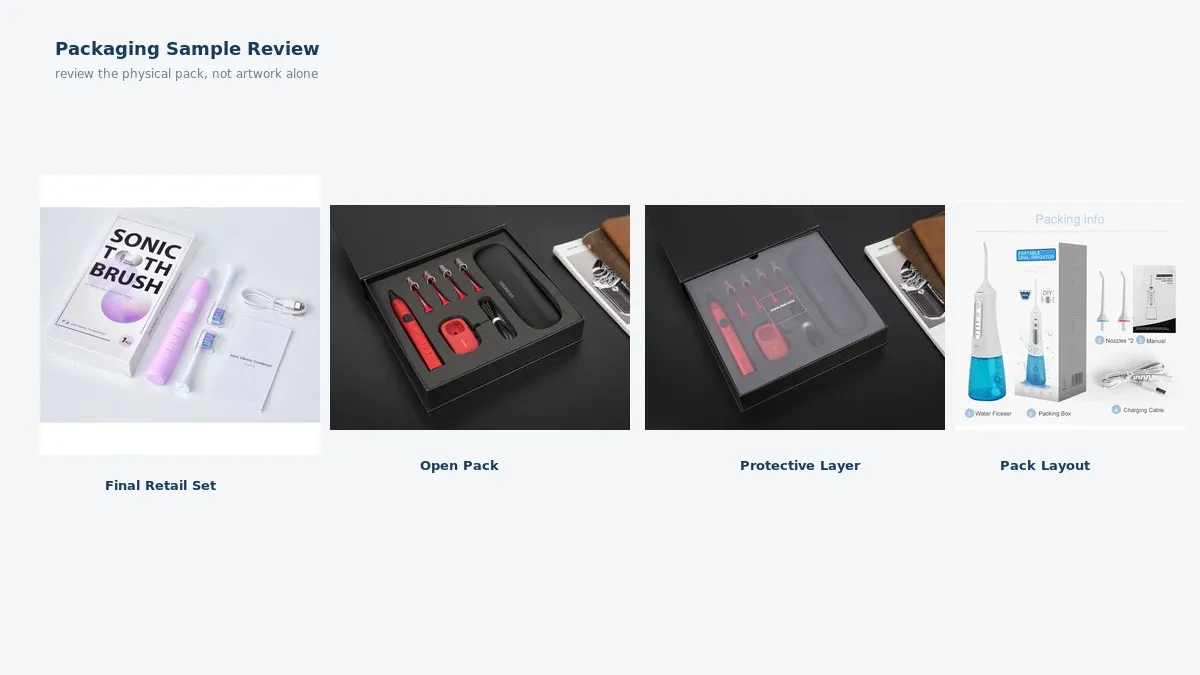
Different packaging samples answer different questions.
| Sample Stage | Can Help Approve | Cannot Prove Alone |
|---|---|---|
| White dummy | Approximate outer size, shelf presence, early structure | Final print color, exact fit, final protection |
| Structural prototype | Product fit, insert concept, accessory layout, opening experience | Production print quality or transport performance |
| Digital proof | Copy, image placement, information hierarchy | Material feel, folds, final print color |
| Printed / color proof | Print appearance against an agreed reference | Product fit, internal movement, final packed configuration |
| Final packed sample | Product arrangement, component count, dimensions, pack usability | Full production consistency or route-specific transit performance |
| Production-intent pack sample | Intended structure, material, print and assembly together | Complete validation for every distribution condition |
The central point is simple:
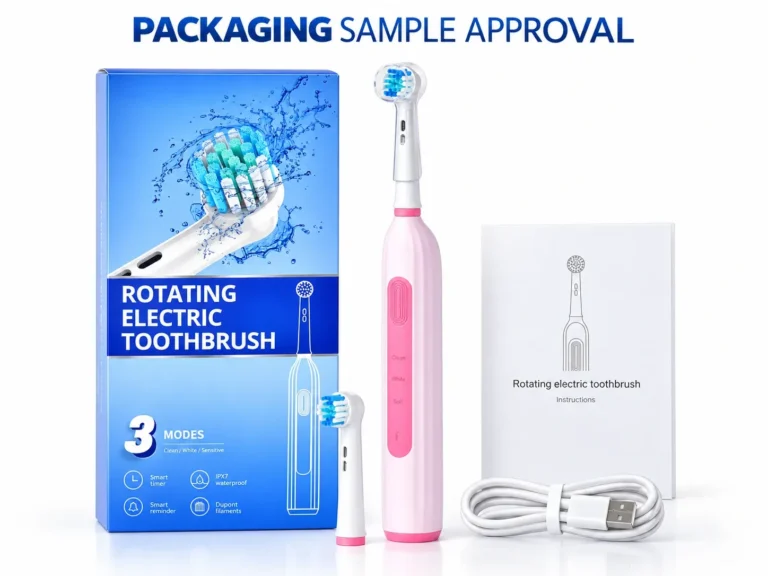
Artwork approval is not physical packaging approval.
A flat proof cannot demonstrate:
A physical packed sample should be reviewed before launch.
Packaging validation should reflect the actual product and distribution route.
Relevant considerations may include:
Established transit-testing frameworks can help simulate these risks.
However, one test protocol should not automatically be applied to every oral-care product.
Validation scope should reflect:
The correct question is not:
“What packaging test does every oral-care product need?”
It is:
“What validation is appropriate for this product, packaging configuration and distribution route?”
| Problem Seen Later | Earlier Decision That Was Missing |
|---|---|
| Dieline, insert and artwork require rework | Product and accessory configuration was not stable |
| Adapter, manual or cable does not fit | Final pack contents were not confirmed |
| Bristles are compressed or hygiene caps move | Brush-head orientation and retention were not defined |
| Transparent reservoir becomes scratched | Insert contact points were not reviewed |
| Nozzles or cables move during transport | Internal retention method was not defined |
| Retail carton is damaged in parcel shipping | Retail vs e-commerce shipping strategy was not decided |
| Pack counts are confused during fulfillment | SKU and variant structure was not clear |
| Barcode or model text is outdated | Product data was not locked before artwork |
| Compatibility wording is too broad | Compatibility scope was not confirmed |
| Master carton is inefficient | Case-pack quantity and orientation were not planned early |
Use this sequence when planning a new oral-care packaging project.
Templates supporting project execution are available under Project Resources.
A folding carton with a suitable internal insert is a common starting point, but the final structure should match the actual product configuration.
A handle, multiple brush heads, charging base, travel case and adapter require a different internal structure from a handle-only product.
Whether the pack needs a window, presentation-led structure or outer shipping protection depends on the product and sales channel.
It depends on the channel and refill strategy.
Retail display may favor hang-ready cartons or blister formats, while subscription and DTC programs may favor compact cartons or mailers.
Whichever format is used, the pack should protect bristles, retain any hygiene caps and make pack count and compatibility clear.
Sometimes.
The decision depends on the product, retail box structure and parcel route.
Some retail packs may need an outer mailer or additional protection.
Marketplace or retailer programs can also impose their own packaging requirements.
After the product configuration, pack count, SKU structure, packaging architecture, information requirements and approximate dieline are stable.
Starting artwork before these decisions are made increases the likelihood of revisions.
Different pack counts or bundle configurations may require separate commercial SKUs and may require separate GTINs or other identifiers depending on the applicable GS1 allocation rules and retailer requirements.
Confirm the identification structure before final artwork.
Review:
A flat artwork proof cannot confirm these physical characteristics.
Use a concise and factually supportable statement limited to the verified platform or model scope.
Reserve enough packaging space for the information before artwork development.
Avoid overly broad compatibility lists or wording that could imply affiliation where none exists.
Distributor and wholesale programs place greater emphasis on the transport layer.
That can include:
The consumer-facing pack still matters, but the master carton is designed primarily for transport and warehouse handling.
Prepare the product configuration, target channels, sellable pack counts and bundles, protection priorities and information requirements before beginning structural or artwork work.
A defined packaging brief can reduce avoidable revisions and make later packaging decisions easier to control.
Browse current products on our All Products page.