Start Your Electric Toothbrush Project
Tell us your product requirements and target market. We will review the details and reply with the relevant next steps.
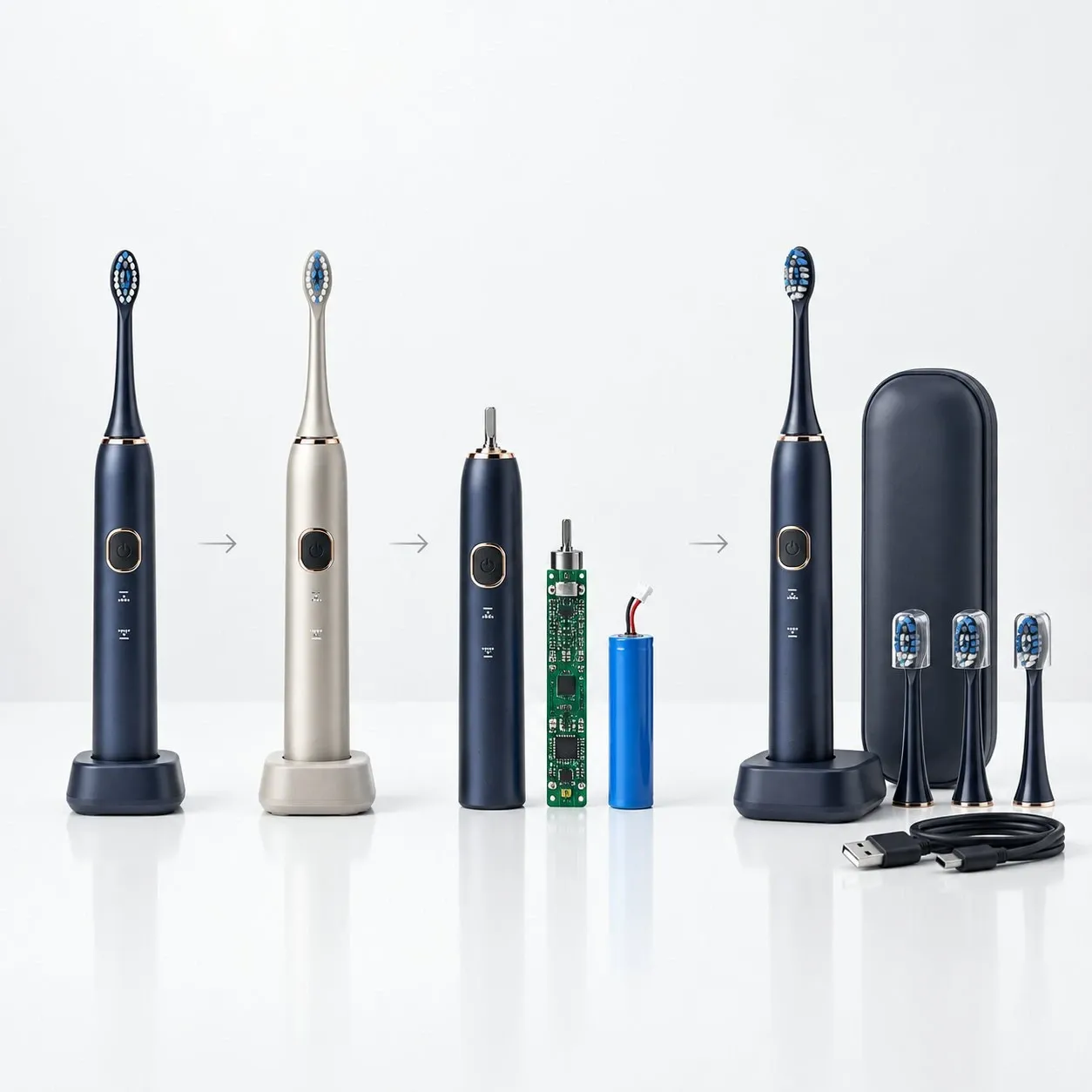
“Can you send me a sample?” is not a specific enough request for an OEM project.
The unit may be an existing stock model, a logo-and-color sample, an engineering unit with temporary components, a trial part from new tooling, or a pre-production unit representing the intended final configuration.
Each sample supports a different decision.
A stock sample can help select a platform. An engineering sample can confirm a new function while other parts remain temporary. A pre-production sample should be much closer to the intended production configuration.
Before a sample is prepared, buyers should define what it represents, what is final, what is temporary, what can be approved from it, and what still remains open.
Different buyers can ask for “a sample” while needing completely different evidence.
One buyer may want to:
Those are not the same sample request.
If the purpose is unclear, the sample that arrives may not support the decision the buyer needs to make.
A better question is:
What decision will this sample be used to make?
Once that is clear, the appropriate sample type and configuration become much easier to define.
Terms such as:
are not used in exactly the same way by every supplier.
EVT, DVT and PVT are useful concepts in hardware product development, but an electric toothbrush OEM may use different terminology, combine stages or use simpler internal sample names.
For this reason, buyers should focus less on the label and more on the definition.
For each important sample, confirm:
The sample definition matters more than the sample name.
The following is a practical buyer framework, not an official oral-care industry classification.
| Stage | Main Purpose | Typical Situation |
|---|---|---|
| 1. Stock Sample | Evaluate the existing platform | Buyer is choosing a standard product baseline |
| 2. Customized / Appearance Sample | Confirm logo, color, finish or presentation | Core product architecture remains mostly standard |
| 3. Engineering Sample | Verify firmware, component, PCB, battery, charging or sensor changes | Semi-custom engineering development |
| 4. Tooling / T1 Sample | Review parts from new or modified molding tools | Housing, interface or molded components have changed |
| 5. Pre-Production Sample | Confirm the production-intent configuration | Product configuration is substantially frozen |
A golden sample or approved reference serves a different role: it becomes the controlled reference used for later comparison.
Not every project needs all five stages.
A straightforward private-label project may need only a stock sample, appearance confirmation and an approved production reference.
A new housing, charging architecture or PCB may require several engineering and tooling stages before a pre-production sample is meaningful.
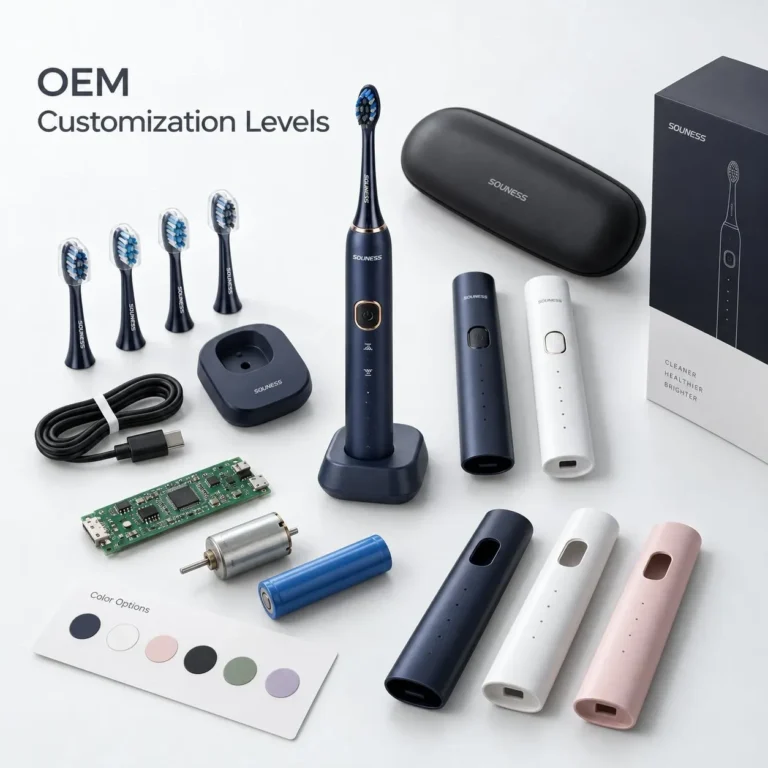
A stock sample is normally an existing supplier model in a standard configuration.
It may come from:
It is useful for evaluating platform-level characteristics such as:
The key question a stock sample answers is:
“Do we want to develop from this platform?”
It does not automatically answer:
“Is this our final product?”
A stock sample should not automatically be treated as the final reference for:
Useful questions to ask alongside the sample include:
Even a simple stock sample should have enough identification to prevent it from later being mistaken for the ordered production configuration.
An appearance sample is used to confirm visible private-label changes.
Examples include:
It can help confirm:
But there is an important limitation:
A cosmetic sample can look final externally while still using standard internal hardware.
It may still contain the supplier’s standard:
Appearance approval therefore should not automatically be treated as approval of the complete product configuration.
Color approval may use:
Digital Pantone, RAL or other references provide a target, but the final visual result can change with:
Where color matters, buyers should confirm the physical finish produced with the intended material and process rather than relying only on a screen reference.
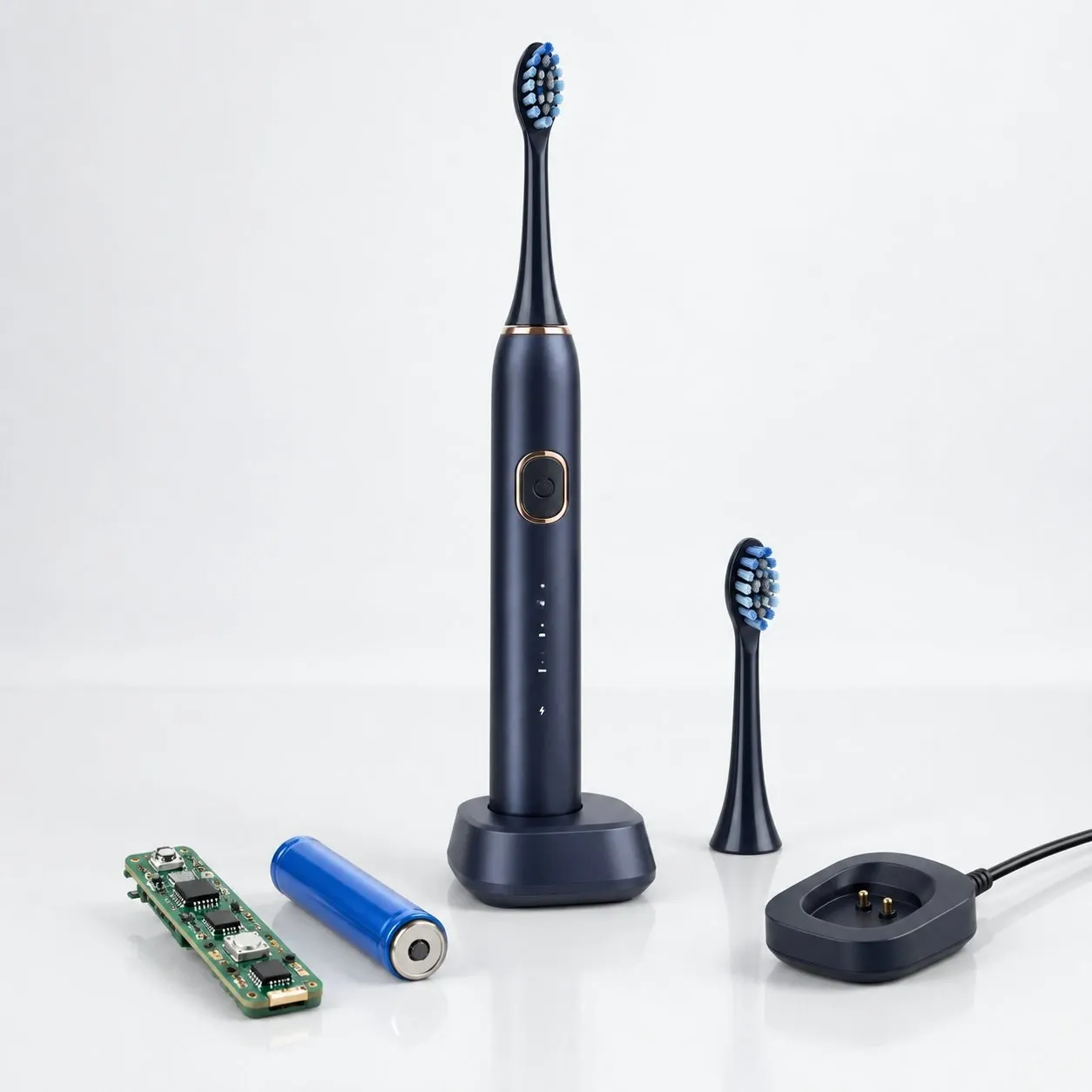
An engineering sample is mainly used to evaluate a technical change.
Typical examples include:
At this stage, some parts may still be temporary.
An engineering sample may use:
That does not necessarily make the sample unsuitable.
It means the buyer needs to understand exactly what the sample was built to demonstrate.
The most important question is:
What is final in this sample, and what is temporary?
An engineering sample may be appropriate for functional approval while still being unsuitable for:
A simple one-page record is often enough.
| Field | Why It Matters |
|---|---|
| Sample ID | Distinguishes the unit from earlier and later samples |
| Date | Establishes sample sequence |
| Model / Platform | Identifies the supplier platform |
| Product Revision | Identifies the technical configuration |
| PCB Revision | Identifies the electronics version |
| Firmware Version | Identifies product behavior |
| Battery | Identifies the battery configuration used |
| Motor / Actuator | Identifies the movement system |
| Charging Method | Identifies the charging configuration |
| Brush-Head System | Identifies the head and interface |
| Sensor / Display Status | Shows the status of new feature hardware |
| Housing Status | Final, prototype, CNC, 3D-printed or temporary |
| Tooling Status | Existing mold, modified mold, prototype or trial tool |
| Accessories | Lists what is included |
| Packaging Status | None, mockup, temporary or production-intent |
| Known Deviations | Identifies differences from intended production |
| Sample Purpose | States the decision this sample should support |
This does not require a complex document-control system.
The goal is simply to make the sample understandable now and comparable later.
An engineering sample should identify where it differs from the intended production product.
Possible known deviations include:
The approval record should then answer two questions:
What can be approved from this sample?
What remains open?
For example:
Firmware mode sequence approved; housing finish and charging base remain temporary.
This prevents one approval from being interpreted more broadly than intended.
Two toothbrushes can look identical and behave differently because the firmware has changed.
A firmware sample should therefore record its firmware version.
Useful checks may include:
Firmware approval should remain limited to the agreed scope.
It does not automatically approve:
unless those elements were also part of the sample being reviewed.
The supplier should also clarify whether the firmware is running on the intended production hardware or a development configuration.
[Internal link: Electric Toothbrush Motor, PCB & Firmware]
The buyer does not need to audit the circuit design.
The buyer does need to understand what the electronics sample represents.
Ask:
A PCB sample may prove that a feature works.
It does not automatically prove that the production configuration is frozen.
Changes to the following may justify a dedicated sample or configuration review:
Buyer-level review may include:
A sample can demonstrate that a charging configuration functions without proving performance across every production lot.
[Internal link: Electric Toothbrush Battery & Charging Systems]
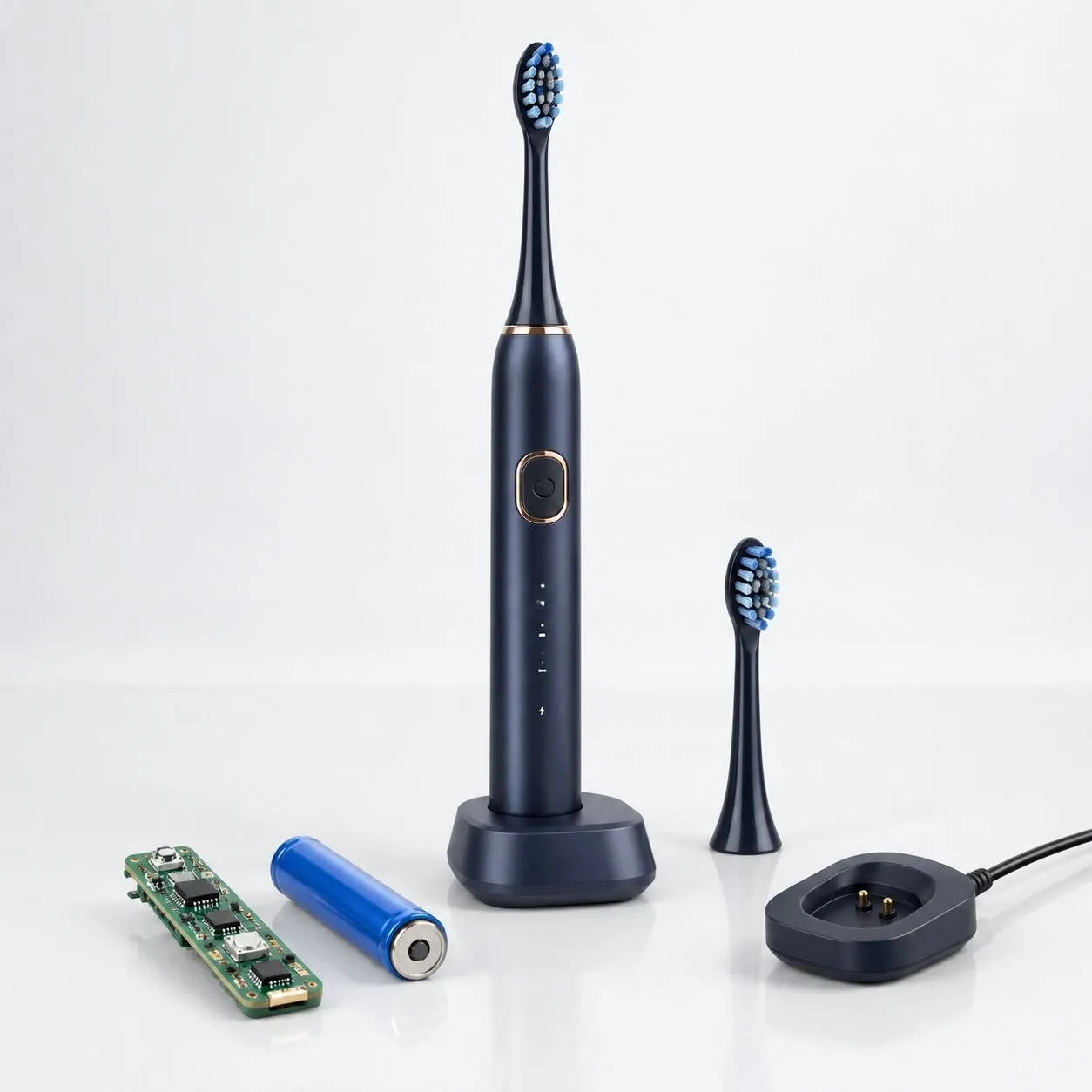
When the project changes the housing, interface or another molded component, samples may begin coming from new or modified tooling.
T0, T1 and T2 are common mold-development terms, but suppliers and toolmakers do not always use them identically.
At buyer level, a T1 sample commonly represents an early customer-review sample from the tool.
It may help evaluate:
After an early tooling sample, additional work may still include:
Therefore:
“T1 looks acceptable” does not automatically mean “tooling is production-ready.”
At the same time, a T1 sample should not automatically be treated as poor quality.
It is a development checkpoint.
The buyer should ask what tooling and process work remains before the molded part is considered production-intent.
[Internal link: Public Mold vs Private Tooling for Private Label Oral-Care Projects]
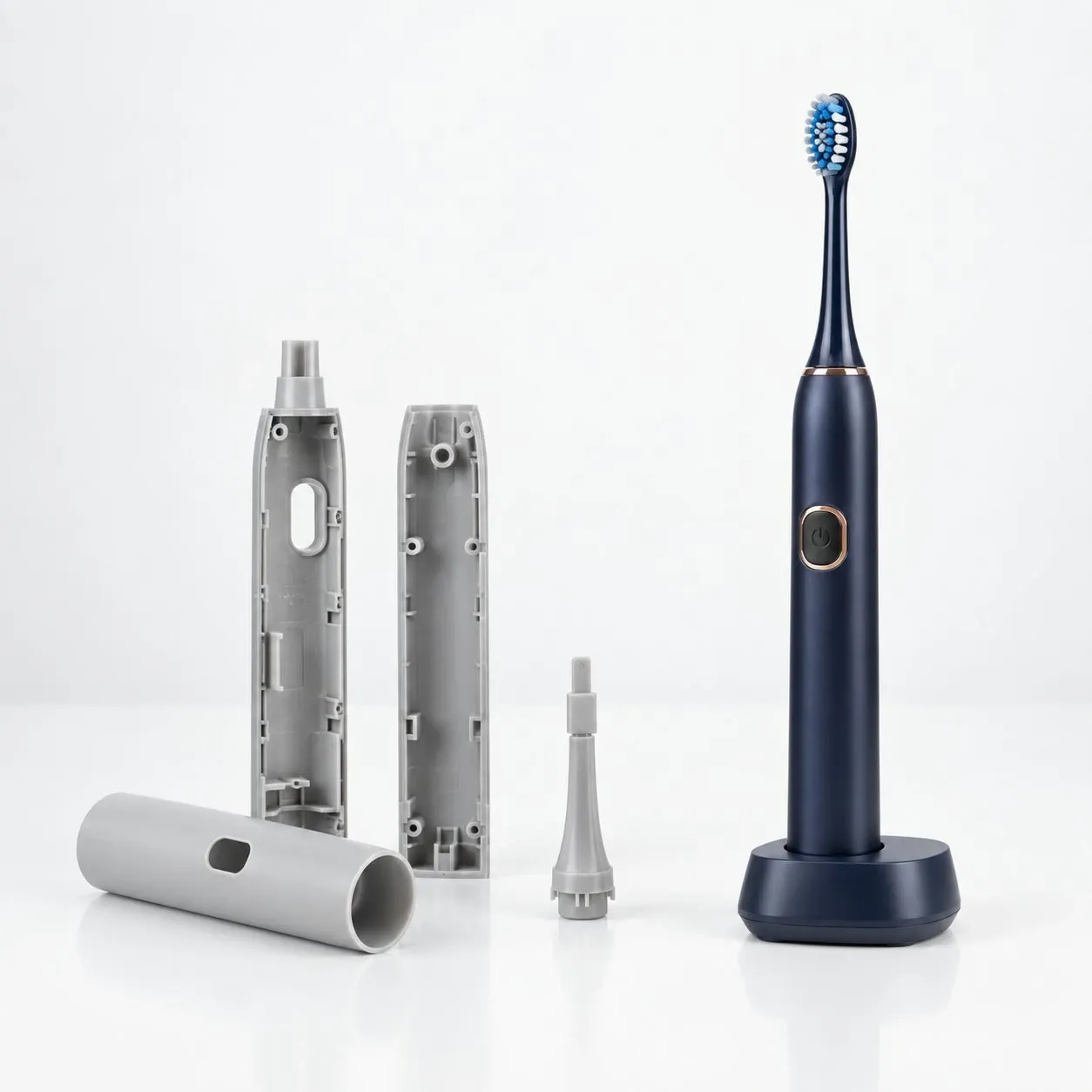
Before production tooling exists, 3D-printed or CNC parts can be very useful.
They can help evaluate:
But they may not represent final molded parts in:
A prototype should be evaluated against the question it was designed to answer.
It should not automatically be treated as evidence of final molded-part performance.
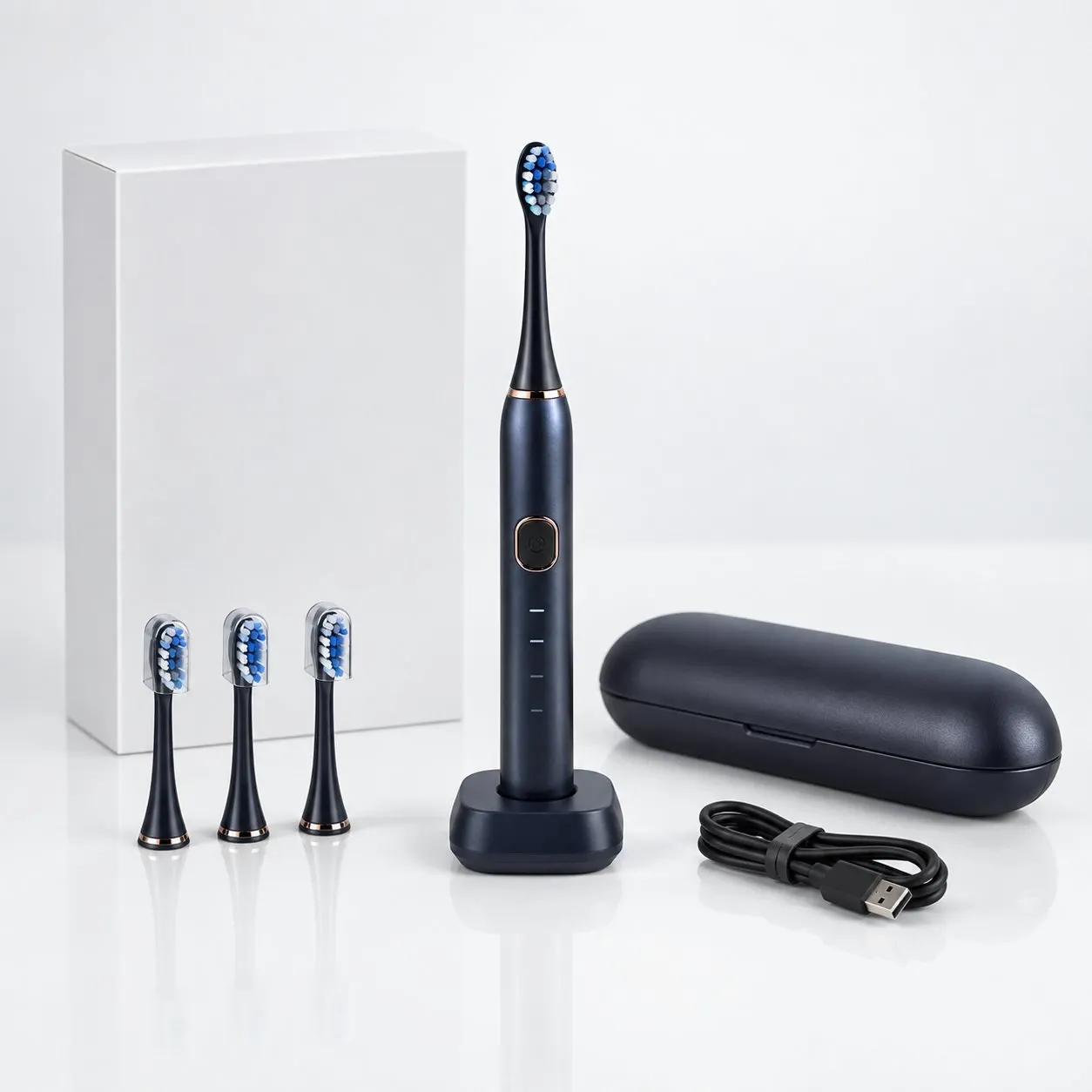
A pre-production sample may also be called a PPS, production-intent sample or pilot sample depending on the supplier.
It should represent the intended production configuration as closely as practical.
Where applicable, this may include the intended:
“As closely as practical” is important.
Not every pre-production sample is necessarily produced on the final mass-production line.
Instead, the buyer should confirm which elements are production-intent and whether any exceptions remain.
A pre-production sample can help confirm:
It does not automatically prove:
Those are separate production and validation controls.
[Internal link: Electric Toothbrush Reliability Testing]
[Internal link: Incoming, In-Process & Final Inspection]
A useful working distinction is:
| Sample | Practical Role |
|---|---|
| Pre-Production Sample | Confirms the intended production configuration before production release |
| Golden Sample / Approved Reference | Formally approved and identified reference used for later comparison |
The terminology can overlap.
Some suppliers may use an approved pre-production sample as the golden reference.
Others may treat the pre-production sample and golden sample as separate stages or records.
The important control is therefore not the name.
Buyers should define the role, configuration, approval scope and reference status of each sample in writing.
[Internal link: Golden Sample Approval for Oral-Care OEM Projects]
A production sample comes from actual production output.
It can help confirm whether manufactured units match:
But one production sample does not automatically approve an entire production lot.
Detailed production controls belong in the inspection process.
[Internal link: Incoming, In-Process & Final Inspection]
A product can look the same externally while its internal configuration has changed.
Possible differences include:
For example:
Sample A
Sample B
External appearance:
Same
Configuration:
Different
Approved samples should therefore be linked to relevant records such as:
[Internal link: BOM & Engineering Change Control for Electric Toothbrush OEM Projects]
Every meaningful sample should be identifiable.
A simple record can include:
Example formats:
MODEL-ENG-03
MODEL-T1-02
MODEL-PPS-01
These are examples, not industry standards.
The principle is:
A sample should be identifiable without relying on memory, chat history or an unlabeled photo.
The word “approved” can become ambiguous if the scope is not stated.
More useful approval statements include:
Partial approval can also be useful.
For example:
Logo location approved; housing color remains open.
Firmware behavior approved; PCB remains developmental.
T1 fit accepted for continued tooling work; finish not approved.
This is not a mandatory industry format.
It is simply a practical way to prevent one approval from unintentionally covering unrelated elements.
Another physical sample may be appropriate after:
Smaller changes may sometimes be reviewed through:
The deciding question is:
Does the change affect something that needs to be physically experienced or verified?
| Evidence | Often Useful For |
|---|---|
| Photo / Video | Logo placement, artwork changes, visible UI behavior, revision comparison, packaging copy |
| Physical Sample | Color, tactile finish, ergonomics, noise, vibration feel, brush-head fit, button feel, mechanical fit, charging interface, packaging fit and accessories |
Neither method is automatically sufficient or insufficient.
The evidence method should match the decision being made.
The actual sample path depends on how deeply the product is being changed.
| Project Type | Example Sample Path |
|---|---|
| Standard Private Label | Stock Sample → Logo / Color Sample if needed → Production-Intent / Approved Reference |
| Cosmetic Customization | Stock Sample → Appearance Sample → Production-Intent Reference |
| Firmware Customization | Stock Sample → Engineering Sample → Updated Engineering Sample if needed → Pre-Production Sample |
| PCB / Component Modification | Stock Sample → Engineering Sample → Integrated Configuration Sample → Pre-Production Sample |
| Battery / Charging Change | Stock Sample → Engineering Sample → Integrated Charging Sample → Pre-Production Sample |
| New Tooling | Prototype → T1 / Tooling Sample → Corrected Tooling Sample where needed → Integrated Sample → Pre-Production Sample |
| Full ODM | Concept / Prototype → Engineering Samples → Tooling Samples → Production-Intent Sample → Approved Reference |
These are examples, not mandatory workflows.
The correct sequence depends on the project.
[Internal link: Electric Toothbrush OEM Customization Levels]
| Sample Type | Useful For | Does Not Automatically Prove |
|---|---|---|
| Stock Sample | Platform feel, size, movement, UI, charging concept and baseline quality | Final branded configuration, final internals, final accessories or packaging |
| Customized / Appearance Sample | Logo, color, finish, decoration and presentation | Final firmware, PCB, battery, motor or assembly process |
| Engineering Sample | Specific function, firmware, PCB, charging, sensor or component integration | Final cosmetics, final tooling, production assembly quality or batch consistency |
| Tooling / T1 Sample | Molded geometry, fit, assembly, interfaces and early appearance | Final tooling condition, final finish or optimized production process |
| Pre-Production Sample | Intended integrated configuration, accessories, packaging and production-intent execution | Batch consistency, every future lot or complete reliability/inspection outcome |
| Golden Sample / Approved Reference | Controlled comparison reference for later acceptance | Automatic proof that future production will remain identical |
| Production Sample | Evidence from actual production output | Automatic acceptance of all units or future production lots |
This table is the simplest way to avoid over-interpreting a sample.
A sample is evidence for a specific decision, not evidence for every later stage of the project.
A useful sample request should define:
| Field | Buyer Should State |
|---|---|
| Model / Platform | Exact supplier platform under review |
| Target Market | Intended country or customer program |
| Sample Purpose | What decision the sample must support |
| Required Changes | Exact requested customization |
| Production-Intent Items | What must already match intended production |
| Temporary Items Allowed | What may still remain prototype or standard |
| Firmware / Function | Required behavior to demonstrate |
| Battery / Charging | Required battery and charging configuration |
| Brush-Head System | Required head and interface |
| Color / Finish | Required physical finish |
| Logo | Artwork and placement |
| Accessories | Exact contents |
| Packaging | None, mockup, temporary or production-intent |
| Sample Records | Configuration, revision and known-deviation records |
The most important field is:
What decision will this sample be used to make?
Examples include:
Once that decision is clear, the supplier can prepare a sample appropriate to that stage.
| Common Mistake | Better Approach |
|---|---|
| Assuming a stock sample is the final product | Identify its exact model, revision and configuration |
| Approving appearance without checking internal configuration | Request a configuration record where relevant |
| Judging prototype cosmetics as production quality | Identify what is prototype and what is production-intent |
| Treating engineering-sample approval as production release | Define the approval scope |
| Not recording firmware version | Record firmware version with the sample |
| Not recording PCB revision | Identify the electronics version |
| Temporary parts are not listed | Record known deviations |
| Treating T1 as final tooling | Confirm remaining tooling and process work |
| Assuming a PPS proves batch consistency | Use it for production-intent configuration confirmation |
| Approving only through chat messages | Tie important decisions to a Sample ID and revision |
| Using “approved” without scope | State exactly what has been approved |
| Changing components after sample approval without review | Trigger a configuration and sample-impact review |
| Multiple unlabeled samples in circulation | Give each relevant sample an ID |
Do not ask only:
“Can you send me a sample?”
Ask:
When those questions are answered clearly, samples become a sequence of controlled product-development decisions rather than a collection of units that happen to look similar.
If you are requesting an electric toothbrush OEM sample, define the decision the sample must support before the supplier prepares it. The required changes, production-intent items and configuration records can then be agreed before the sample is shipped.
A stock sample is an existing supplier model used mainly to evaluate the underlying platform, including size, ergonomics, movement, UI and basic product feel.
An engineering sample is built to evaluate a specific technical change such as firmware, PCB, battery, charging or sensor functionality.
An engineering sample may still contain temporary components, so neither sample should automatically be treated as the final production product.
A stock sample can support approval of the existing platform characteristics it actually represents.
However, if the OEM version will use different firmware, PCB, battery, accessories, packaging or other components, the stock unit does not represent the complete ordered configuration.
Production release should be based on a clearly identified production-intent configuration rather than assuming the stock sample already represents every final detail.
At minimum, an important engineering sample should identify its Sample ID, model, product revision, PCB revision, firmware version and purpose.
Where relevant, the record should also identify the battery, motor, charging configuration, brush-head system, housing status, tooling status and known deviations.
This allows the buyer to distinguish what is final from what remains temporary.
T1 commonly refers to an early customer-review sample produced from new or modified tooling.
It can help evaluate molded geometry, fit, assembly, interfaces and early appearance.
However, terminology varies between toolmakers and suppliers, so buyers should confirm what the supplier means by T1 and what additional tooling or process work remains.
Not necessarily.
After an early tooling trial, work may still remain on dimensions, surface finish, texture, mold venting, inserts or production-process settings.
A good-looking T1 indicates progress, but buyers should confirm whether the mold and molded component are actually considered production-intent before using the sample as a final reference.
A pre-production sample should represent the intended mass-production configuration as closely as practical.
Depending on the project, this may include the intended housing, PCB, firmware, battery, motor, brush head, charging system, accessories and packaging.
Its purpose is to confirm the integrated production-intent configuration before production release, not to prove the consistency of every future production unit.
Not always.
A pre-production sample is generally used to confirm the intended production configuration.
A golden sample is the formally approved and identified reference used for later comparison.
Some suppliers may use the approved pre-production sample as the golden reference, while others keep the two concepts separate.
The safest approach is to define the role, configuration and approval status of each sample in writing.